Few positions have changed as much. Full-backs used to stay home; now they give width in attack, deliver crosses and sometimes step into midfield (an "inverted" full-back). Getting the balance right between going forward and getting back is the whole job.
Defence · number 2 / 3
Full-back
Full-backs (left-back and right-back) are the wide defenders in a back four. They stop wingers getting crosses in, tuck in to cover the centre-backs, and join attacks by overlapping the winger or moving inside into midfield. The modern full-back attacks as much as they defend.
The full-back in each formation
With the ball, without it, and in transition
With the ball: Give width high up when the winger comes inside, overlap or underlap, and cross early.
Without the ball: Stop the cross first, show the winger down the line, and tuck in when the ball is on the far side.
When the ball changes hands: Sprint back to your position when the ball is lost; it's the full-back's space opponents attack first.
Our winger has it, one against one. The outside centre-back sets off on the overlap.
More boards: Getting it wide
Skills a full-back needs
⚽ Technical
- Crossing on the run
- 1v1 defending
- Passing down the line and inside
🧠 Tactical
- When to overlap
- Tucking in on the far side
- Inverting into midfield
💪 Physical
- Stamina
- Repeated sprints
❤️ Mental
- Discipline to get back
- Bravery going forward
Team drills for full-backs
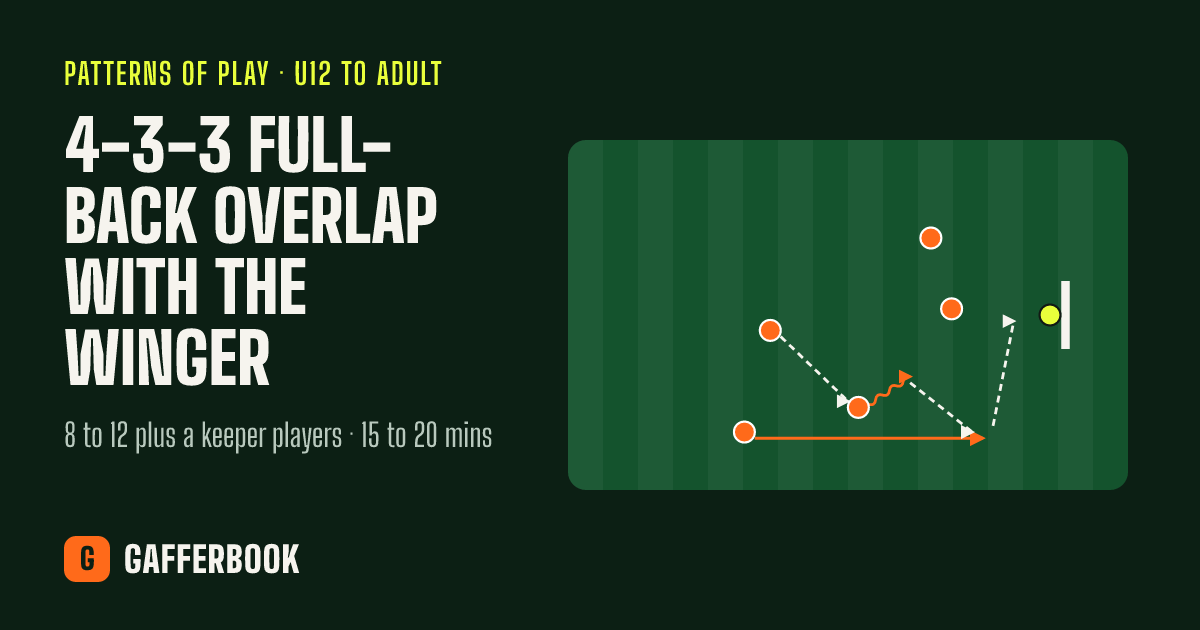 4-3-3 full-back overlap with the winger8 to 12 plus a keeper players · U12 to adult
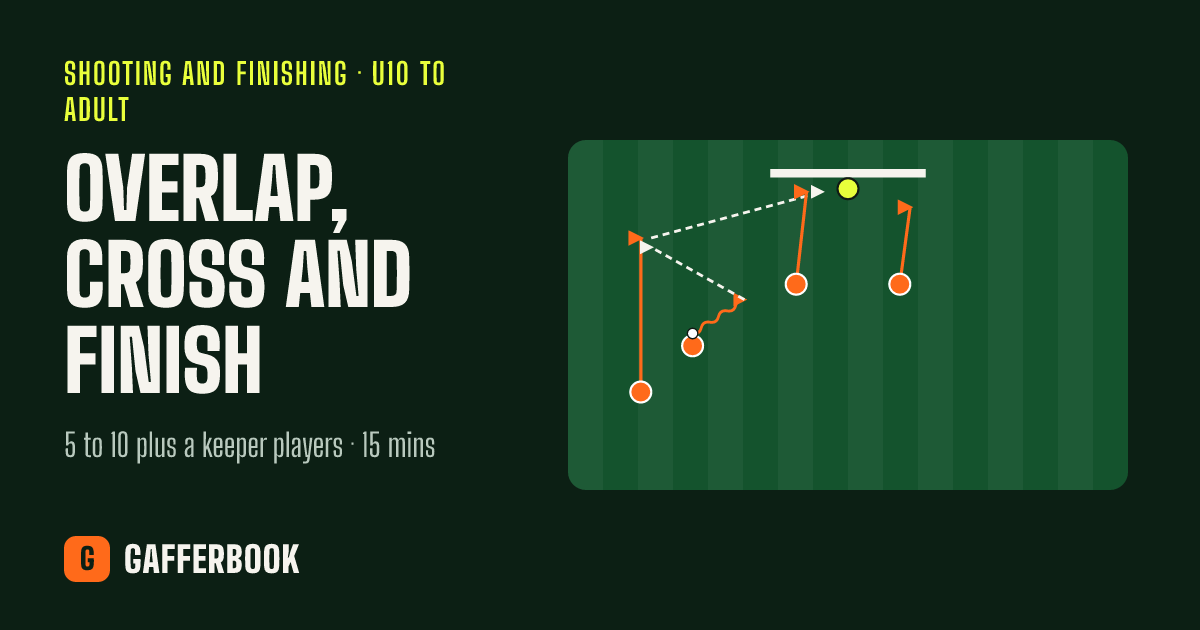 Overlap, cross and finish5 to 10 plus a keeper players · U10 to adult
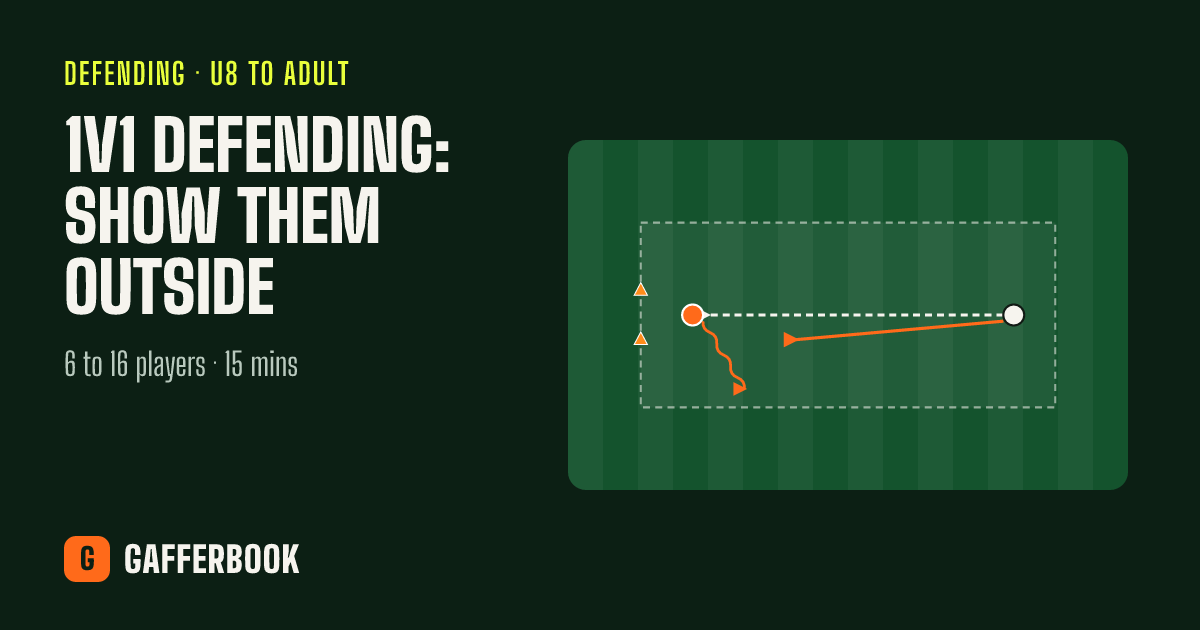 1v1 defending: show them outside6 to 16 players · U8 to adult
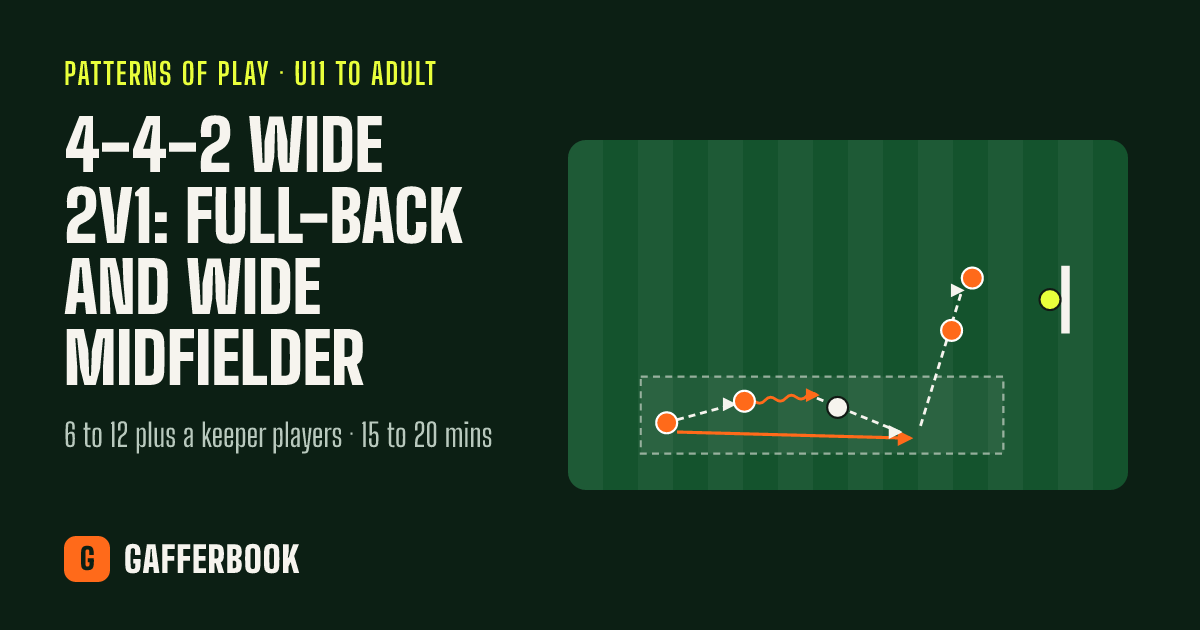 4-4-2 wide 2v1: full-back and wide midfielder6 to 12 plus a keeper players · U11 to adult
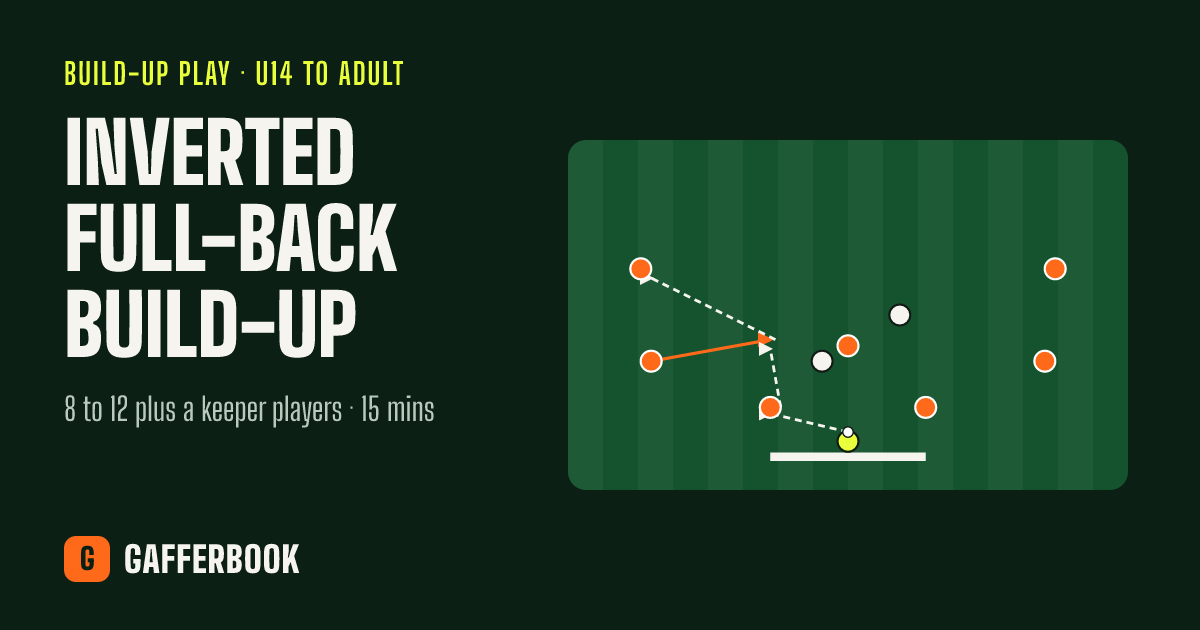 Inverted full-back build-up8 to 12 plus a keeper players · U14 to adult
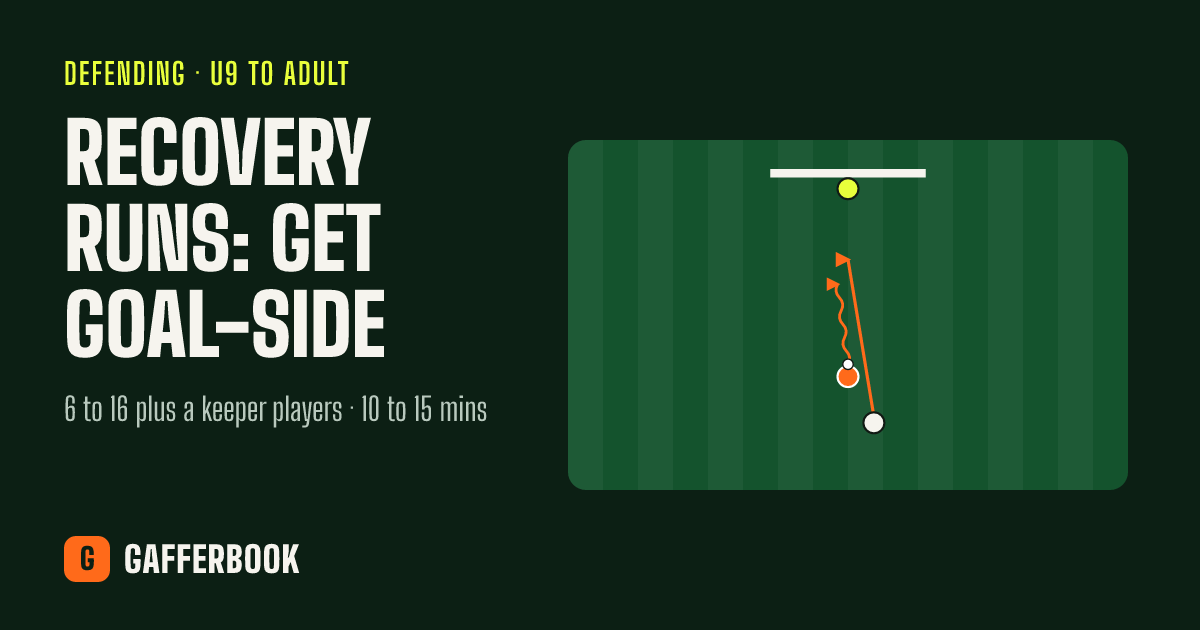 Recovery runs: get goal-side6 to 16 plus a keeper players · U9 to adult
Practise at home
Drills a full-back can do alone with a ball and a wall. Or follow the circuit below: timer, beeps and every station shown.
Two-touch wall anglesOpen up, touch across, pass · 20 passesLong pass to a targetLean back, strike through · 10 passesJockey and shuffleLow, side-on, don't cross · 45 secondsRecovery sprintsTurn, sprint, goal-side · 6 sprints1v1 moves on a coneAttack it, fake, explode · 10 movesCrossing to a targetHead up, whip it in · 10 crosses
🔁 Full-back home circuit
7 minutes · 7 stations · 40s on, 20s rest. Turn the sound on for the beeps. Clear the space first, and younger players should have an adult nearby.
Coaches: send this circuit or any home drill to a player from your team hub, and see how they got on.
Players to watch
- Trent Alexander-Arnold: Passing range and crossing from right-back that changed how the role is played.
- Lucy Bronze: Powerful, attacking right-back who has won major trophies with club and country.
- Ashley Cole: Outstanding 1v1 defending at left-back.
- Philipp Lahm: Intelligent full-back who could also play in midfield.
For grassroots coaches
- Full-back is a great position for learning: you defend, attack and see the whole game.
- Teach the overlap with a simple 2v1 on a wide channel.
- In 7v7, wide players often do the full-back job too, so rotate them.
Questions people ask
What's the difference between a full-back and a wing-back?
Full-backs play in a back four; wing-backs play in a back three or five and are expected to cover the whole flank, attacking higher up.
What is an inverted full-back?
A full-back who moves inside into midfield when the team has the ball, instead of staying wide.
What number does a full-back wear?
Traditionally 2 for the right-back and 3 for the left-back.
Other positions
Wing-back
A wing-back covers the whole flank in a system with three centre-backs.
Read →Centre-back
A centre-back defends the middle of the pitch in front of goal.
Read →Winger
A winger plays high and wide on the flank.
Read →← All football positions · Formations · Practise at home
Ask about this position
Free AI coaching help from Gafferbook. Ask anything about coaching your team.