Centre-backs read the game. The best ones rarely need a last-ditch tackle because they're already in the right place. Today they're also expected to be comfortable on the ball: splitting wide when the keeper has it and passing through the lines, not just clearing it.
Defence · number 4 / 5 / 6
Centre-back
A centre-back defends the middle of the pitch in front of goal. They stop attackers turning and shooting, win headers and tackles, cover their partner, keep the defensive line together, and start attacks by passing out from the back. In a back three, the outside centre-backs also cover the wide channels.
The centre-back in each formation
With the ball, without it, and in transition
With the ball: Split wide when the keeper has it, play through midfield when you can, and step into space with the ball if nobody presses you.
Without the ball: Stay goal-side and central, hold the line with your partner, challenge or cover, and win the first header.
When the ball changes hands: When the ball's lost, drop and protect the middle first. When it's won, look for the forward pass before the opponent resets.
Two compact lines near our box. Their winger has it, so the whole block slides to that side.
More boards: Playing out from the back · Mid block
Skills a centre-back needs
⚽ Technical
- Heading (from U12 with guidance)
- Short and long passing with both feet
- Clean first touch under pressure
🧠 Tactical
- Covering and balance with your partner
- Holding a line
- When to step up and when to drop
💪 Physical
- Strength in duels
- Recovery speed
❤️ Mental
- Composure
- Leadership and talking
Team drills for centre-backs
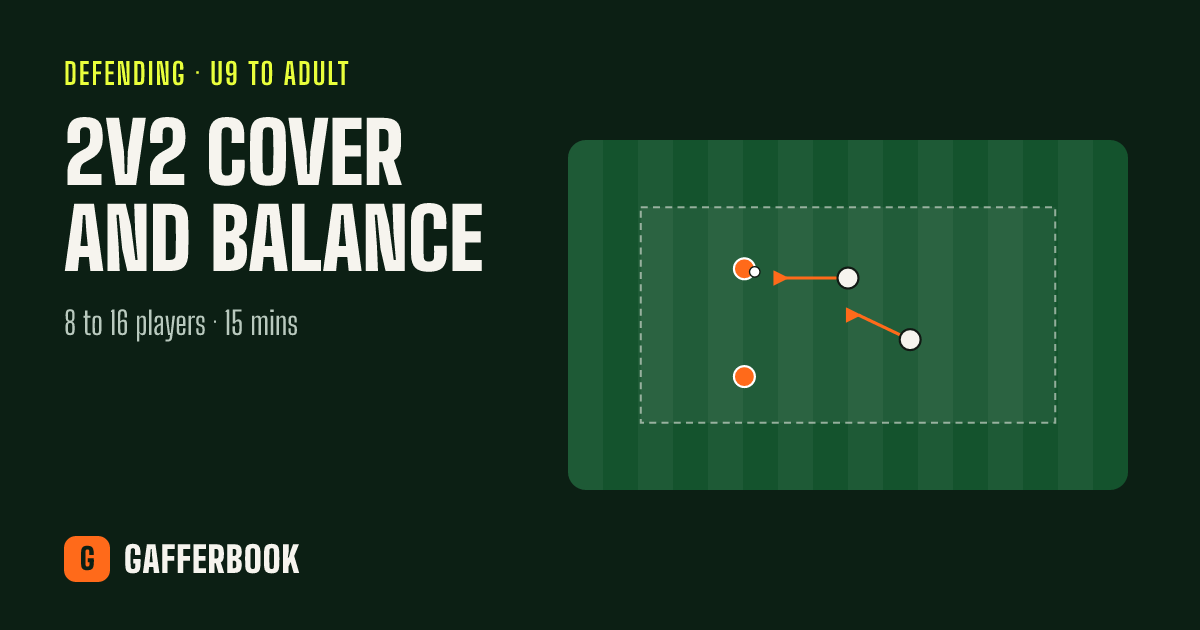 2v2 cover and balance8 to 16 players · U9 to adult
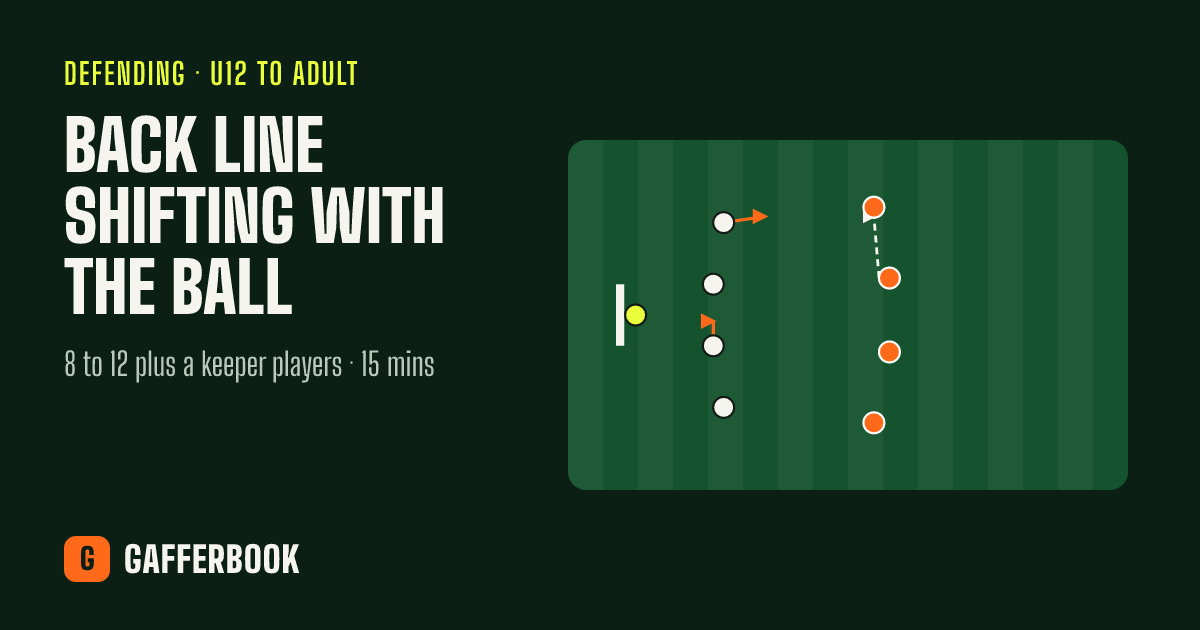 Back line shifting with the ball8 to 12 plus a keeper players · U12 to adult
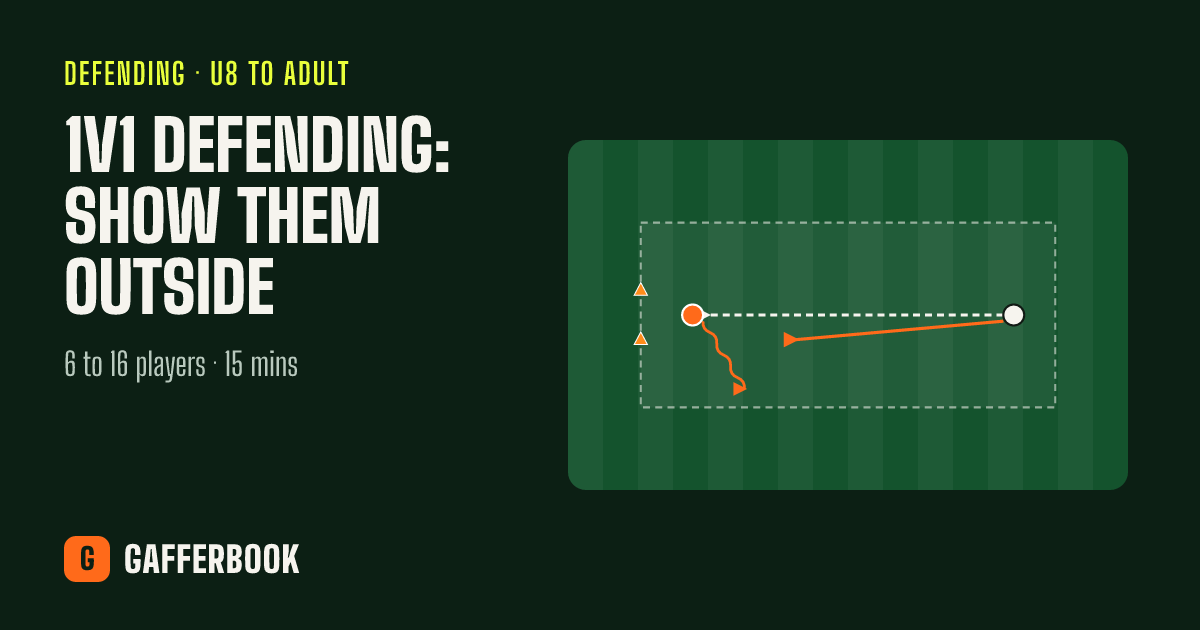 1v1 defending: show them outside6 to 16 players · U8 to adult
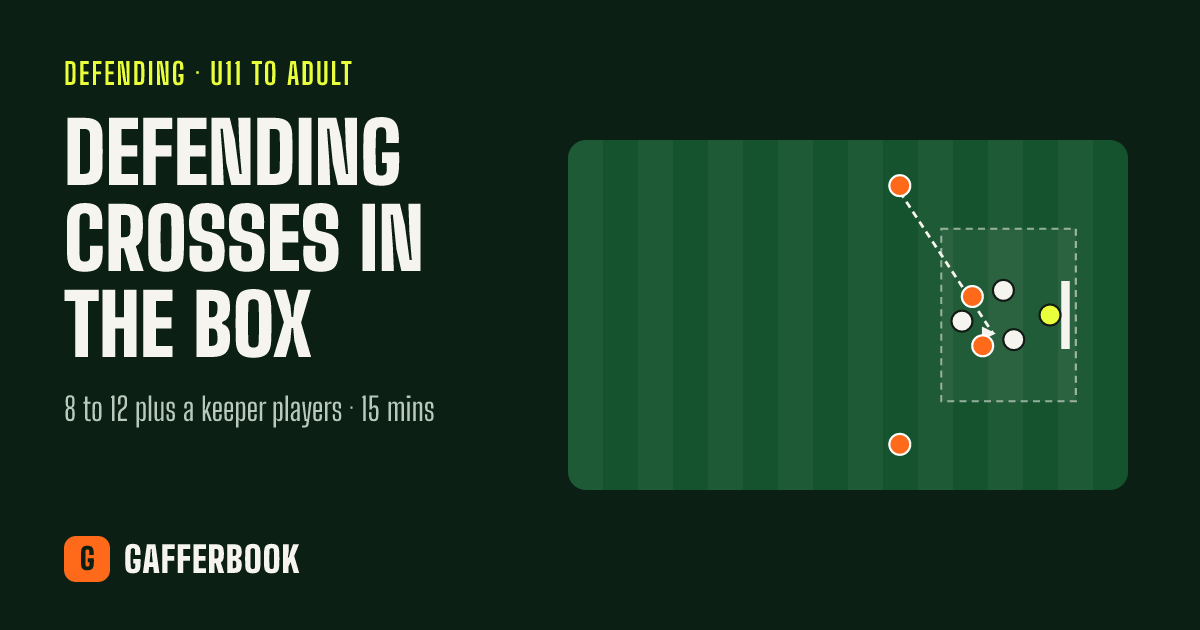 Defending crosses in the box8 to 12 plus a keeper players · U11 to adult
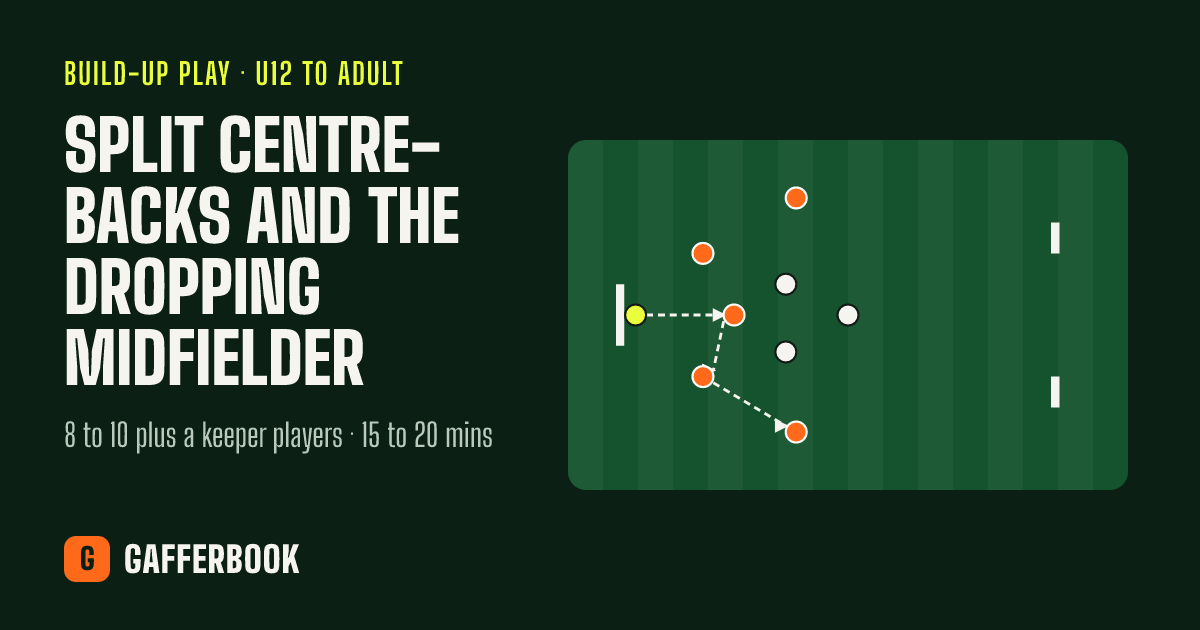 Split centre-backs and the dropping midfielder8 to 10 plus a keeper players · U12 to adult
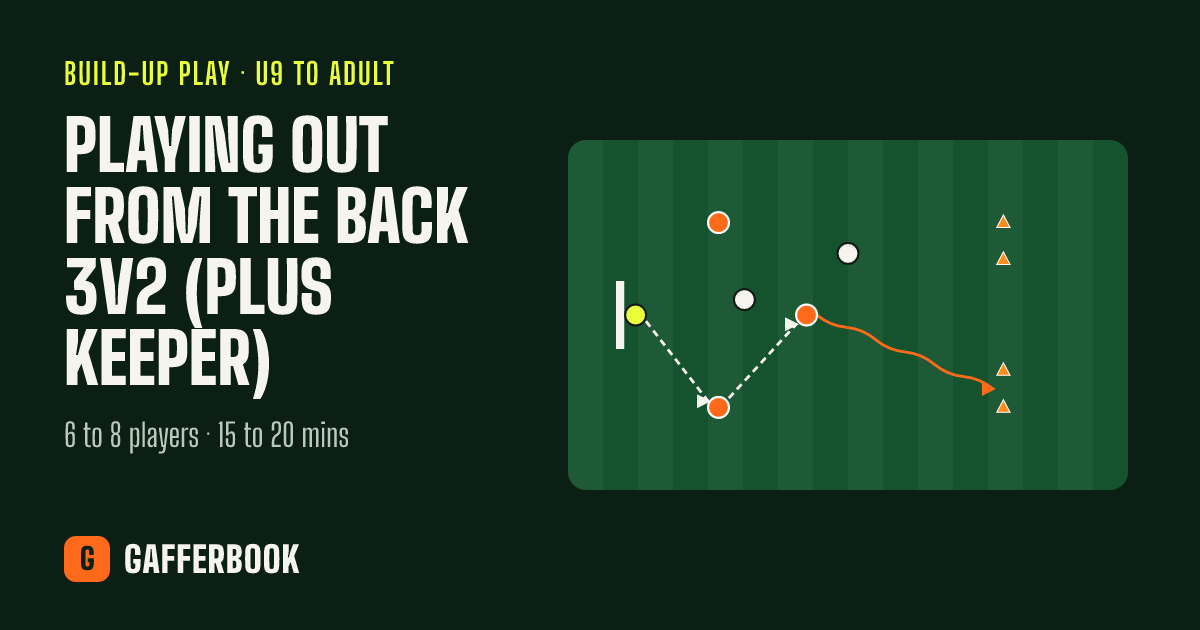 Playing out from the back 3v2 (plus keeper)6 to 8 players · U9 to adult
Practise at home
Drills a centre-back can do alone with a ball and a wall. Or follow the circuit below: timer, beeps and every station shown.
Two-touch wall anglesOpen up, touch across, pass · 20 passesLong pass to a targetLean back, strike through · 10 passesJockey and shuffleLow, side-on, don't cross · 45 secondsRecovery sprintsTurn, sprint, goal-side · 6 sprintsScan and callLook before it arrives · 20 passesHeader technique with a parentForehead, eyes open · 8 headers
🔁 Centre-back home circuit
7 minutes · 7 stations · 40s on, 20s rest. Turn the sound on for the beeps. Clear the space first, and younger players should have an adult nearby.
Coaches: send this circuit or any home drill to a player from your team hub, and see how they got on.
Players to watch
- Virgil van Dijk: Calm reading of the game, aerial strength and long diagonal passes.
- Leah Williamson: Ball-playing centre-back who captained England to the Euro 2022 title.
- Rio Ferdinand: Pace, anticipation and comfort on the ball from the back.
- Millie Bright: Physical, brave defending and a big presence in the air.
For grassroots coaches
- Don't only put your tallest player here: reading the game and passing matter more at junior ages.
- Teach the cover-and-balance idea early with 2v2 games.
- Let centre-backs carry the ball forward when there's space; it builds confidence.
Questions people ask
What's the difference between a centre-back and a centre-half?
Nothing: they're two names for the same position. Centre-half is the older British term.
Should a centre-back be tall?
It helps in the air at older ages, but reading the game, positioning and passing matter more, especially in youth football.
What does a centre-back do in a back three?
The middle one organises and covers; the outside two defend the wide channels and often step into midfield with the ball.
Other positions
Full-back
Full-backs (left-back and right-back) are the wide defenders in a back four.
Read →Defensive midfielder (number 6)
A defensive midfielder (CDM, the number 6) plays just in front of the defence.
Read →Goalkeeper
The goalkeeper is the last line of defence and the first attacker.
Read →← All football positions · Formations · Practise at home
Ask about this position
Free AI coaching help from Gafferbook. Ask anything about coaching your team.