Wingers are a team's most direct attackers. Speed helps, but changing pace, a good first touch and decision-making in the final third matter even more.
Attack · number 7 / 11
Winger
A winger plays high and wide on the flank. They beat defenders 1v1, cross for the striker, and cut inside to shoot, often on their stronger foot (an inverted winger). Without the ball they press the opponent's full-back and track back when needed.
The winger in each formation
With the ball, without it, and in transition
With the ball: Stay wide to stretch the defence, take players on 1v1, cross or cut inside to shoot.
Without the ball: Press the full-back to show them inside or back, and track their runs.
When the ball changes hands: Sprint in behind when the ball's won; counter-press when it's lost high up.
We've drawn them to our right. Our left-side player stays wide and high, where the space is.
More boards: Overlap · Counter-attack
Skills a winger needs
⚽ Technical
- Dribbling at speed
- 1v1 moves
- Crossing and finishing
🧠 Tactical
- When to go wide or inside
- Back-post runs
💪 Physical
- Acceleration
- Agility
❤️ Mental
- Confidence to take players on
- Bouncing back from a lost ball
Team drills for wingers
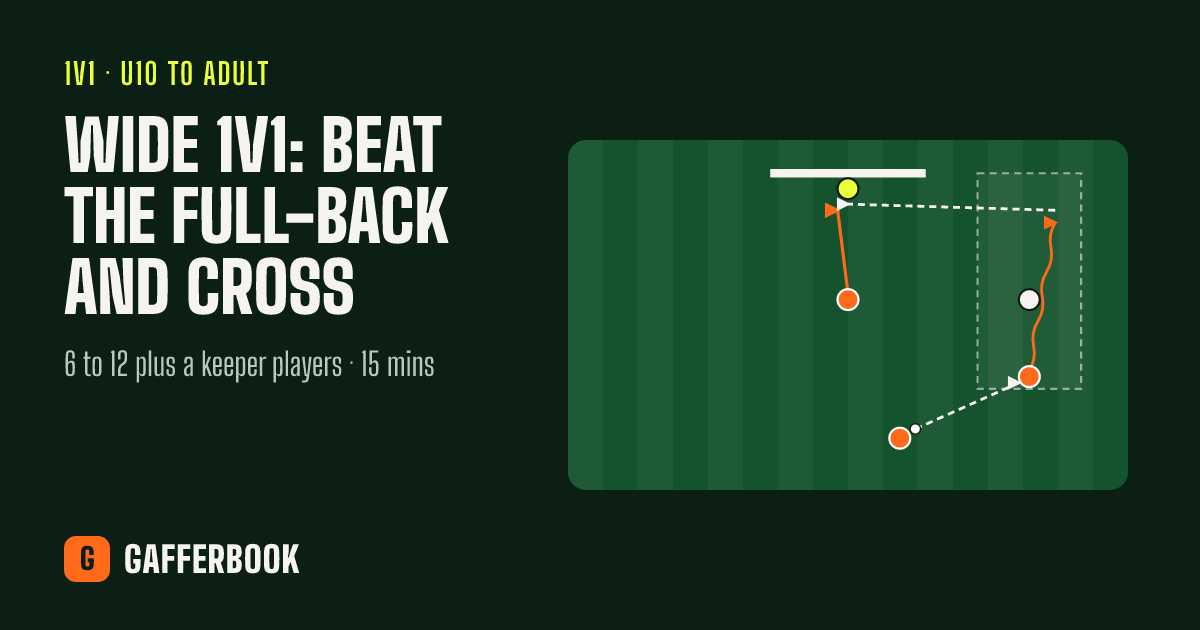 Wide 1v1: beat the full-back and cross6 to 12 plus a keeper players · U10 to adult
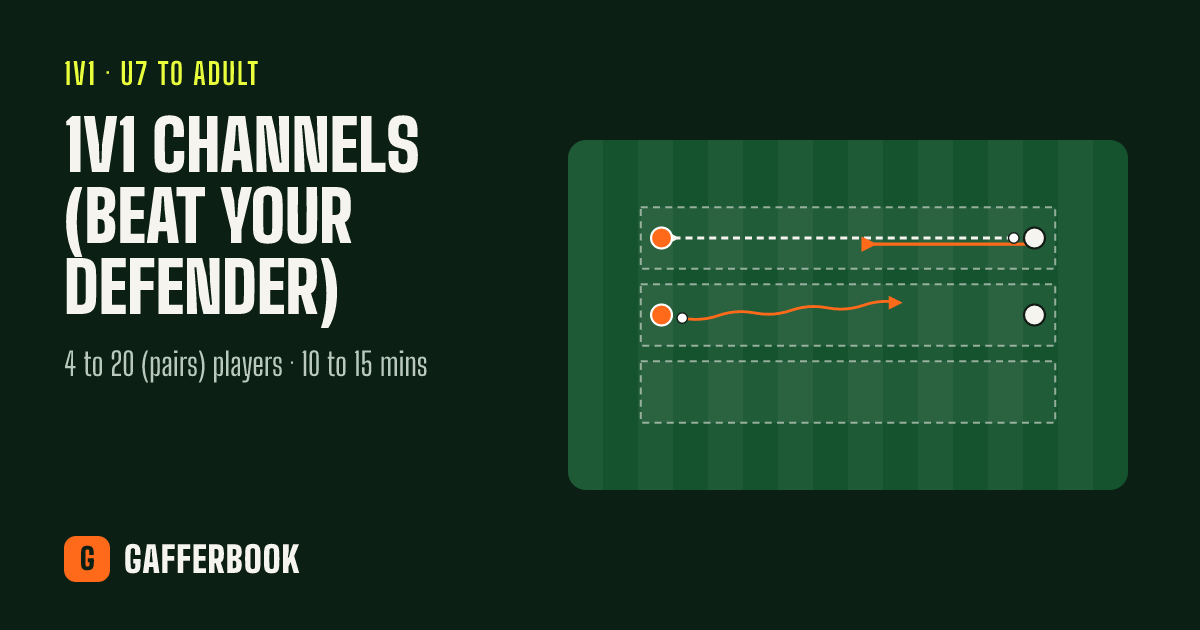 1v1 channels (beat your defender)4 to 20 (pairs) players · U7 to adult
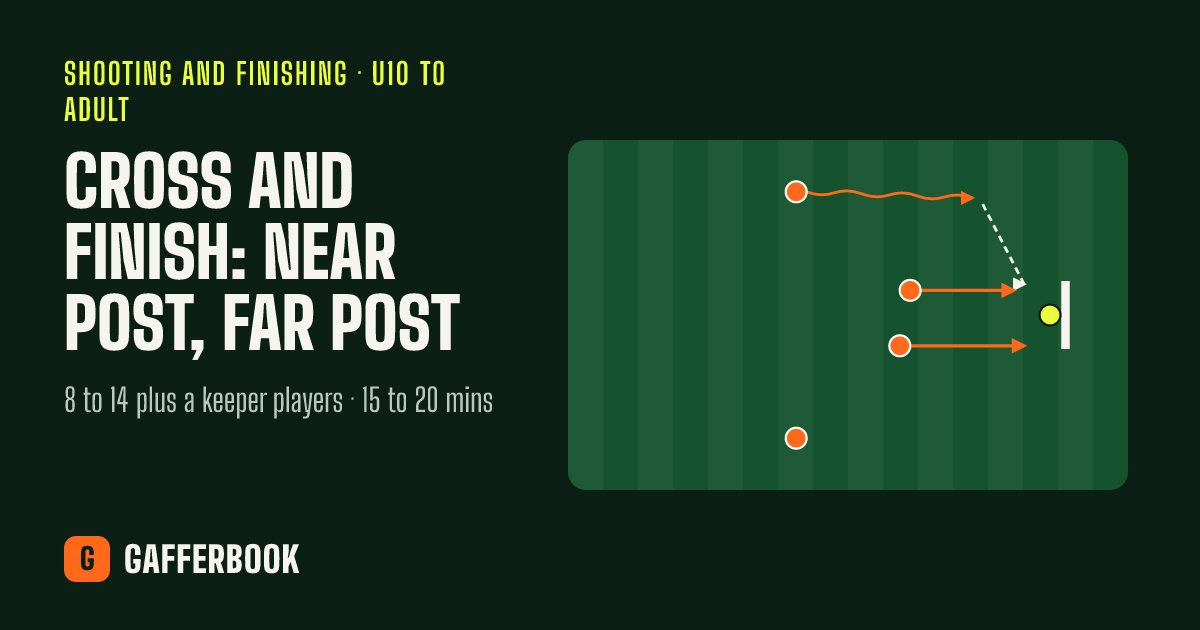 Cross and finish: near post, far post8 to 14 plus a keeper players · U10 to adult
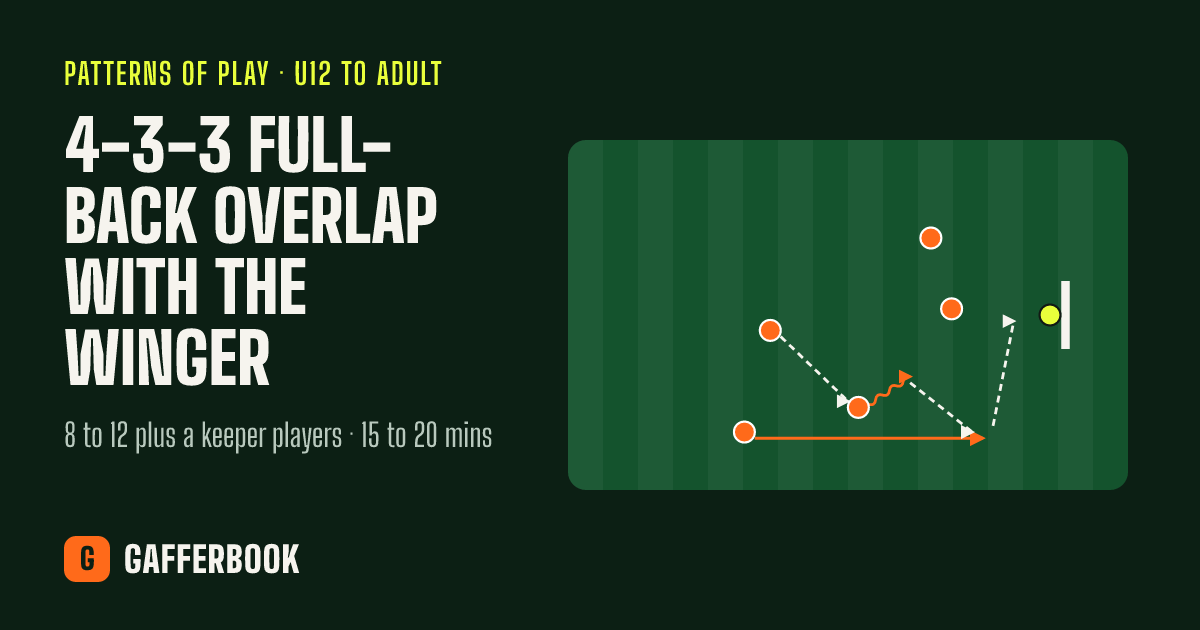 4-3-3 full-back overlap with the winger8 to 12 plus a keeper players · U12 to adult
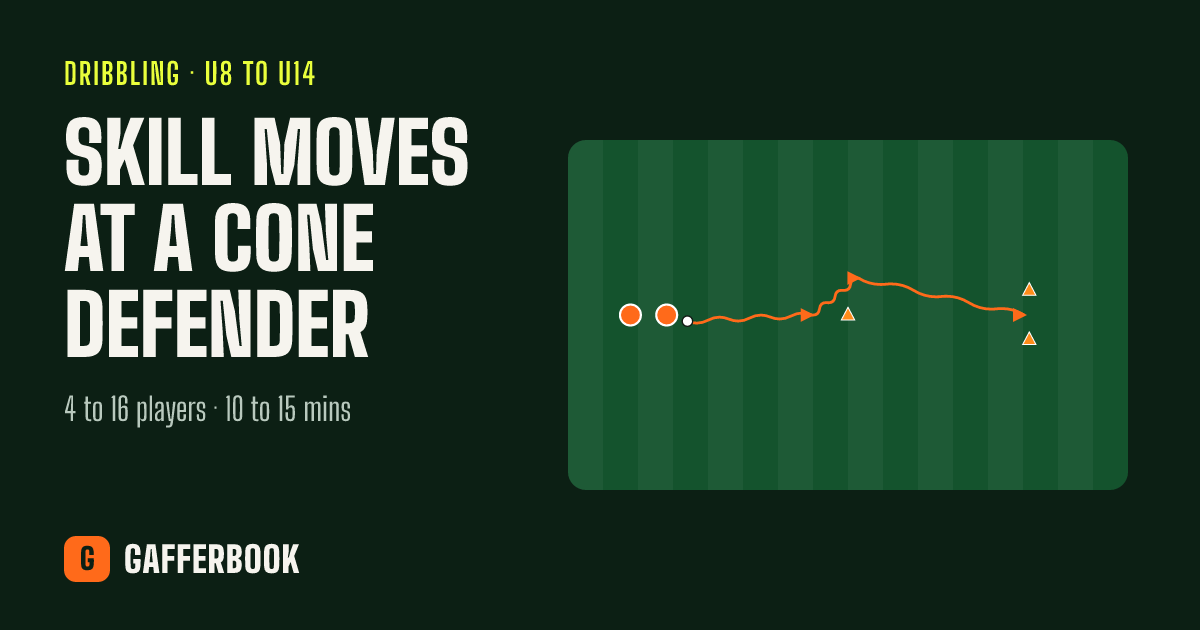 Skill moves at a cone defender4 to 16 players · U8 to U14
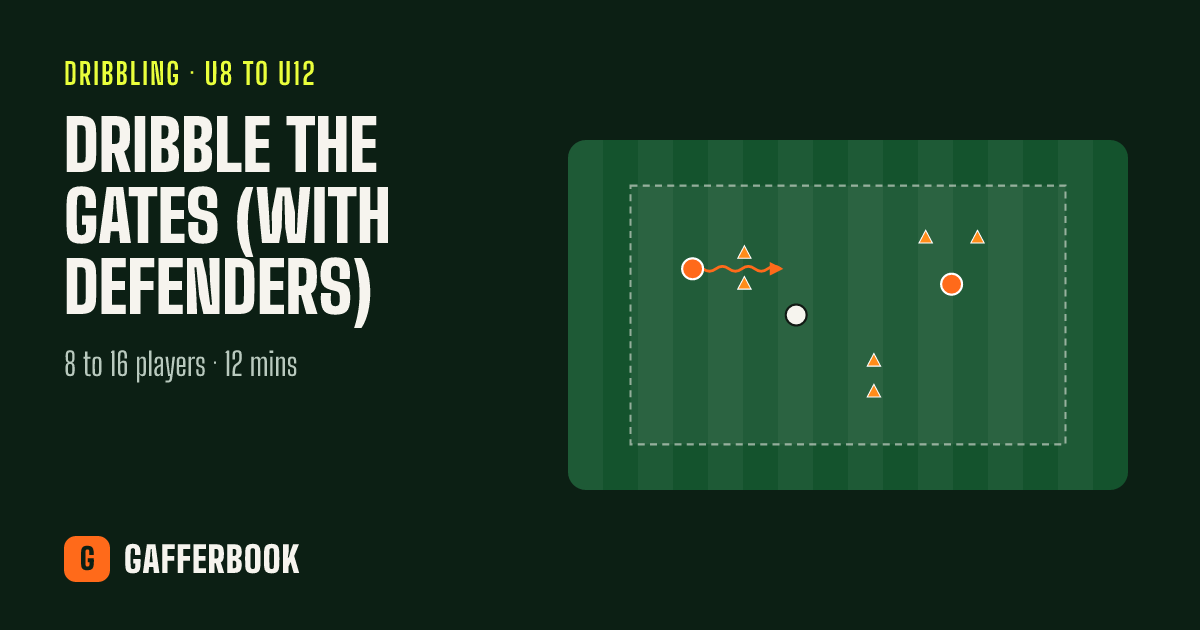 Dribble the gates (with defenders)8 to 16 players · U8 to U12
Practise at home
Drills a winger can do alone with a ball and a wall. Or follow the circuit below: timer, beeps and every station shown.
V pull-backsPull back, push away, make a V · 15 each footTarget zones on a wallCall it, hit it · 16 shotsVolleys from your own feedHead still, toes down · 10 volleys1v1 moves on a coneAttack it, fake, explode · 10 movesCrossing to a targetHead up, whip it in · 10 crosses
🔁 Winger home circuit
7 minutes · 7 stations · 40s on, 20s rest. Turn the sound on for the beeps. Clear the space first, and younger players should have an adult nearby.
Coaches: send this circuit or any home drill to a player from your team hub, and see how they got on.
Players to watch
- Mohamed Salah: Cuts in from the right onto his left foot to score.
- Lauren Hemp: Direct, quick and dangerous in 1v1s for club and country.
- Arjen Robben: Famous for cutting inside from the right and curling shots.
- Ryan Giggs: Direct running and crossing down the left over a long career.
For grassroots coaches
- Encourage 1v1s: wingers learn by trying, failing and trying again.
- Teach the back-post run as well as the cross.
- Rotate players: lots of children love the role.
Questions people ask
What is an inverted winger?
A winger who plays on the opposite side to their stronger foot, so they can cut inside and shoot, like a left-footer on the right.
What number does a winger wear?
Traditionally 7 on the right and 11 on the left.
Do wingers need to defend?
Yes: they press the opposing full-back and track runs back, especially in a 4-4-2 shape.
Other positions
Wide midfielder
A wide midfielder (left or right midfield) plays on the flank in a midfield line.
Read →Striker (number 9)
A striker (the number 9) leads the attack.
Read →Full-back
Full-backs (left-back and right-back) are the wide defenders in a back four.
Read →← All football positions · Formations · Practise at home
Ask about this position
Free AI coaching help from Gafferbook. Ask anything about coaching your team.