Modern keepers do far more than save shots. In small-sided football especially, the keeper touches the ball more than almost anyone, so being comfortable with your feet matters as much as your hands. A keeper who comes off their line to clear through balls is often called a sweeper keeper.
Goalkeeper · number 1
Goalkeeper
The goalkeeper is the last line of defence and the first attacker. They stop shots, deal with crosses, organise the defence by talking, sweep up balls played in behind, and start attacks with throws, rolls and passes. The number 1 is the only player allowed to handle the ball, inside their own penalty area.
The goalkeeper in each formation
With the ball, without it, and in transition
With the ball: Offer a safe pass behind the defenders, play out short or switch play, and choose quickly between rolling, throwing and kicking.
Without the ball: Set position as the ball moves, talk to the defence, come for crosses you can win, and stay big in 1v1s.
When the ball changes hands: When you catch it, look for the quick throw to a free player before the other team recovers. When it's lost high up, step up to sweep.
Goal kick. Centre-backs split wide; the midfielder drops between them, facing the pitch.
More boards: Defending corners
Skills a goalkeeper needs
⚽ Technical
- Handling (W and basket catches)
- Diving and getting up quickly
- Distribution with hands and both feet
🧠 Tactical
- Positioning on the angle
- Starting position for through balls
- Organising the line
💪 Physical
- Quick feet and spring
- Agility to change direction
❤️ Mental
- Bouncing back after a mistake
- Communication
- Concentration when not busy
Team drills for goalkeepers
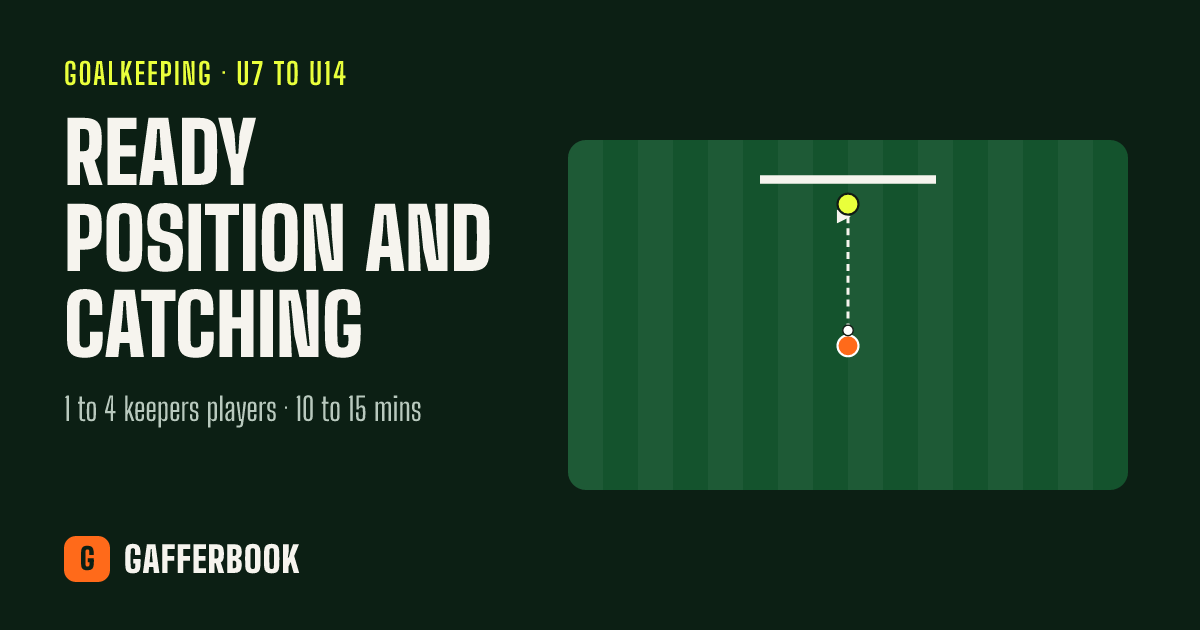 Ready position and catching1 to 4 keepers players · U7 to U14
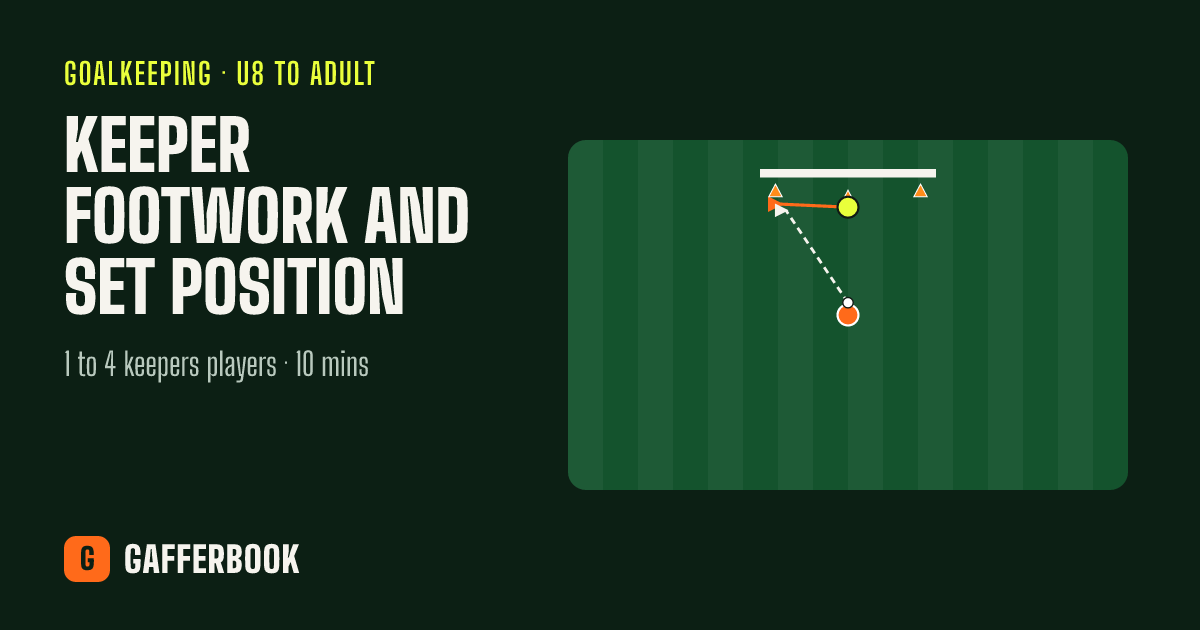 Keeper footwork and set position1 to 4 keepers players · U8 to adult
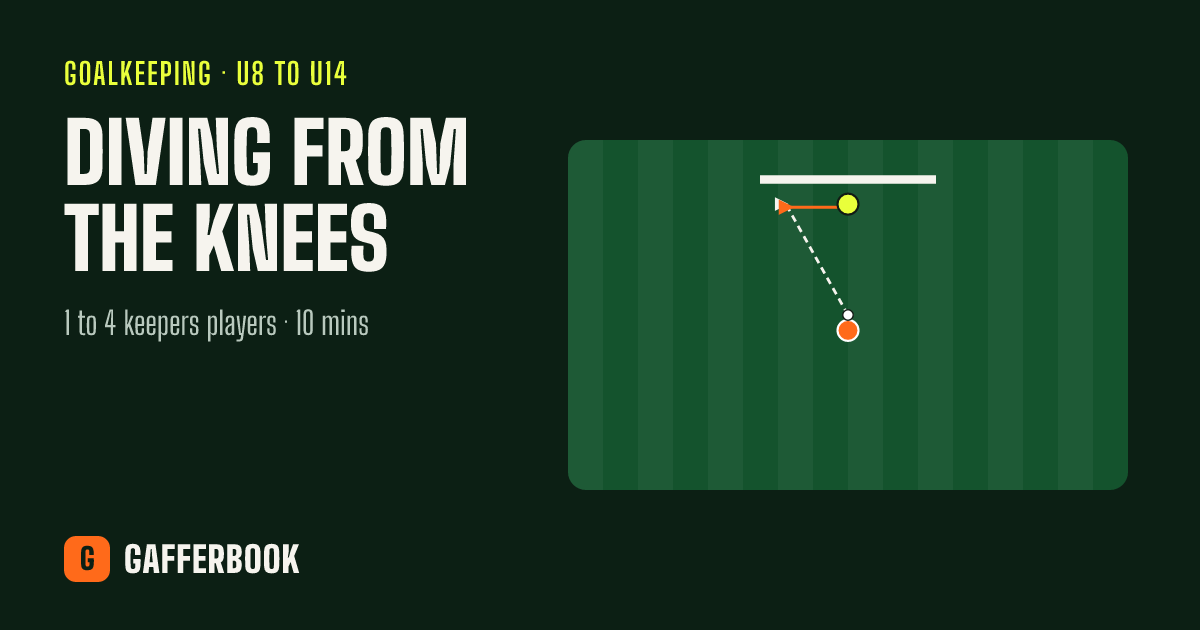 Diving from the knees1 to 4 keepers players · U8 to U14
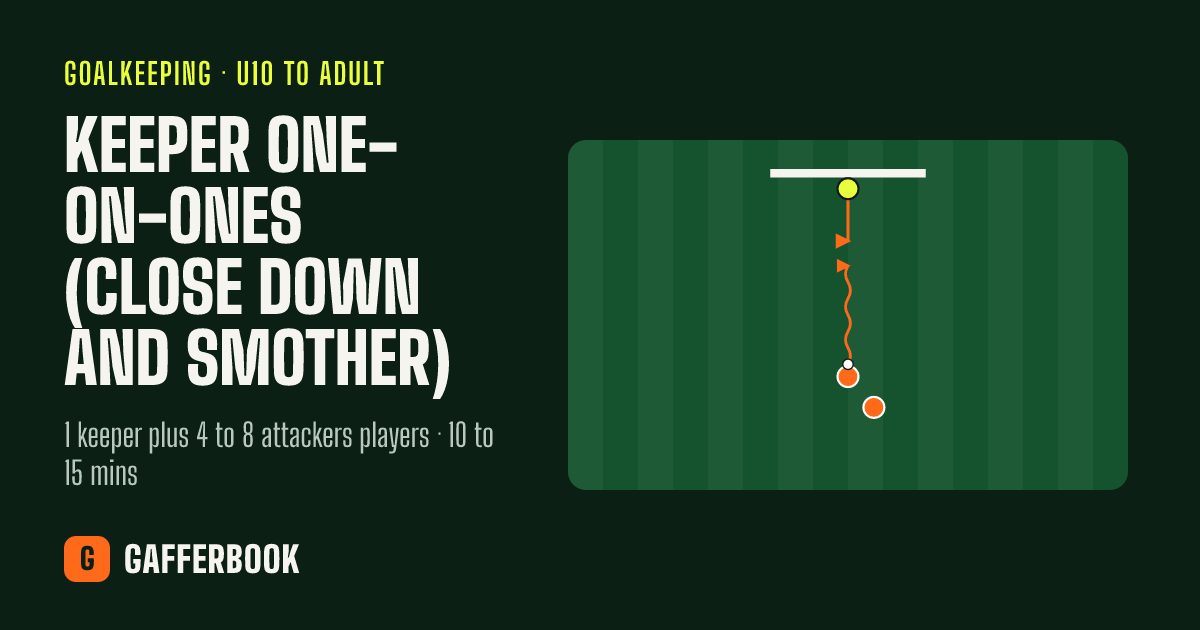 Keeper one-on-ones (close down and smother)1 keeper plus 4 to 8 attackers players · U10 to adult
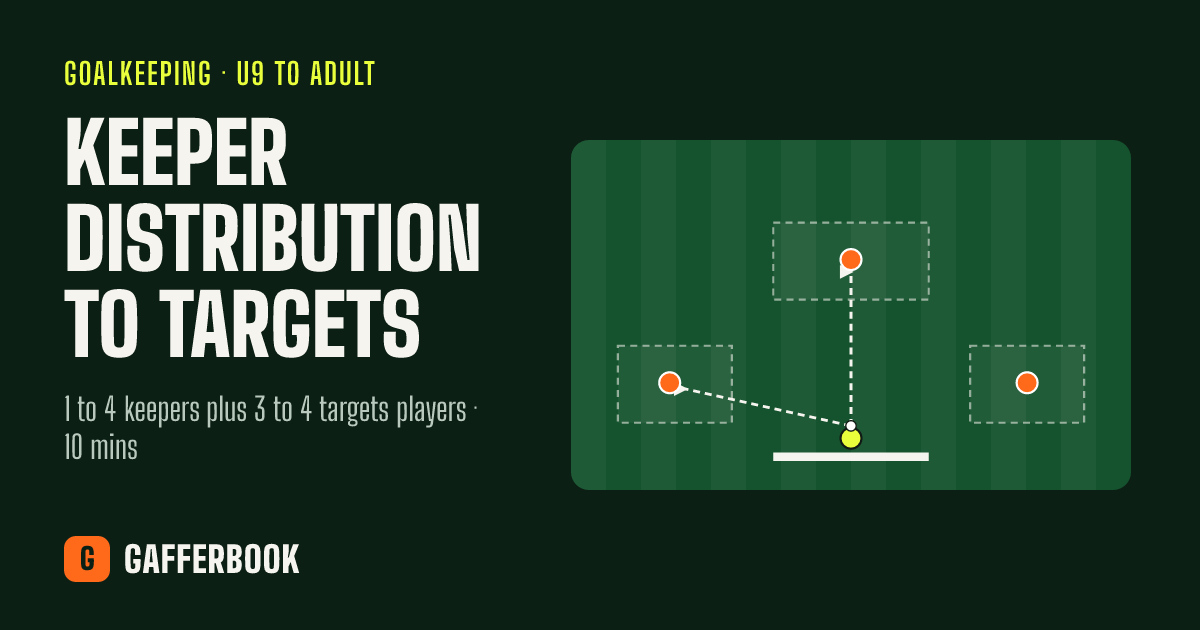 Keeper distribution to targets1 to 4 keepers plus 3 to 4 targets players · U9 to adult
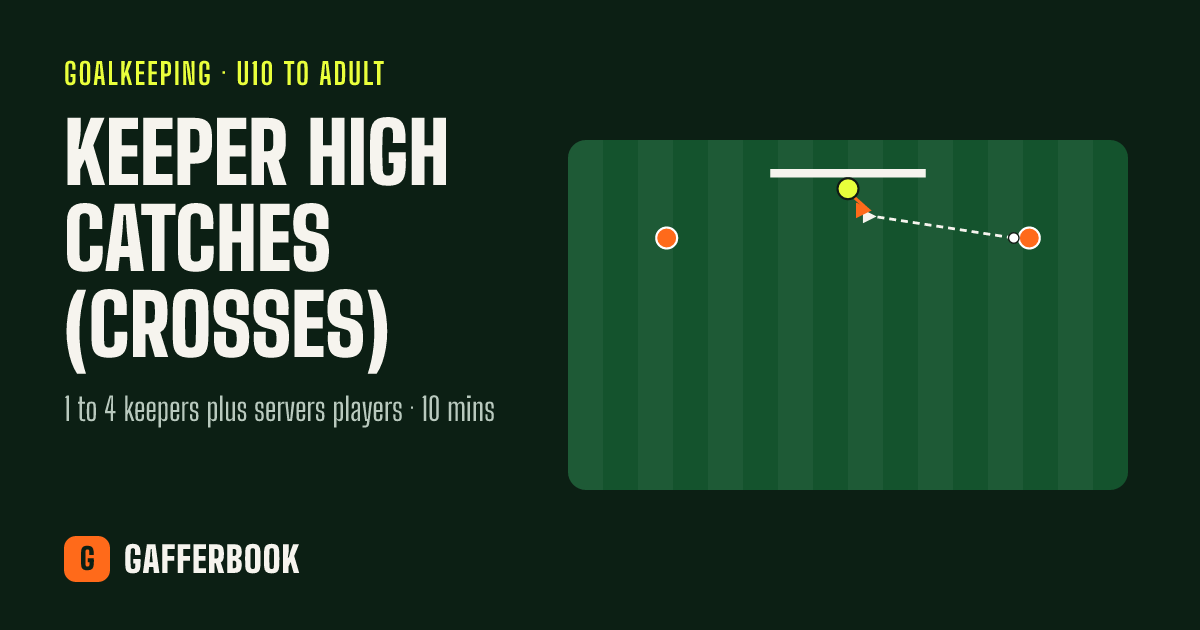 Keeper high catches (crosses)1 to 4 keepers plus servers players · U10 to adult
Practise at home
Drills a goalkeeper can do alone with a ball and a wall. Or follow the circuit below: timer, beeps and every station shown.
Two-touch wall anglesOpen up, touch across, pass · 20 passesLong pass to a targetLean back, strike through · 10 passesKeeper wall catchesReady, W, into the chest · 25 catchesKeeper footwork shuffleShuffle, set, ready · 45 secondsKeeper kicks and throws to a targetStep, aim, follow through · 10 of each
🔁 Goalkeeper home circuit
7 minutes · 7 stations · 40s on, 20s rest. Turn the sound on for the beeps. Clear the space first, and younger players should have an adult nearby.
Coaches: send this circuit or any home drill to a player from your team hub, and see how they got on.
Players to watch
- Manuel Neuer: Defined the modern sweeper keeper, starting far off his line and clearing danger outside the box.
- Mary Earps: Shot-stopping and big-game saves for England's Euro 2022 winners.
- Alisson Becker: Calm in 1v1s and quick, accurate distribution to start counter-attacks.
- Peter Schmeichel: Commanding presence, huge reach and starting attacks with long throws.
For grassroots coaches
- Rotate young players through goal so everyone tries it and nobody is stuck there.
- Keepers need outfield practice too: they're the extra passer in build-up.
- Praise the brave decisions, like coming for a cross, even when they go wrong.
Questions people ask
What does a sweeper keeper do?
A sweeper keeper stands further off their line and races out to clear through balls played behind the defence, often outside the penalty area with their feet.
Should young players play in goal every week?
Most coaching guidance recommends rotating young players through goal so everyone learns the position and nobody is stuck there.
What number does a goalkeeper wear?
Traditionally 1, with substitute keepers often wearing 12 or 13 in squad numbers.
Other positions
Centre-back
A centre-back defends the middle of the pitch in front of goal.
Read →Full-back
Full-backs (left-back and right-back) are the wide defenders in a back four.
Read →← All football positions · Formations · Practise at home
Ask about this position
Free AI coaching help from Gafferbook. Ask anything about coaching your team.