Great strikers are about movement and finishing. Most goals are scored with one or two touches inside the box, so getting into the right place at the right time matters most.
Attack · number 9
Striker (number 9)
A striker (the number 9) leads the attack. They score goals, make runs in behind, hold the ball up so team-mates can join, and press defenders when the team loses it. In a front two, strikers work as a pair; alone up front, they link play as well as finish.
The striker in each formation
With the ball, without it, and in transition
With the ball: Run in behind to stretch the defence, come short to link, and attack the near post and the space between centre-backs.
Without the ball: Lead the press: curve your run to show the ball one way.
When the ball changes hands: Be the outlet when the ball's won, and the first presser when it's lost.
Their keeper has it. Stay compact and wait for the trigger: the short pass to a centre-back.
More boards: Route one · Counter-attack
Skills a striker needs
⚽ Technical
- Finishing with both feet
- First-time shots
- Holding the ball up
- Heading (from U12 with guidance)
🧠 Tactical
- Movement in the box
- Timing runs to stay onside
- Pressing triggers
💪 Physical
- Acceleration
- Strength
❤️ Mental
- Confidence after a miss
- Composure in front of goal
Team drills for strikers
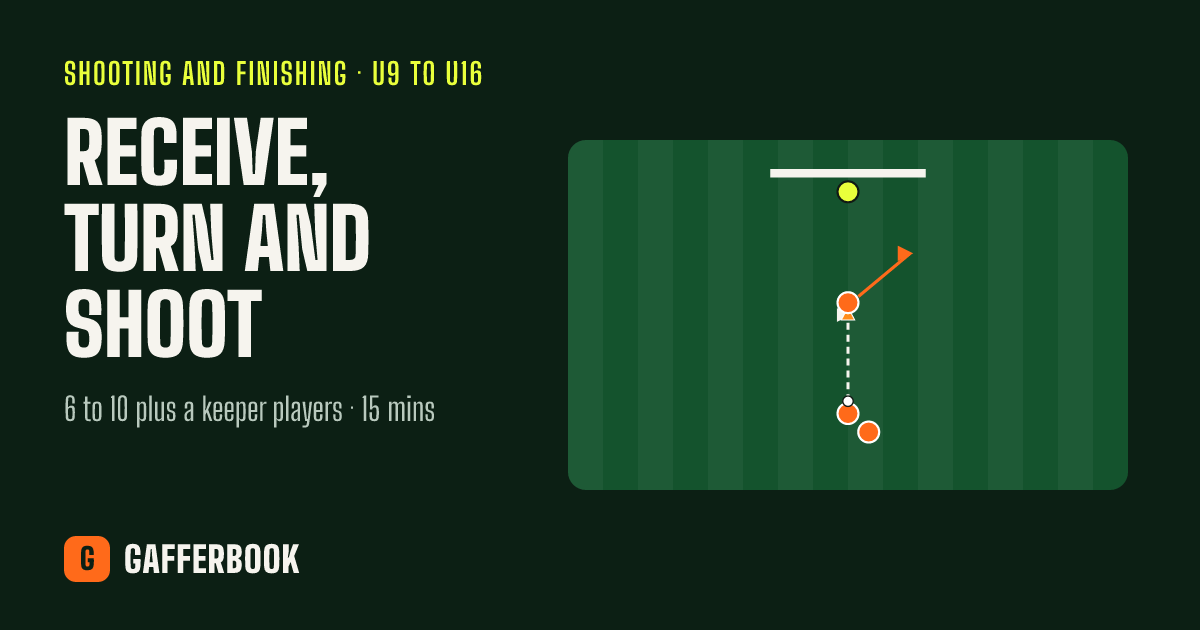 Receive, turn and shoot6 to 10 plus a keeper players · U9 to U16
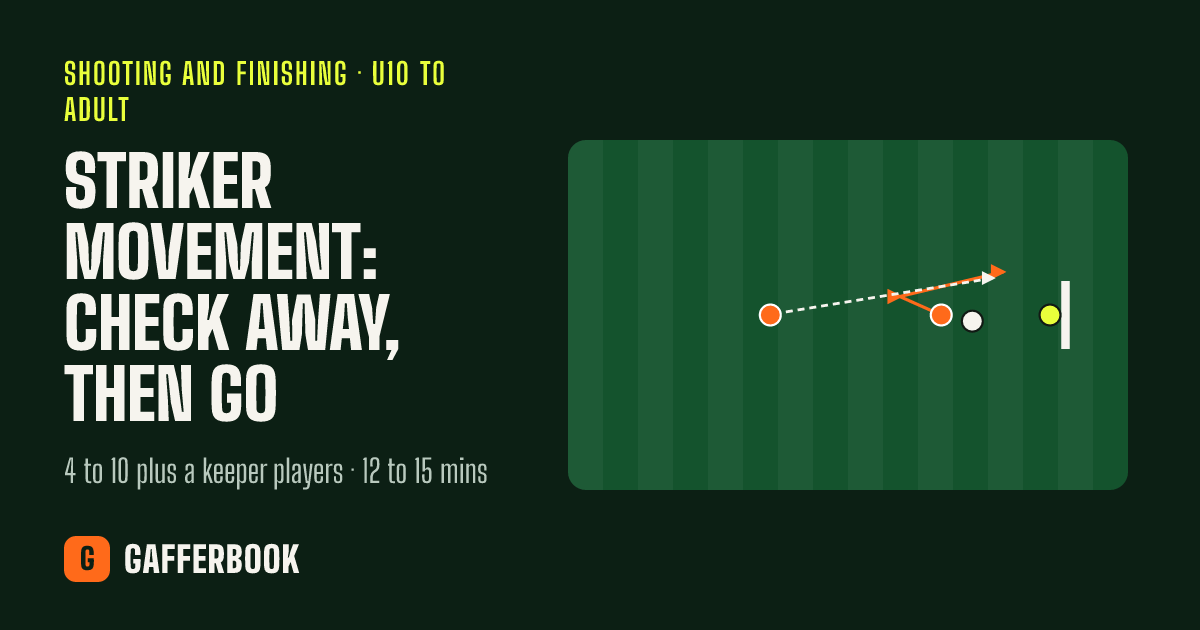 Striker movement: check away, then go4 to 10 plus a keeper players · U10 to adult
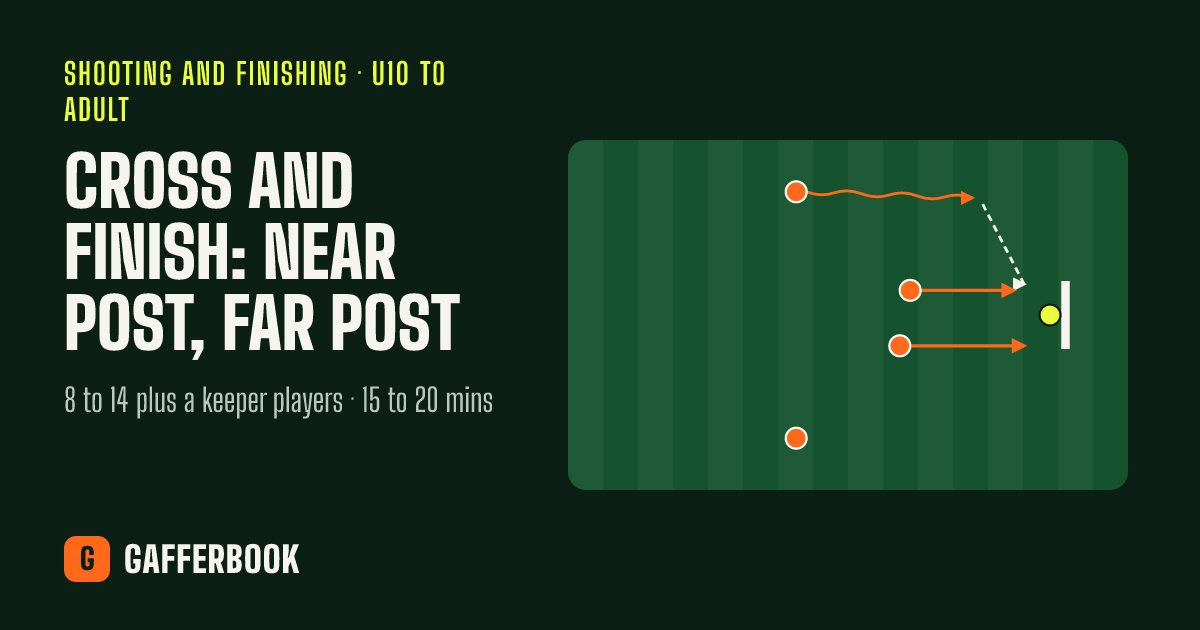 Cross and finish: near post, far post8 to 14 plus a keeper players · U10 to adult
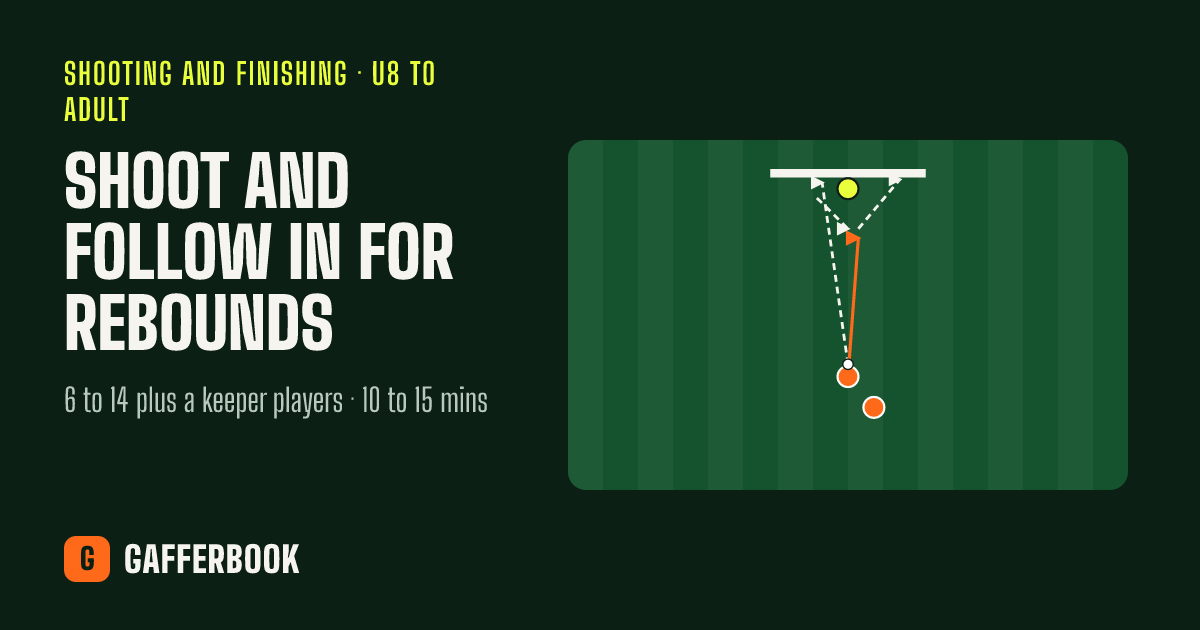 Shoot and follow in for rebounds6 to 14 plus a keeper players · U8 to adult
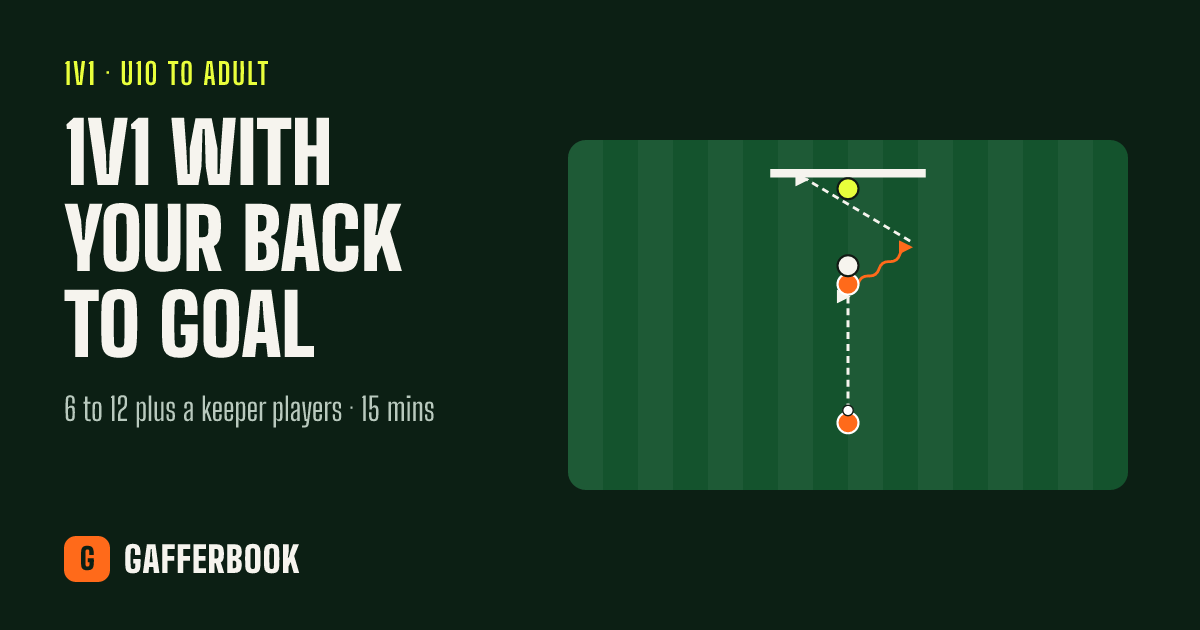 1v1 with your back to goal6 to 12 plus a keeper players · U10 to adult
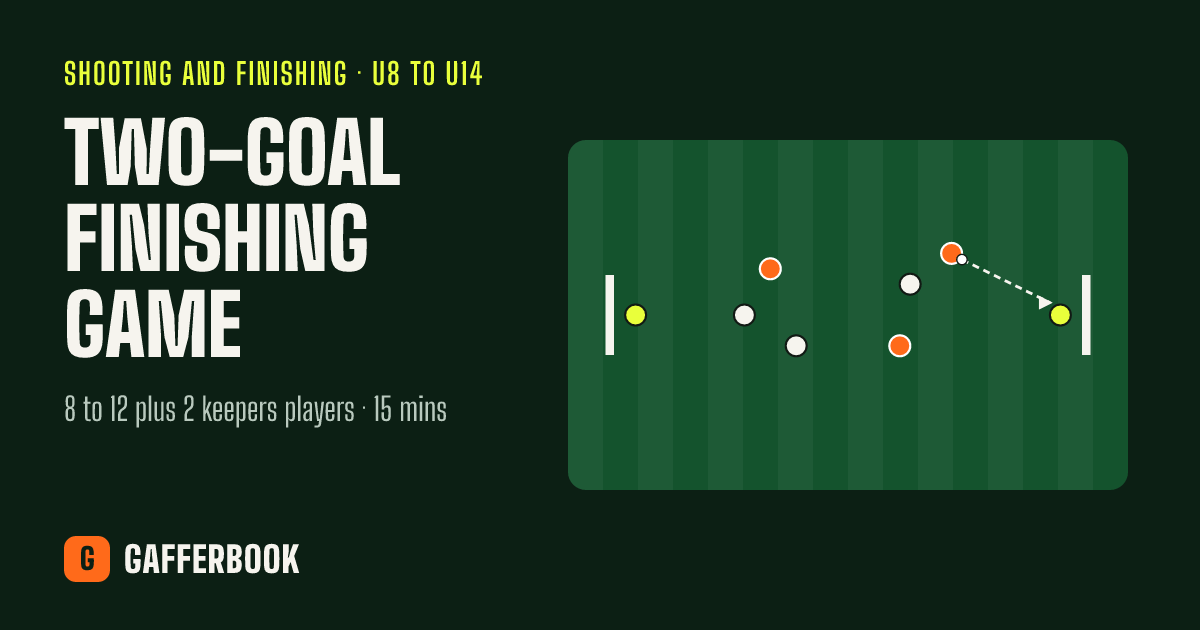 Two-goal finishing game8 to 12 plus 2 keepers players · U8 to U14
Practise at home
Drills a striker can do alone with a ball and a wall. Or follow the circuit below: timer, beeps and every station shown.
V pull-backsPull back, push away, make a V · 15 each footReceive and turn off the wallSide-on, receive, turn · 12 turnsTarget zones on a wallCall it, hit it · 16 shotsTurn and shootCheck, turn, shoot · 10 shotsVolleys from your own feedHead still, toes down · 10 volleys1v1 moves on a coneAttack it, fake, explode · 10 moves
🔁 Striker home circuit
7 minutes · 7 stations · 40s on, 20s rest. Turn the sound on for the beeps. Clear the space first, and younger players should have an adult nearby.
Coaches: send this circuit or any home drill to a player from your team hub, and see how they got on.
Players to watch
- Alan Shearer: Powerful finishing and heading: the Premier League's record scorer.
- Harry Kane: Scores and creates, dropping deep to link play as well as finishing.
- Alessia Russo: Clever movement and finishing for England's strike force.
- Erling Haaland: Explosive runs in behind and ruthless first-time finishing.
For grassroots coaches
- Count shots, not just goals: praise the striker who keeps shooting.
- Teach movement: near post, far post and between the centre-backs.
- Rotate the role: lots of children want to score.
Questions people ask
What's the difference between a striker and a centre-forward?
They're used almost interchangeably. Some use centre-forward for a striker who also links play and holds the ball up.
What number does a striker wear?
Traditionally 9, with 10 often worn by a second striker or attacking midfielder.
How can a striker improve finishing?
Lots of shots in practice, both feet, first-time finishes, and working on movement so you get chances in the first place.
Other positions
False 9
A false 9 starts as the centre-forward but drops deep into midfield instead of staying high.
Read →Winger
A winger plays high and wide on the flank.
Read →Attacking midfielder (number 10)
An attacking midfielder (CAM, the number 10) plays between the opponent's midfield and defence.
Read →← All football positions · Formations · Practise at home
Ask about this position
Free AI coaching help from Gafferbook. Ask anything about coaching your team.