GK LB LCB RCB RB DM LCM RCM LW ST RW ‹ ▶ Play Step 1 of 4 ›
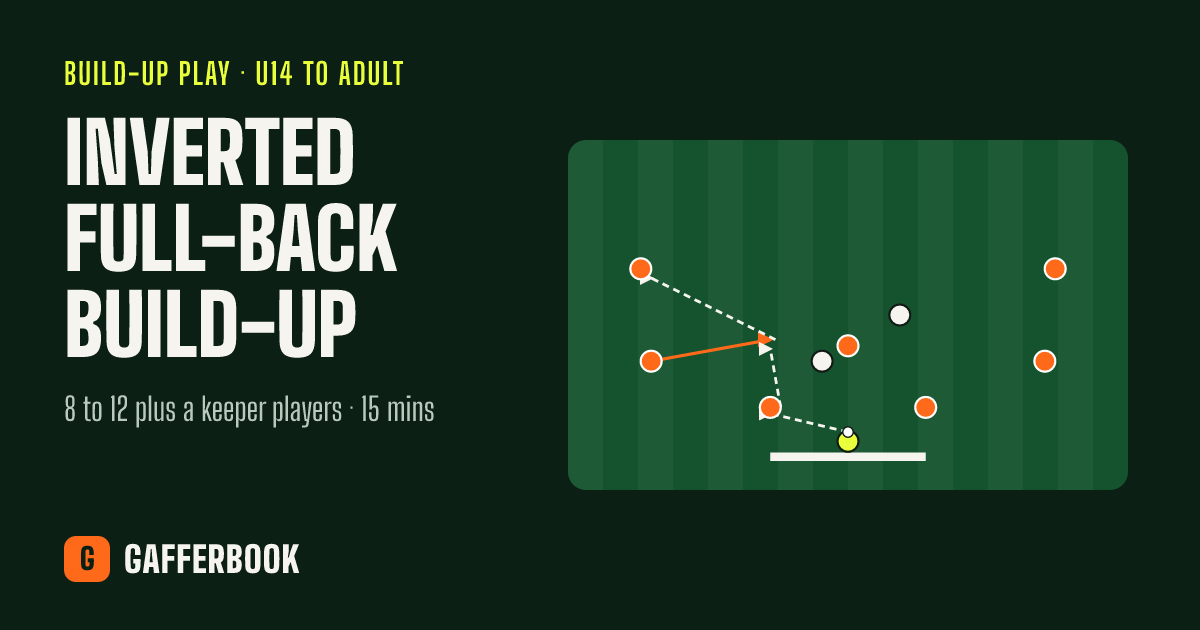
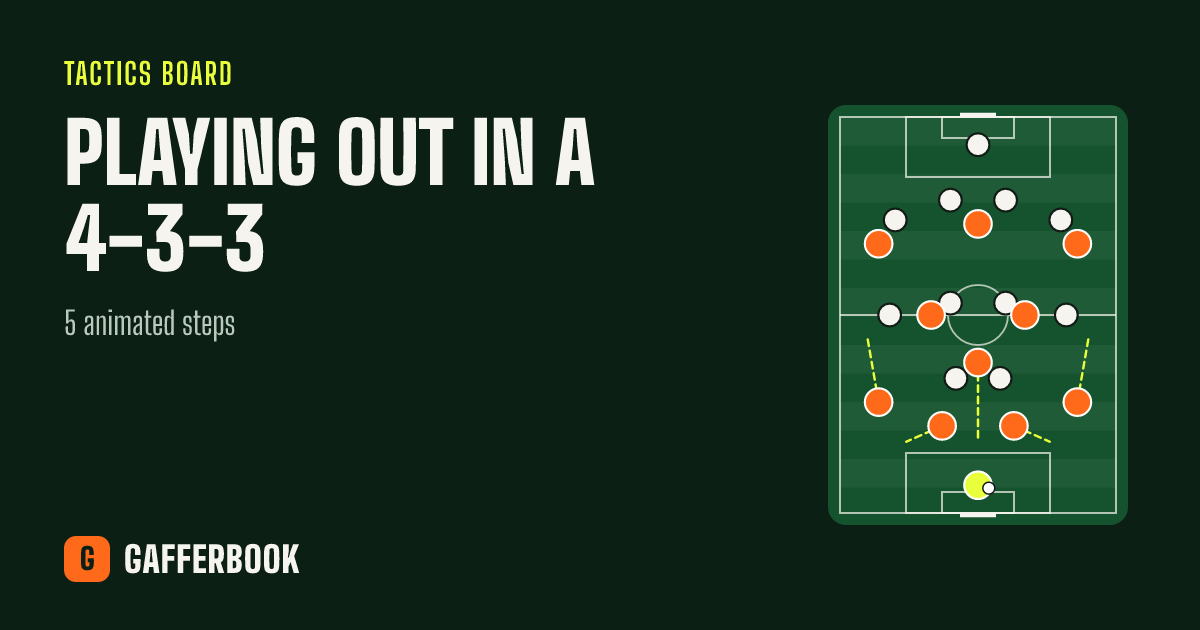
We have it at the back. Our left-back is about to step inside.
Drawn for 11v11 4-3-3. Pick your own format and shape and every step is redrawn for your players. Then present it or send it to your team.
Step by step We have it at the back. Our left-back is about to step inside. Left-back moves into midfield next to the 6. The other three make a back three; the 8 moves higher. Centre-back finds the inverted full-back, who receives facing forward in the middle. Their wide midfielder came inside to follow, so our winger is free wide. When to use it When your wingers like to stay wide, when the middle is crowded, or when your team keeps getting hit on the counter through the middle.
Coaching points In possession, the full-back steps inside next to the holding midfielder. The other three defenders make a back three. The winger on that side holds the width; the 8 moves higher into the half-space. The inverted full-back receives facing forward and plays into the 8 or winger. When the ball is lost, they're already in the middle to stop the counter. Who does what Position Their job Inverted full-back Steps inside, receives centrally, passes forward. Back three The other full-back and centre-backs spread across. Holding midfielder Partners the inverted full-back in a 2. Winger Stays wide. 8 Pushes higher into the half-space.
When they change it If they… You… Their winger follows our full-back inside Our winger is now free out wide. Their striker blocks the middle Our centre-back carries it forward. They press high Full-back goes back to the normal position for an easier pass wide.
Common mistakes Inverting with nobody holding the width. The 8 staying deep, so three players are in the same area. The full-back drifting inside without checking the shoulder. At 7v7, 9v9 and 11v11
7v7 In a 3-2-1, a wide defender can step into midfield the same way.
9v9 In a 3-2-3, the wide centre-back can step into midfield.
11v11 The board: a 4-3-3 with the left-back stepping inside. See the full 11v11 4-3-3 formation guide for the shape, positions and drills.
Drills to practise it Questions coaches ask What is an inverted full-back? A full-back who moves inside into midfield when the team has the ball, instead of going up the touchline.
Why use inverted full-backs? More passers in the middle, better protection against counters, and space for the winger to stay wide.
Is it too complicated for grassroots teams? Not for older youth teams. Keep it to one simple rule: when our centre-back has the ball, step inside next to the 6.
More tactics boards ← All tactics boards · Formations · Drills