GK LB LCB RCB RB DM LCM RCM LW ST RW ‹ ▶ Play Step 1 of 3 ›
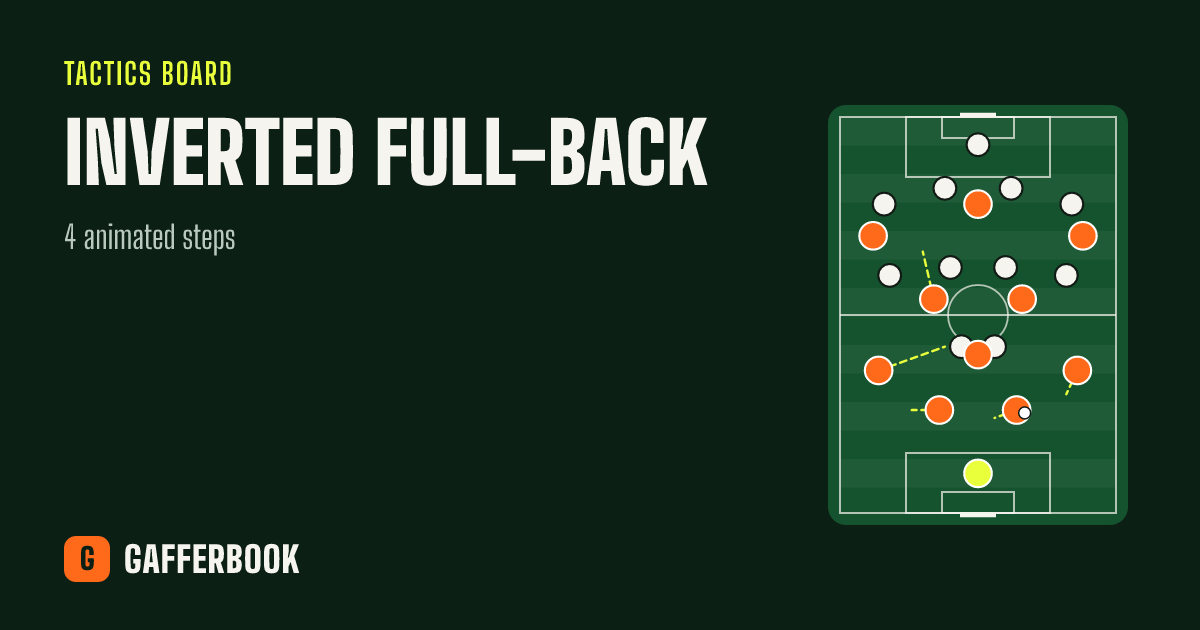
We're attacking down the right. Behind the ball: two centre-backs, the 6 and the left-back, close to their two strikers.
Drawn for 11v11 4-3-3. Pick your own format and shape and every step is redrawn for your players. Then present it or send it to your team.
Step by step We're attacking down the right. Behind the ball: two centre-backs, the 6 and the left-back, close to their two strikers. We lose it. They try the quick pass forward to their striker. Our centre-back steps in front and wins it. No counter, and we attack again. When to use it Every attack. The more players you commit forward, the more organised the rest defence must be.
Coaching points Agree who stays: usually two centre-backs and the holding midfielder, plus one full-back. Stand close to their forwards, on the goal side, ready to step in front. Keep more rest defenders than they have forwards: one extra player. Stay connected to the attack, around 20 to 30 metres behind it, so you can win second balls. When the ball is lost, step in and win it, or delay until help arrives. Who does what Position Their job Centre-backs Watch their strikers, ready to step in front. Holding midfielder Screens the middle, wins second balls. Full-back (one) Stays to make the extra player. Attackers Counter-press when the ball is lost.
When they change it If they… You… They leave three forwards up Keep four in rest defence: both full-backs stay. They leave one forward Commit more players forward. Their striker is quick Rest defence stands a step deeper on that side.
Common mistakes Everyone joining the attack. Rest defenders standing far from their forwards. Rest defence too deep, leaving a big gap to the attack. At 7v7, 9v9 and 11v11
7v7 One or two defenders stay; the keeper sweeps.
9v9 In a 3-2-3, two of the back three plus a midfielder stay.
11v11 The board: a 4-3-3 with two centre-backs, the 6 and the left-back in rest defence. See the full 11v11 4-3-3 formation guide for the shape, positions and drills.
Drills to practise it Questions coaches ask What is rest defence? The players who stay behind the ball while the team attacks, positioned to stop the counter-attack.
How many players should be in rest defence? Usually one more than the number of forwards the opponent leaves up.
Is rest defence just for professionals? No. Any team that keeps conceding on the counter benefits from agreeing who stays back.
More tactics boards ← All tactics boards · Formations · Drills