Updated 9 November 2026 · Written for grassroots coaches by Gafferbook
When players don't listen, the fix is usually the session, not the children. Talk for under 30 seconds, show rather than tell, use one attention signal, keep everyone active with no queues, and agree a few simple team rules together. Praise the players who are listening.
Why it happens
Children switch off when they're waiting, when explanations are long, or when an activity is too easy or too hard. Most behaviour problems at training are really boredom problems.
It helps to look at your own session first: how long were they standing still? How many were waiting in a line?
Quick fixes that work
- Keep talks short: one demonstration, one sentence, then go. Coach during the game, not before it.
- Use an attention signal: "hands on heads" or "1, 2, 3, eyes on me". Practise it as a game.
- No queues: smaller groups, more balls, more goals. See our small-sided games.
- Talk with the ball still: "foot on the ball" before you speak, so nobody's tempted to kick it.
- Give jobs: the restless child can set up cones, count passes or be the captain for a game.
Agree team rules together
Ask the players what makes training good, and write down three or four rules they suggest, such as "listen when the coach talks" and "help each other". Children stick to rules they made.
Be consistent: a calm reminder, then sitting out a minute if needed, then straight back in. Never take away a whole game from the group for one player.
When it's one child
Have a quiet word away from the group, find out what's going on, and give them responsibility. If you're worried about something beyond football, speak to your club welfare officer.
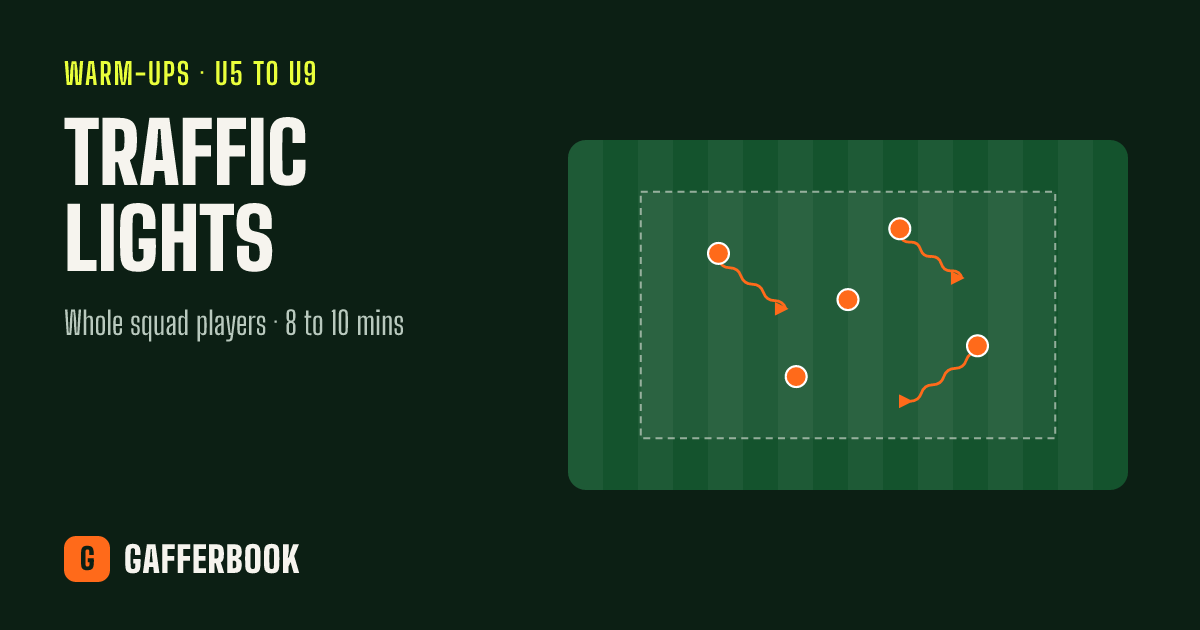 Traffic lights
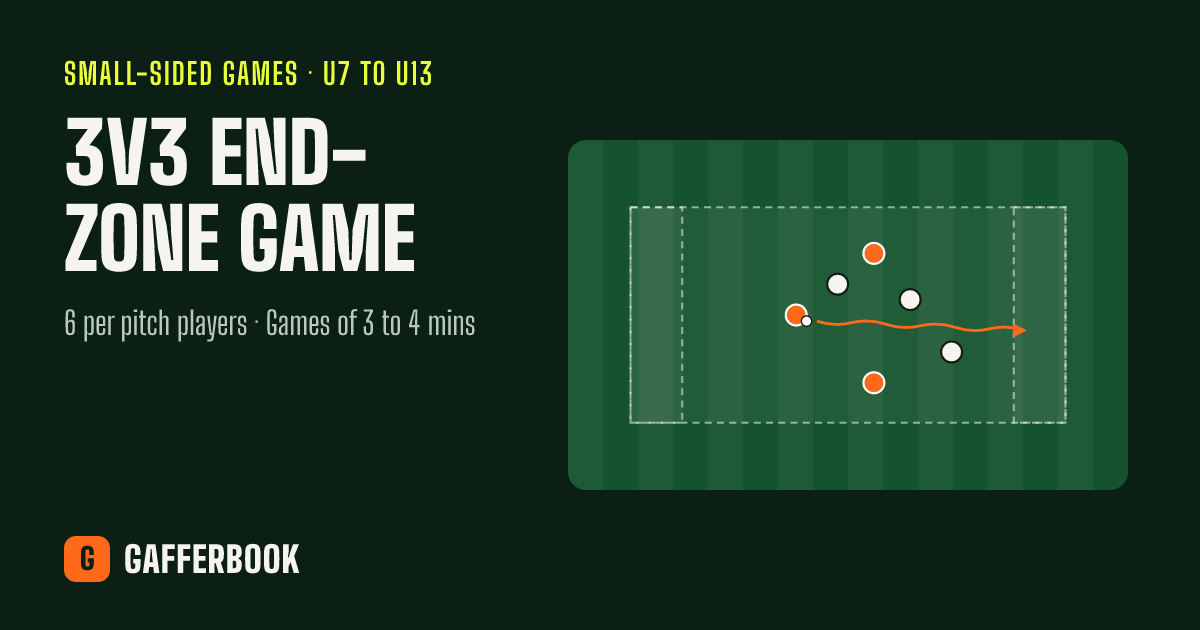 3v3 end-zone game
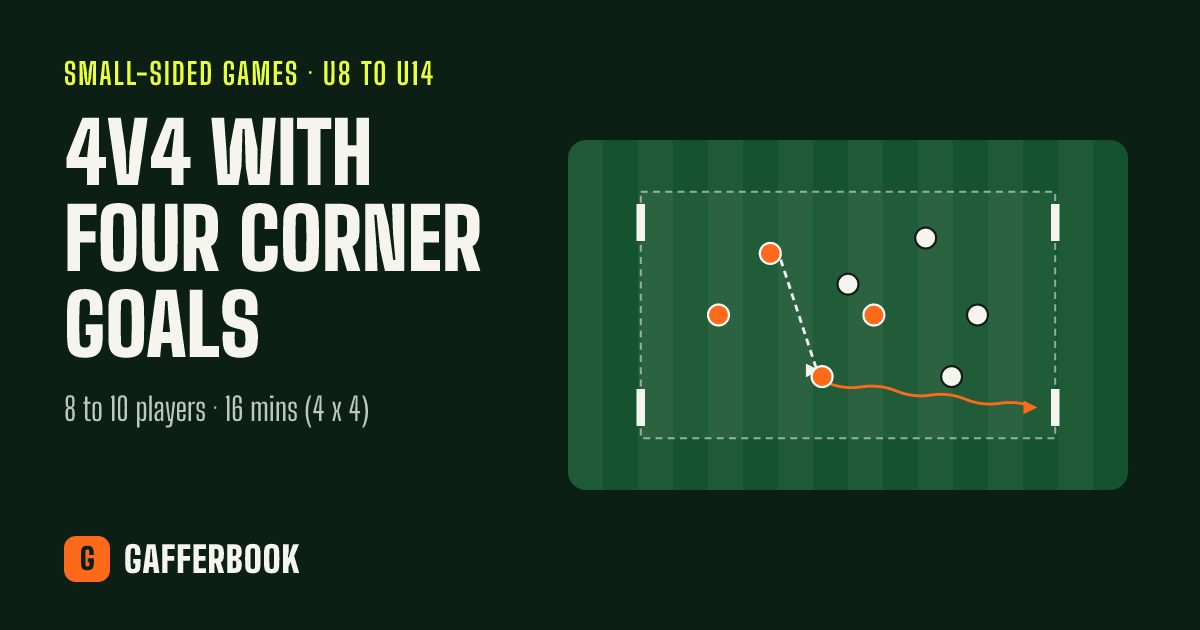 4v4 with four corner goals