Updated 9 November 2026 · Written for grassroots coaches by Gafferbook
U9s stay focused when they're busy, so give everyone a ball, swap lines and queues for small games, and keep each activity to about ten minutes. Talk for less than a minute at a time, set one simple challenge per game, and finish with a match. Most lost focus is a session problem, not a child problem.
Why U9s switch off
Eight-year-olds want to play. Their attention is short, they learn by doing, and they get restless fast when they're waiting. If a group is messing about, it's usually because they're standing still, a game is too easy or too hard, or someone has been talking for too long.
That's good news, because those are all things you control. Change the session and the behaviour usually follows.
Keep everyone moving
- A ball each for warm-ups and skill work. Ball mastery and dribbling through gates keep every child busy at once.
- No queues longer than two or three. If you've got a line of six, split into two smaller groups or turn it into a game.
- Small-sided games over big ones: 2v2 to four goals gives everyone dozens of touches in a few minutes.
- Have the next activity set up before the current one ends, so there's no dead time while you move cones.
Talk less, and make it count
Aim for under a minute each time you stop them. Get them close, in a semicircle with their backs to anything distracting, and give one point, not three. Then get them playing again.
Questions work better than instructions: "How could we get past the defender?" A child who works out the answer pays attention because it's their idea.
Short blocks with a challenge
Plan in blocks of eight to twelve minutes and change the game or add a twist before interest drops. Give each game one clear challenge: "Can you score with your weaker foot?" or "How many passes before we score?" Challenges with a score or a target hold attention far better than open-ended practice.
Games with a bit of competition work brilliantly at this age: bib tails tag to start, and a World Cup finishing game to finish. Keep teams mixed so the same children don't always win.
Routines they can rely on
The same shape of session every week helps U9s settle: arrive and play straight away, a warm-up game, one or two practices, then a match to finish. They know what's coming, there's less fuss, and the match at the end is something to work for.
Agree two or three simple rules with them at the start of the season, such as "ball under your foot when the coach talks". Children stick to rules they helped make.
When one child keeps losing focus
Give them a job: setting out goals, showing a skill, being captain for a game. Keep them close to you during talks and use their name positively. Check the activity suits them, because a player who finds it too hard or too easy will drift. If it carries on, have a quiet word with their parent, framed around helping them enjoy it more, not as a complaint.
A ready-made 60-minute U9 session
- 0 to 10 minutes: arrival game and bib tails tag.
- 10 to 25: ball mastery, then dribble the gates with defenders.
- 25 to 40: 2v2 to four goals, changing pairs every three minutes.
- 40 to 60: a match, with one challenge from the session.
Or let the session planner build one for your numbers and focus.
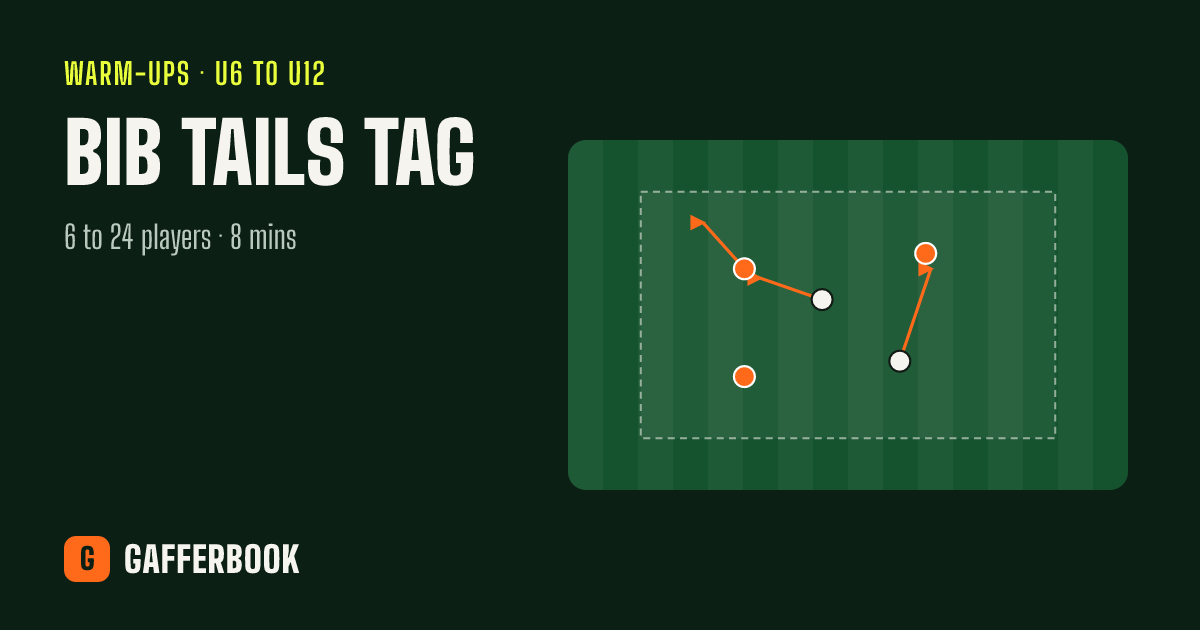 Bib tails tag
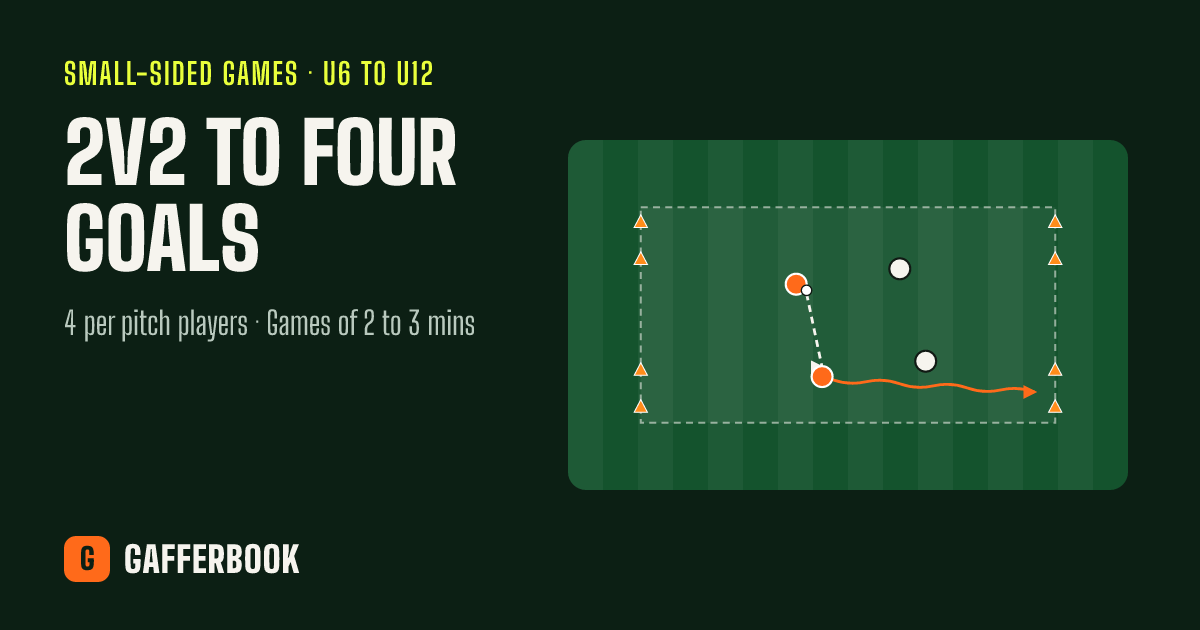 2v2 to four goals
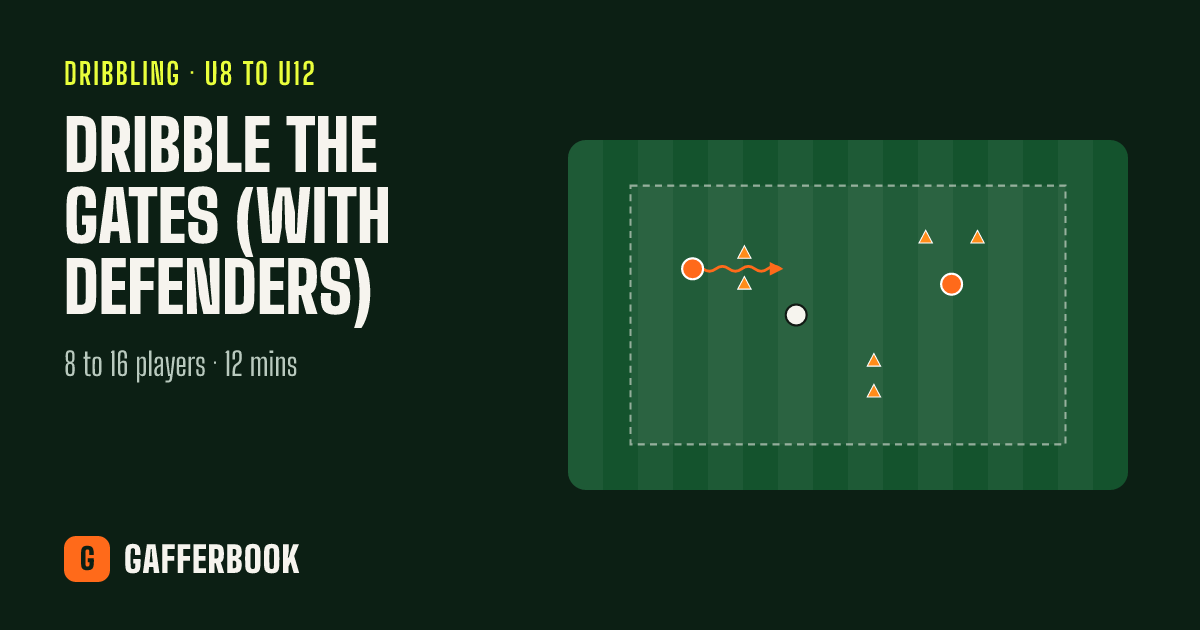 Dribble the gates (with defenders)
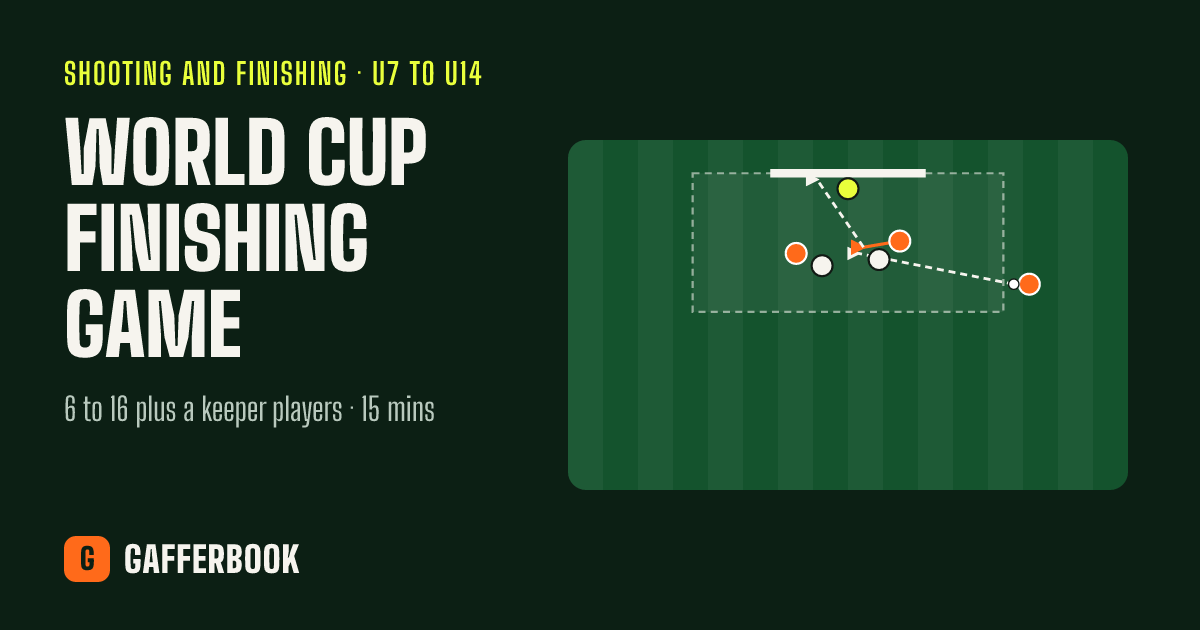 World Cup finishing game