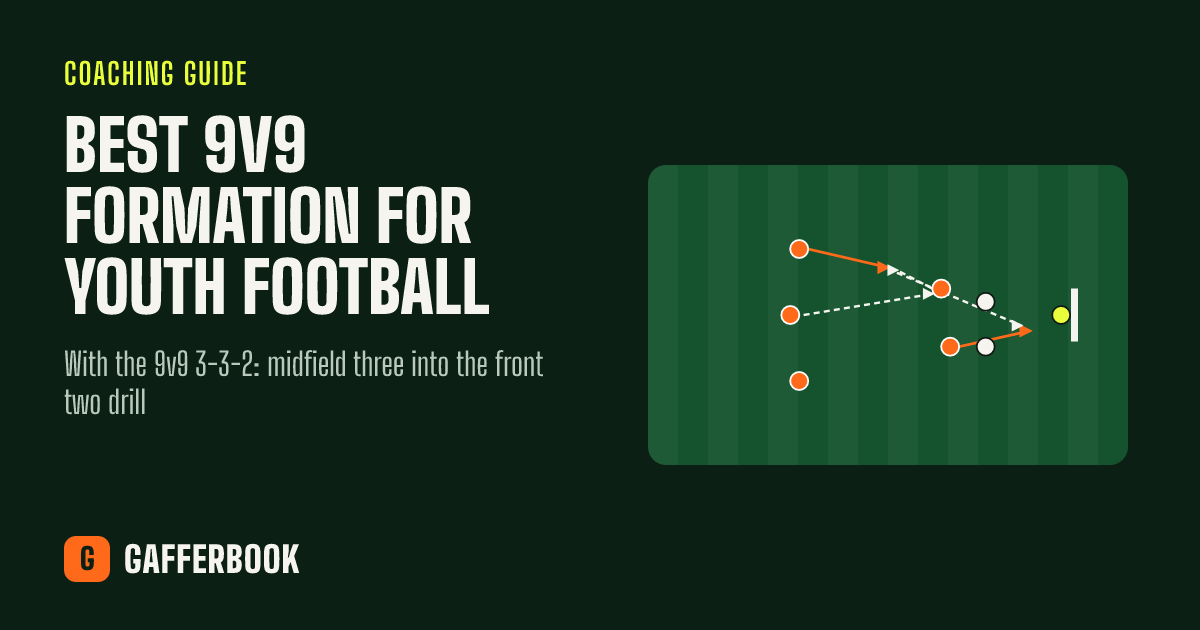
Updated 9 November 2026 · Written for grassroots coaches by Gafferbook
For most youth teams, 3-3-2 is the best starting 9v9 formation: three at the back give cover, three midfielders cover the width, and two strikers work as a pair. 3-2-3 suits teams with quick wingers, 2-4-2 suits strong midfielders, and 3-4-1 suits a team that likes the ball.
The main 9v9 shapes
- 3-3-2: balanced and easy to learn. Two banks of three, two strikers.
- 3-2-3: a front three with wingers. Great for pressing high and attacking wide, but the midfield two must work hard.
- 2-4-2: a flat four in midfield. Strong in the middle, but only two at the back.
- 3-4-1: wide midfielders act like wing-backs. Good for keeping the ball; needs a striker who can hold it up.
How to choose
Start from your players, not the formation. Fast wide players? Try 3-2-3. Lots of midfielders who like the ball? 3-4-1. New to 9v9? 3-3-2 is the easiest step up from 7v7 because it keeps a familiar back three.
Whatever you pick, rotate positions so players learn the whole pitch. Use compare formations to see two shapes side by side.
Moving up from 7v7
The pitch gets bigger, so spacing matters more. Teach the back three to split wide when the keeper has it, and get midfielders showing between the lines. The tactics board lets you show the shape with and without the ball before the season starts.
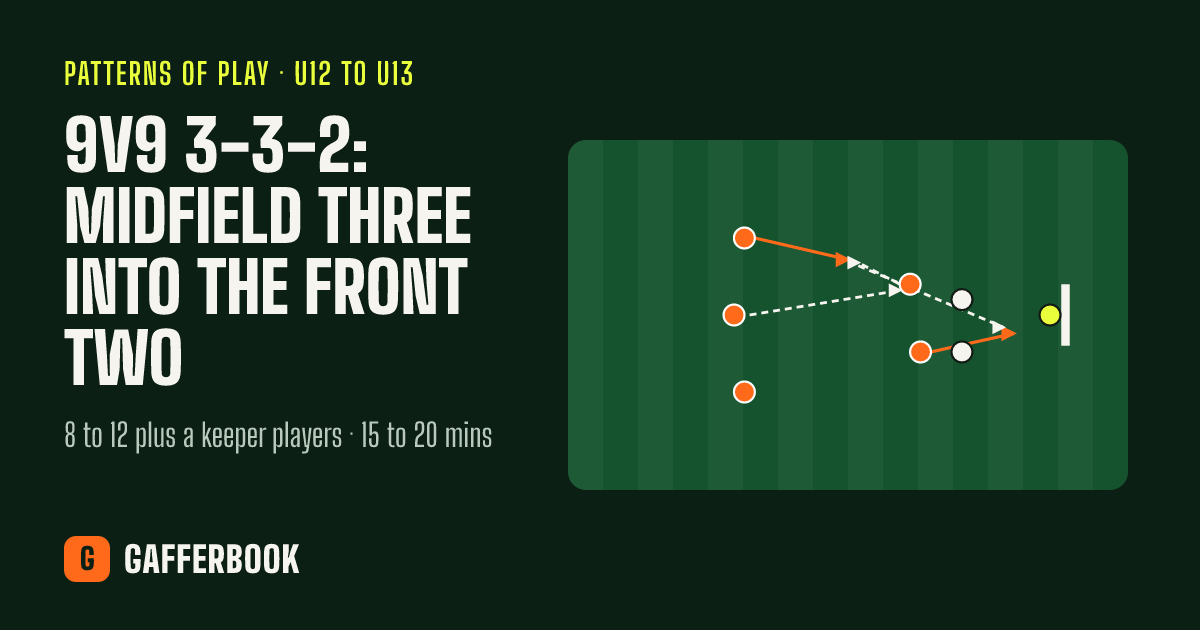 9v9 3-3-2: midfield three into the front two
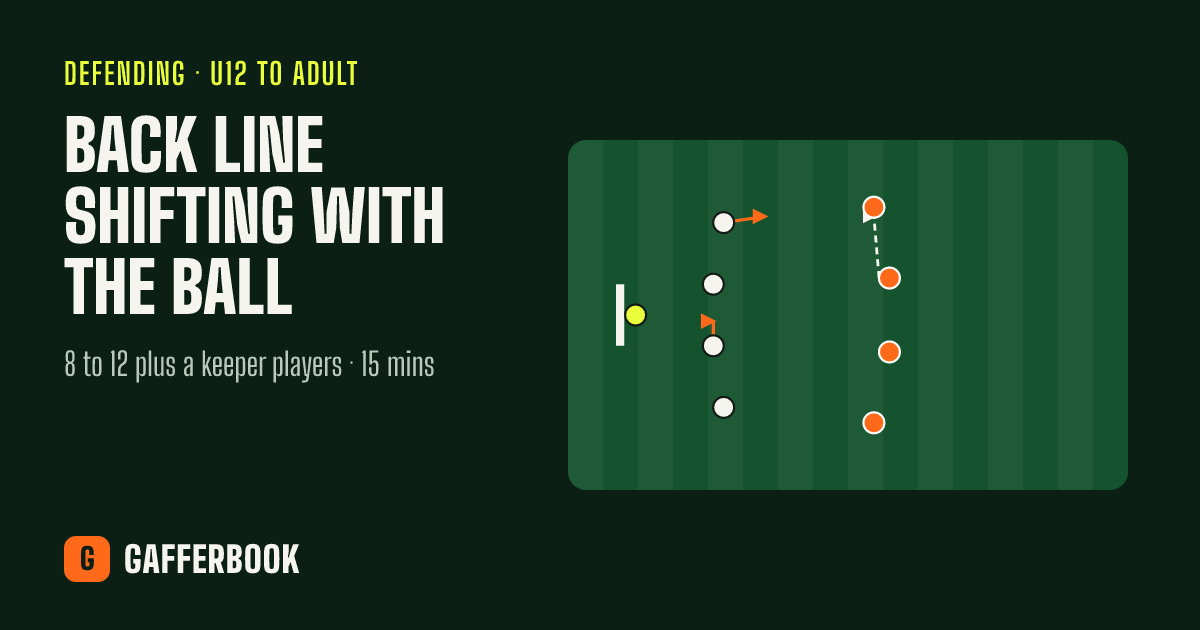 Back line shifting with the ball
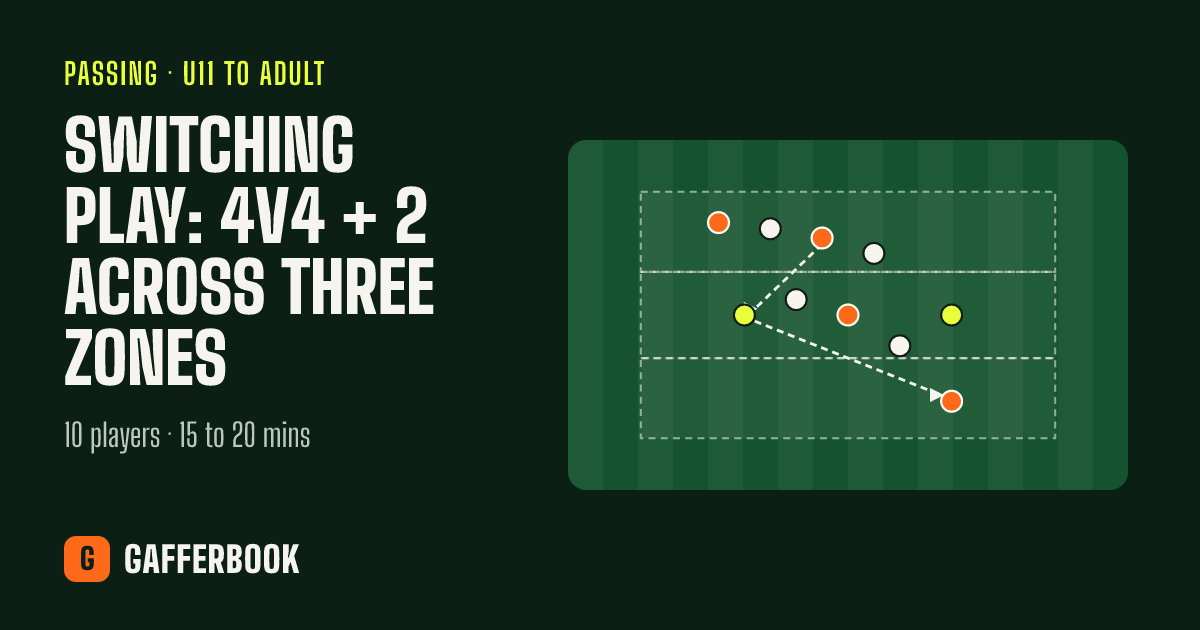 Switching play: 4v4 + 2 across three zones