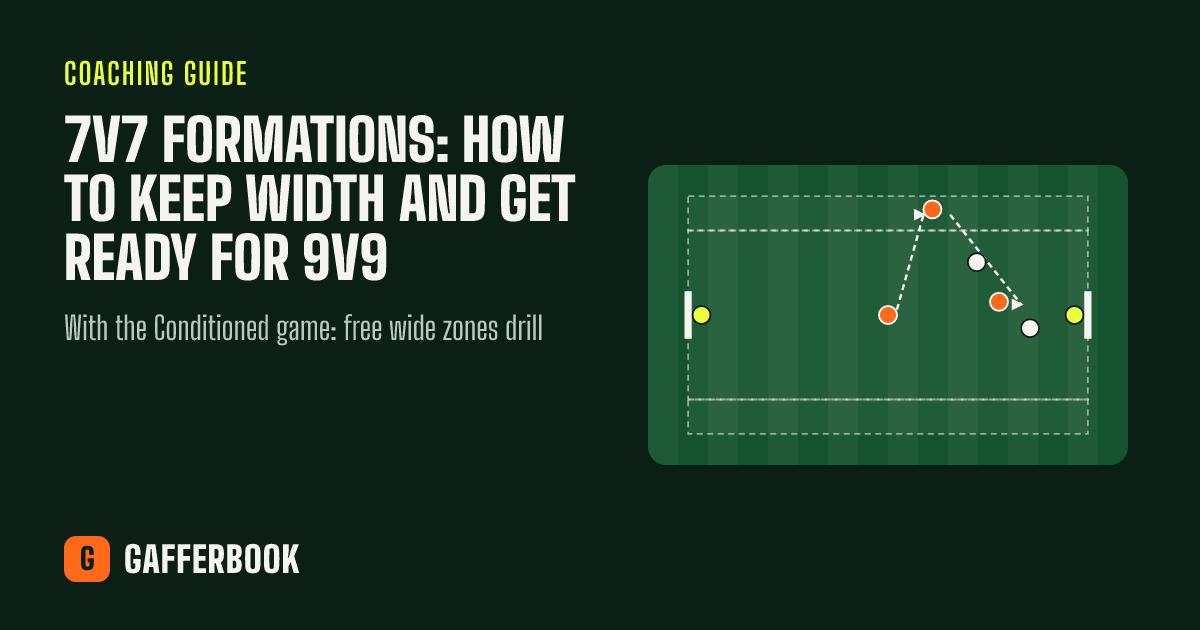
Updated 9 November 2026 · Written for grassroots coaches by Gafferbook
For width in 7v7, use a shape with a player on each side, such as 2-3-1 or 3-2-1, and teach the wide players to start on the touchline when you have the ball. A 2-3-1 is the best stepping stone to 9v9 because its back two, midfield three and striker grow naturally into a 3-3-2 or 3-2-3.
The common 7v7 formations, and how much width each gives
With a keeper and six outfield players, most teams use one of four shapes. Each has its own page with positions and drills:
- 2-3-1: two defenders, a midfield three with a player on each side, and a striker. The most balanced shape and the easiest to keep wide.
- 3-2-1: solid at the back, but width has to come from the outside defenders pushing on, which younger players find hard.
- 2-1-2-1: a diamond. Great for passing triangles in the middle, but the two wide players can drift inside and leave the flanks empty.
- 3-1-2: two strikers up top. Good for pressing, but it's narrow unless the wide defenders get forward.
No shape guarantees width on its own. What makes the difference is whether players know where to stand when you've got the ball.
Why width matters so much at 7v7
7v7 pitches are big for the number of players. If everyone comes to the ball, the pitch shrinks and the other team can defend easily. If your wide players hold the touchline, the opposition has to stretch, gaps open in the middle, and your players get time on the ball.
Width is also how players learn to see the whole pitch: to scan, to switch play, and to understand that the ball can go away from the crowd. Those habits matter far more at 9v9 and 11v11 than any result at 7v7.
How to teach width
- Give it a picture: "When we've got the ball, the wide players have chalk on their boots," meaning their feet should be near the line.
- Make it a rule of the game for a while: a goal counts double if the ball went through a wide area first. Free wide zones and switching play across three zones both do this.
- Practise the movement, not just the position. In the 2-3-1 wide rotation the wide player and defender learn when to go and when to tuck in.
- Teach the opposite too: when you lose the ball, the wide players come back in to make the team compact. Width with the ball, narrow without it.
- Ask, don't tell. Freeze play once and ask: "Where's our space?" Let the player find the answer.
Rotate players through every position
At 7v7, every player should spend time wide, in the middle and at the back across the season. Wide players learn to face forward and cross, central players learn to turn and switch, and everyone learns what width feels like. A line-up builder and the sub planner make rotating fairly much easier.
How 7v7 prepares players for 9v9
If you play a 2-3-1, the jump is small: add a defender and a striker and you have a 3-3-2, or push the wide midfielders on and you have a 3-2-3. The roles your players already know (the outside players giving width, the middle player linking, the striker holding the ball up) carry straight over.
In your last few months of 7v7, add a little of what's coming: playing out from the back with the keeper, switching play from one side to the other, and covering for a teammate who's gone forward. Then the bigger pitch feels like more space to use rather than more ground to cover. When that step comes, see our guide to moving from 9v9 to 11v11 for the next one.
What good looks like
When you win the ball, one player on each side moves out towards the touchline without being told. Your team gets the ball wide at least a few times each half, and someone switches play from one side to the other. When you lose it, the wide players come back in. If you see that, your players are ready for 9v9, whatever the scoreline.
Drills to work on it
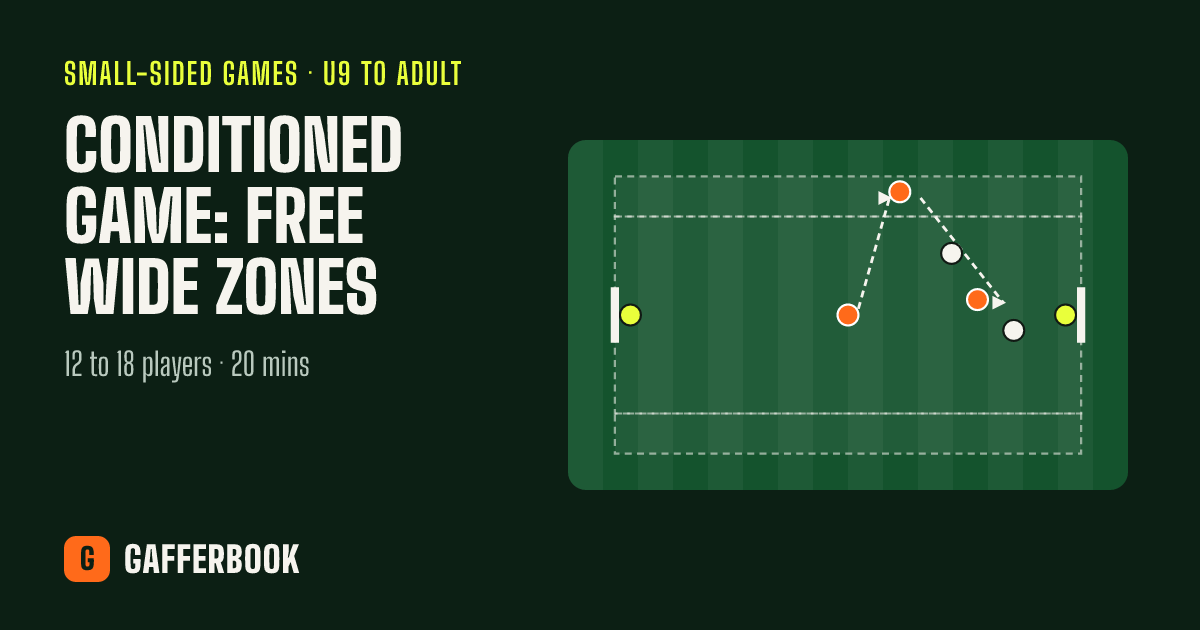 Conditioned game: free wide zones12 to 18 players · U9 to adult · 20 mins
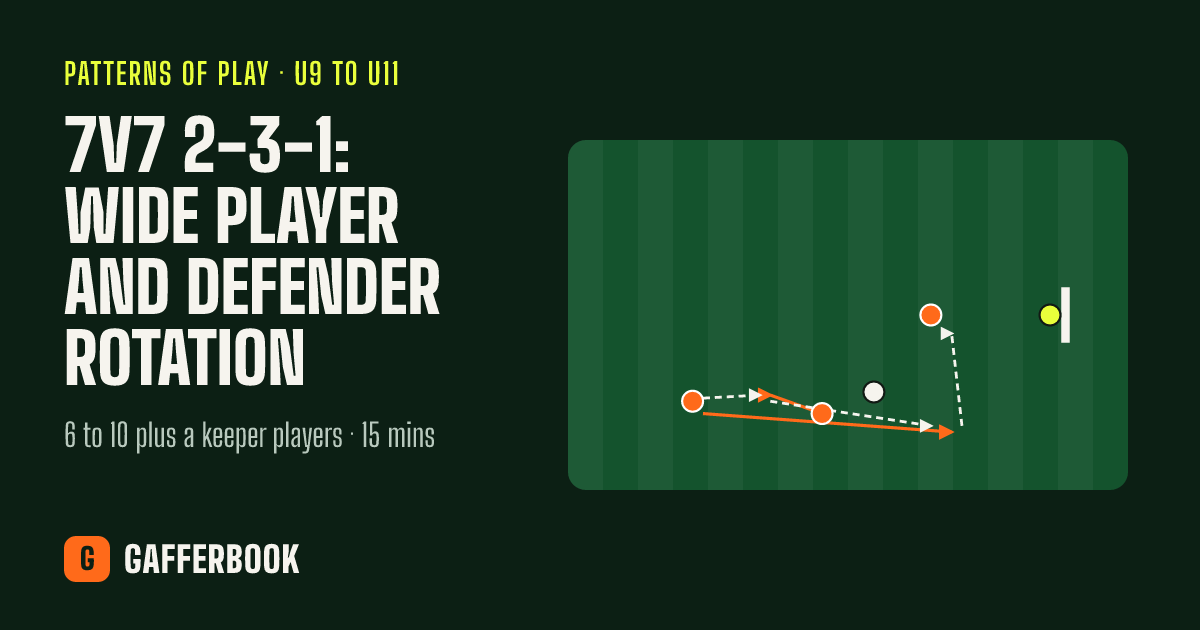 7v7 2-3-1: wide player and defender rotation6 to 10 plus a keeper players · U9 to U11 · 15 mins
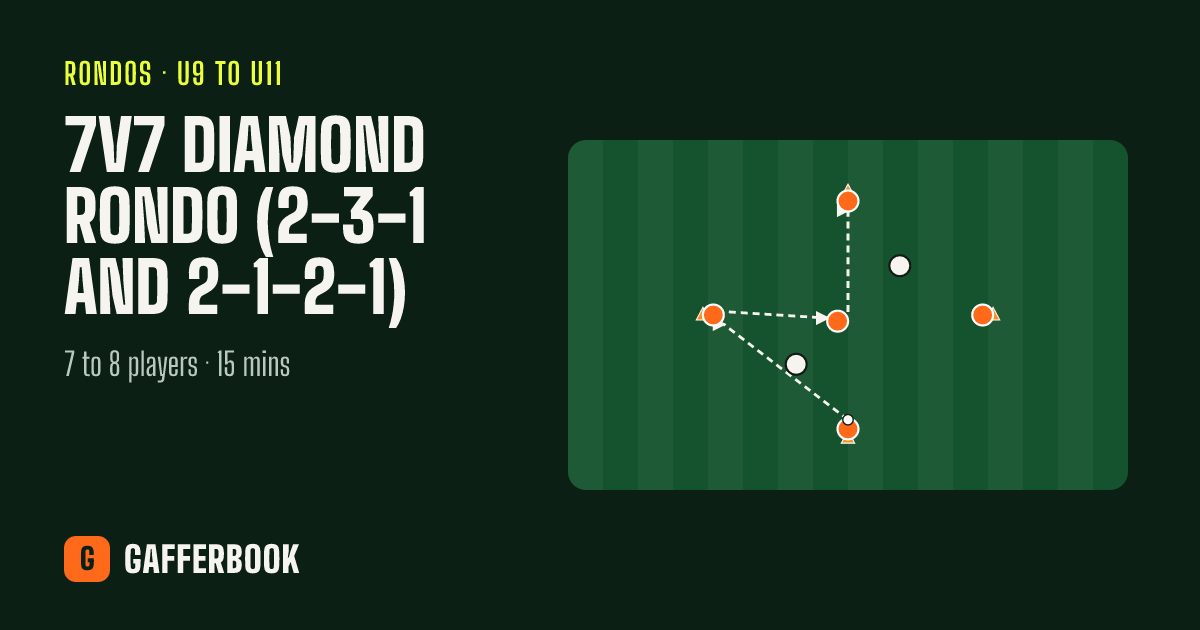 7v7 diamond rondo (2-3-1 and 2-1-2-1)7 to 8 players · U9 to U11 · 15 mins
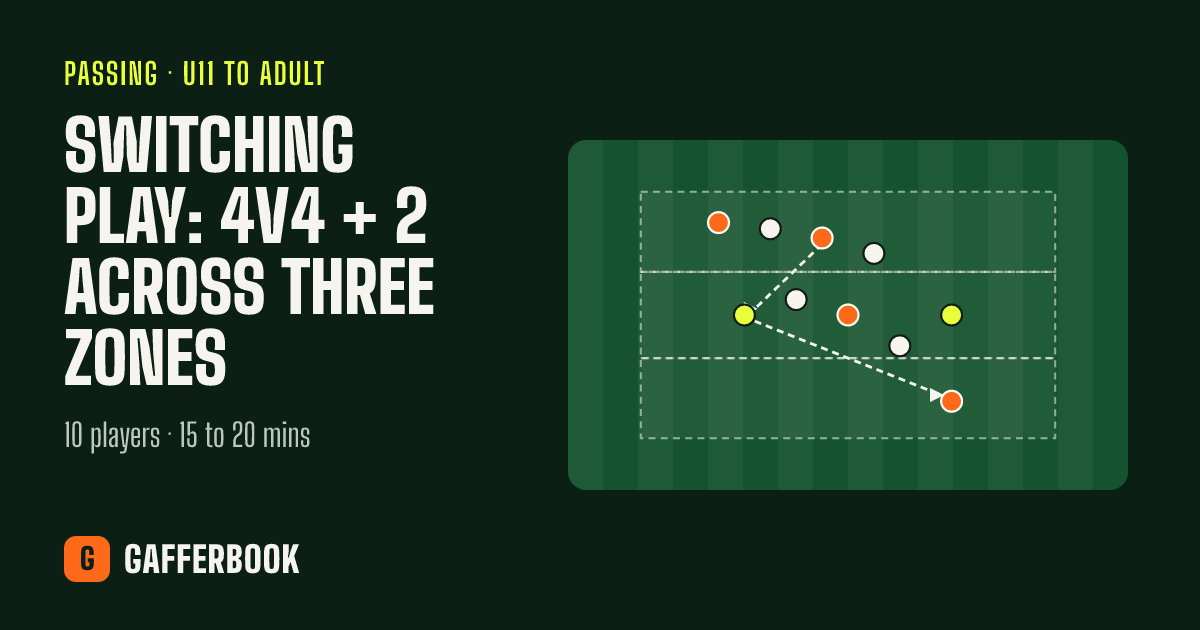 Switching play: 4v4 + 2 across three zones10 players · U11 to adult · 15 to 20 mins