In September 2016 Chelsea were 3-0 down at half-time at Arsenal. Early in the second half Antonio Conte switched to a back three, a 3-4-3, and stuck with it. In the next game, at Hull, Marcos Alonso and Victor Moses played as wing-backs. Chelsea went on a run of 13 straight Premier League wins and won the title. The shape gave them three centre-backs, wing-backs for width, two inside forwards in the pockets and a striker.
Step 1 of 4
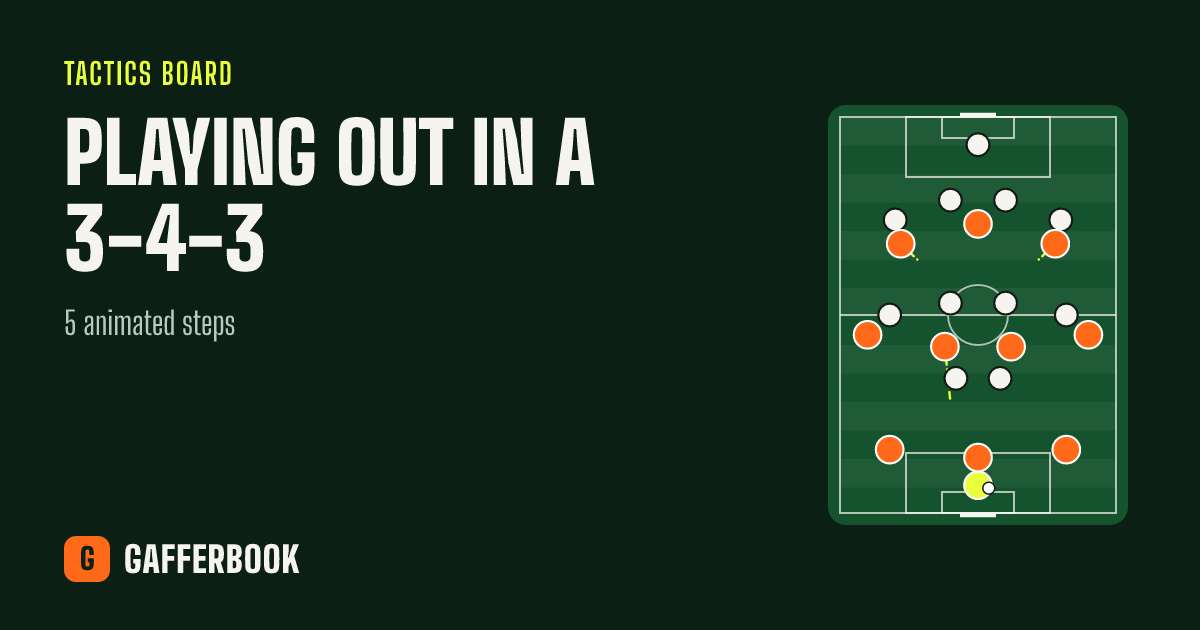
Back three spread, wing-backs high and wide, inside forwards in the pockets.
Drawn for 11v11 3-4-3. Pick your own format and shape and every step is redrawn for your players. Then present it or send it to your team.
Step by step
Back three spread, wing-backs high and wide, inside forwards in the pockets.
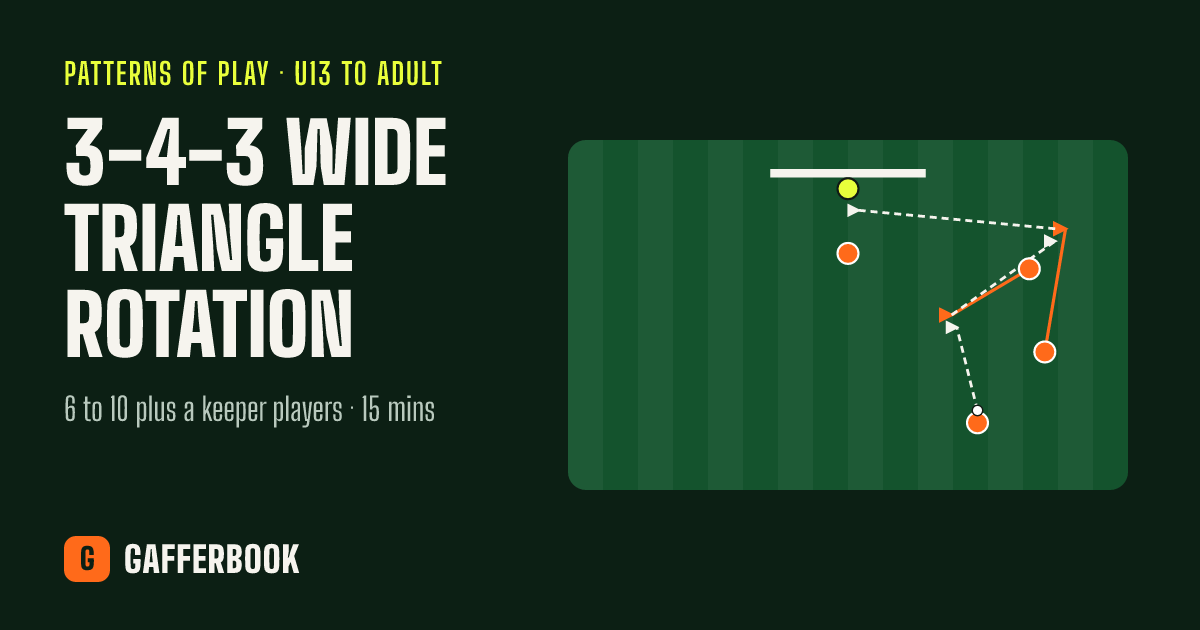
The right centre-back finds the wing-back, who has all the width.
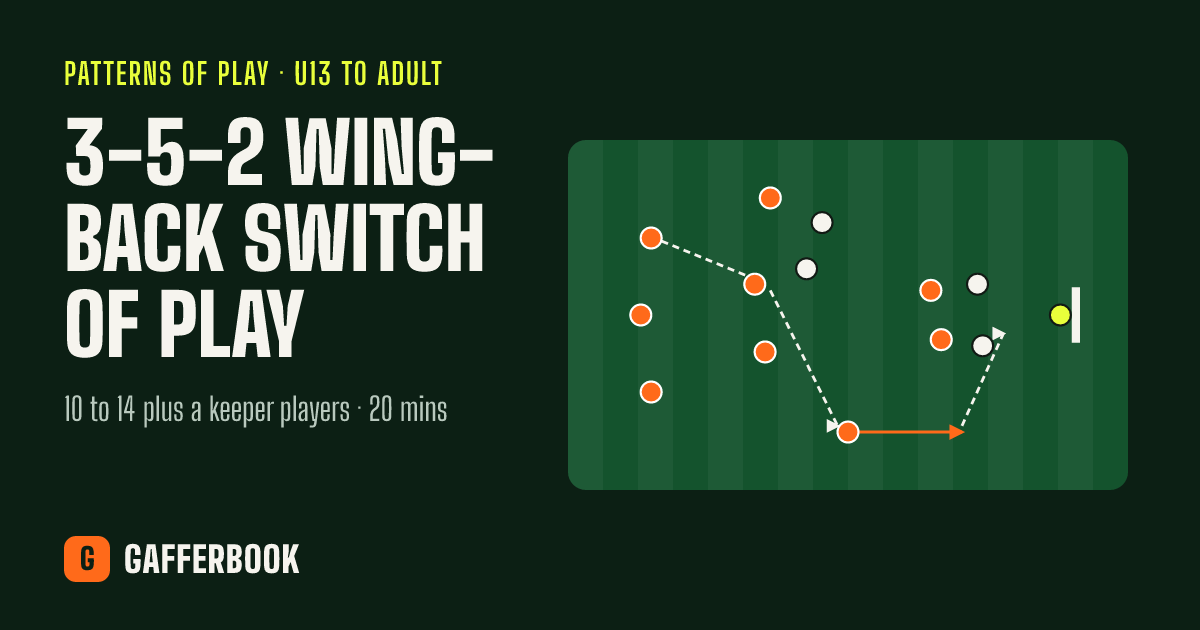
Wing-back to the inside forward in the pocket, who turns. The far wing-back starts the run.
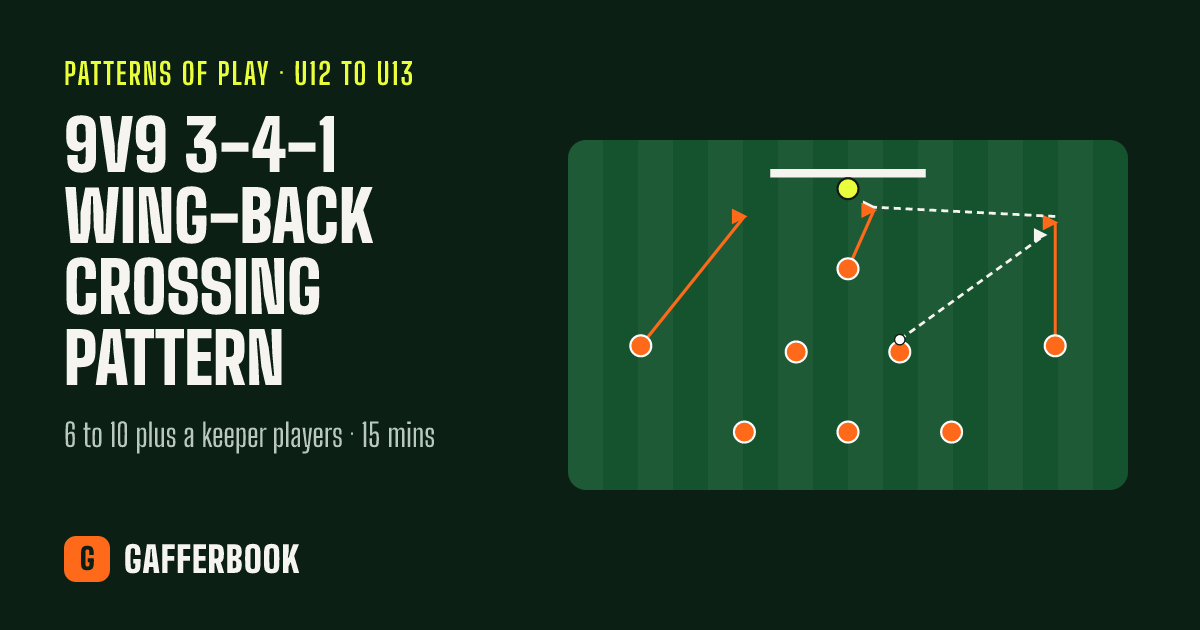
Wide again for the cross. Striker near post, the far-side wing-back arriving at the back post.
When to use it
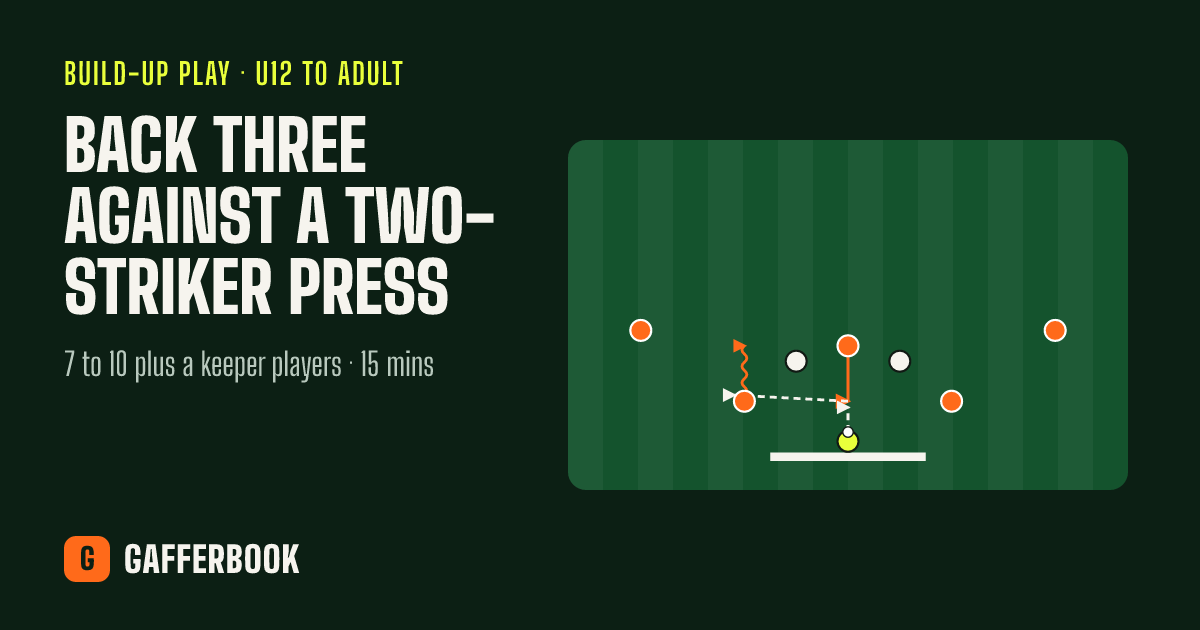
When you have energetic wide players for the wing-back roles and centre-backs comfortable in a back three. It's especially strong against teams with two strikers.
Coaching points
Three centre-backs: one spare against two strikers.
Wing-backs give all the width, so the two forwards behind the striker can play inside.
The two central midfielders protect the back three and recycle the ball.
Inside forwards find the pockets between full-back and centre-back.
The far-side wing-back arrives late at the back post for crosses.
Who does what
Position
Their job
Back three
Defend, spread wide in possession, step into midfield.
Wing-backs
Width, crosses and the far-post run.
Central pair
Win it, protect, recycle.
Inside forwards
Pockets, combinations, shots.
Striker
Pins the centre-backs, holds it up, finishes.
When they change it
If they…
You…
Opponents copy the shape
Matched up man for man: individual battles and set pieces decide it.
They overload a wing-back
The outside centre-back steps across to help.
Copying it at grassroots
At 9v9, a 3-2-3 or 3-4-1 teaches the same ideas.
Common mistakes
Wing-backs who don't get back.
Inside forwards drifting wide, on top of the wing-back.
The back three staying narrow when we have the ball.
At 7v7, 9v9 and 11v11
7v7
A 3-2-1 gives a back three and wide midfielders.
9v9
A 3-2-3 or 3-4-1 is the natural small-sided version.
11v11
The board: a 3-4-3 with wing-backs and inside forwards.
The history on this page is written in our own words from these sources. The board is our simplified picture of the idea, not a copy of any match footage.