Updated 9 November 2026 · Written for grassroots coaches by Gafferbook
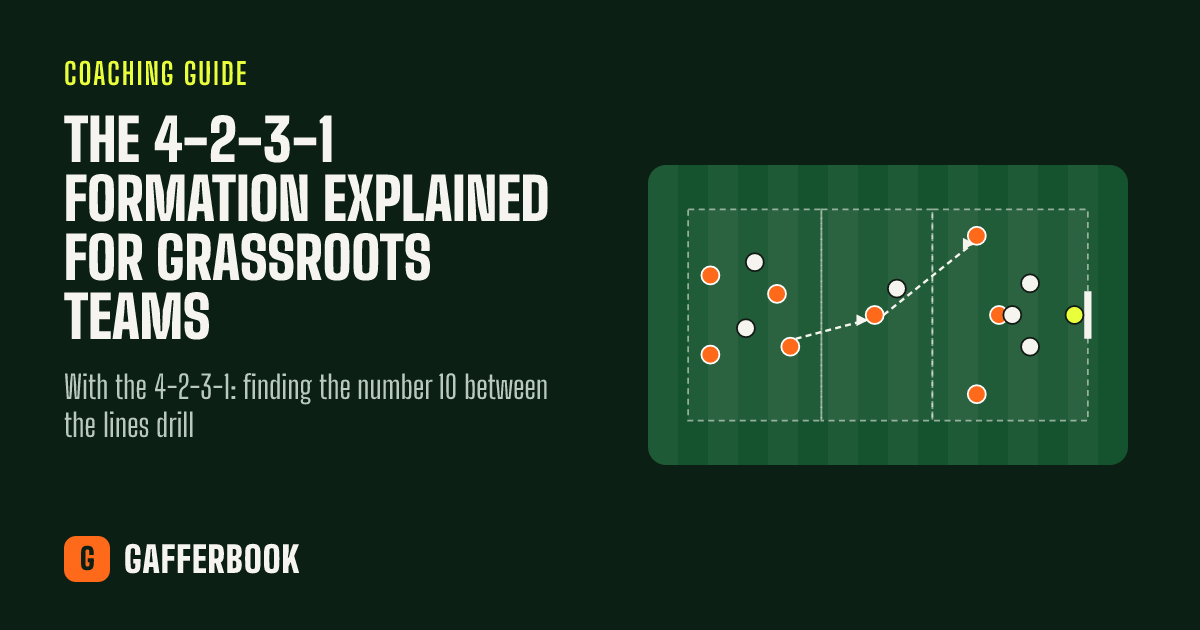
The 4-2-3-1 uses a back four, two holding midfielders (the double pivot), three attacking midfielders with a number 10 in the middle, and one striker. It's balanced: the two holders protect the defence while the 10 and wide players support the striker. It suits teams with a creative 10 and hard-working holders.
How it works with the ball
The two holding midfielders give the defence safe passes and switch play. The number 10 finds space between the opponent's midfield and defence. Wide attackers can cut inside while full-backs give width. The striker holds the ball up and runs in behind.
See the full shape on the 4-2-3-1 formation page.
How it works without the ball
It often becomes a 4-4-1-1 or 4-4-2: wide attackers drop into midfield and the 10 joins the striker in pressing. The two holders stay in front of the back four so nothing goes through the middle. The mid block board shows the idea.
Is it right for your team?
It works best at 11v11 with players who understand roles. For youth teams moving up, it can feel complicated; 4-3-3 or 4-4-2 may be simpler to start with. If you have one creative player who loves the ball, the 10 role suits them well.
Practise the 10's movement with the number 10 between the lines pattern.
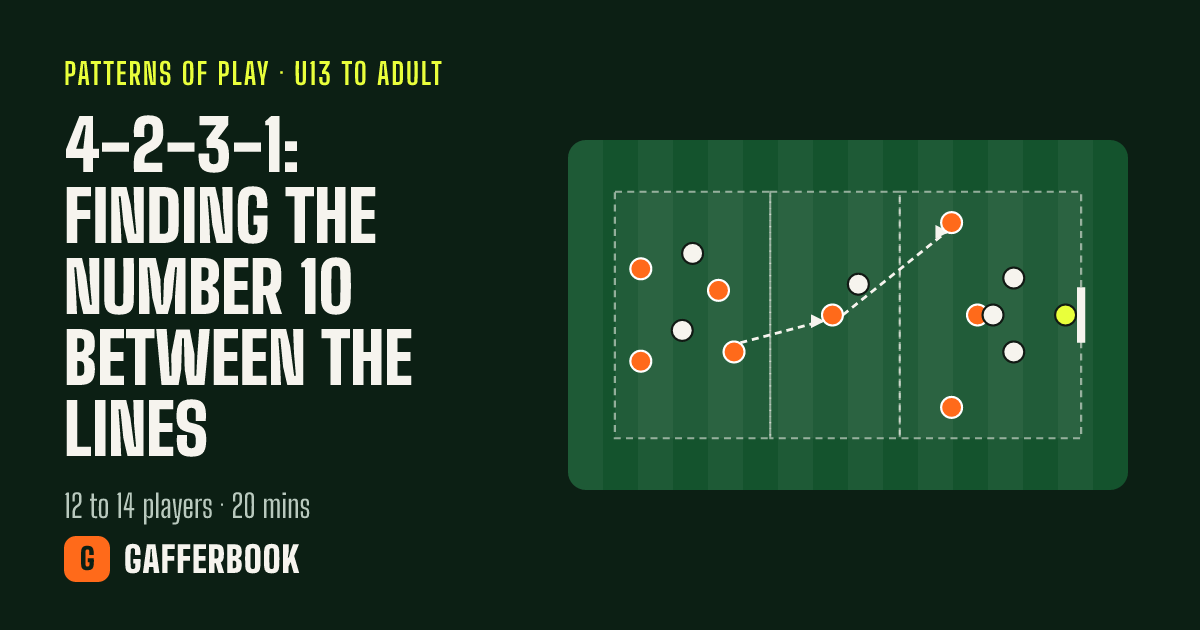 4-2-3-1: finding the number 10 between the lines
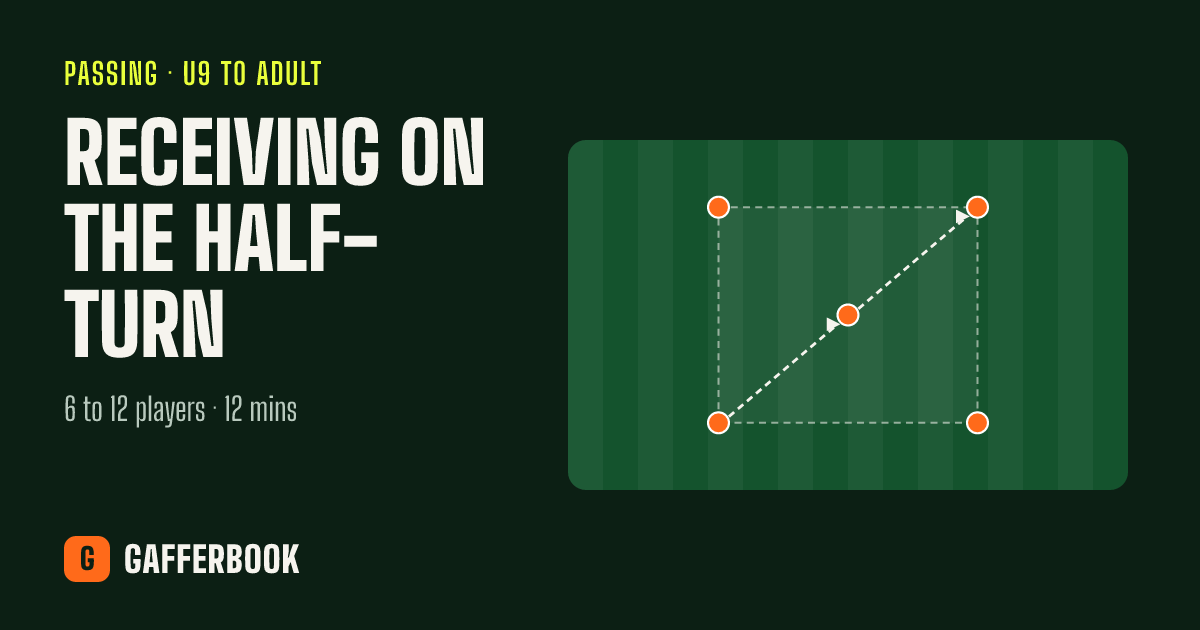 Receiving on the half-turn
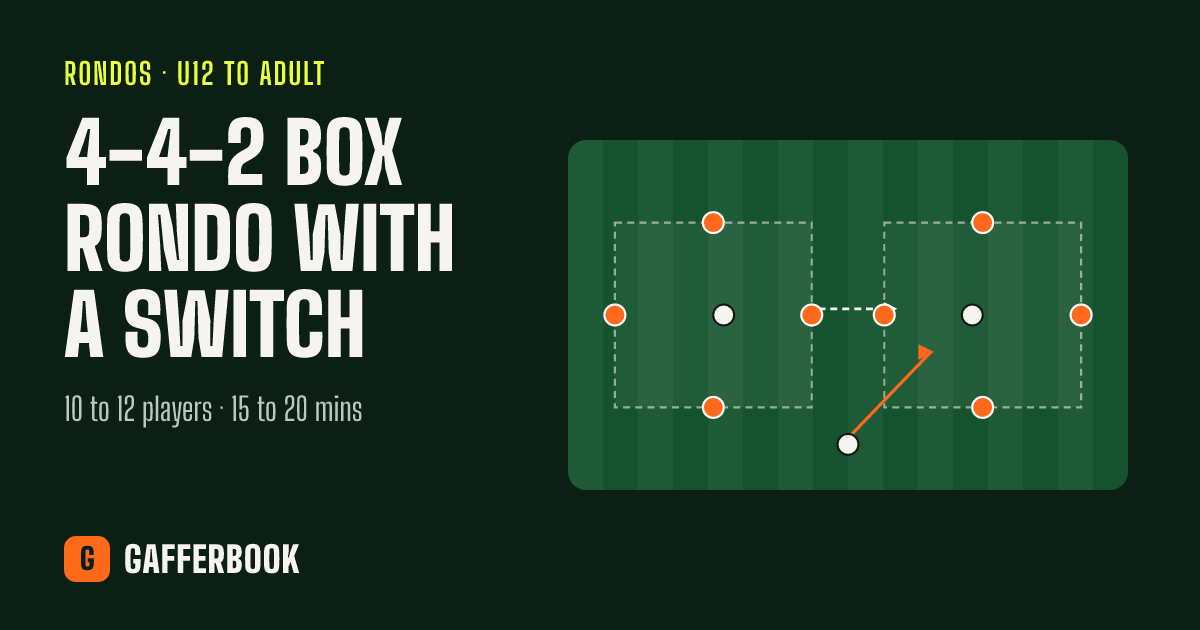 4-4-2 box rondo with a switch