Guardiola's Barcelona: positional play and the false nine
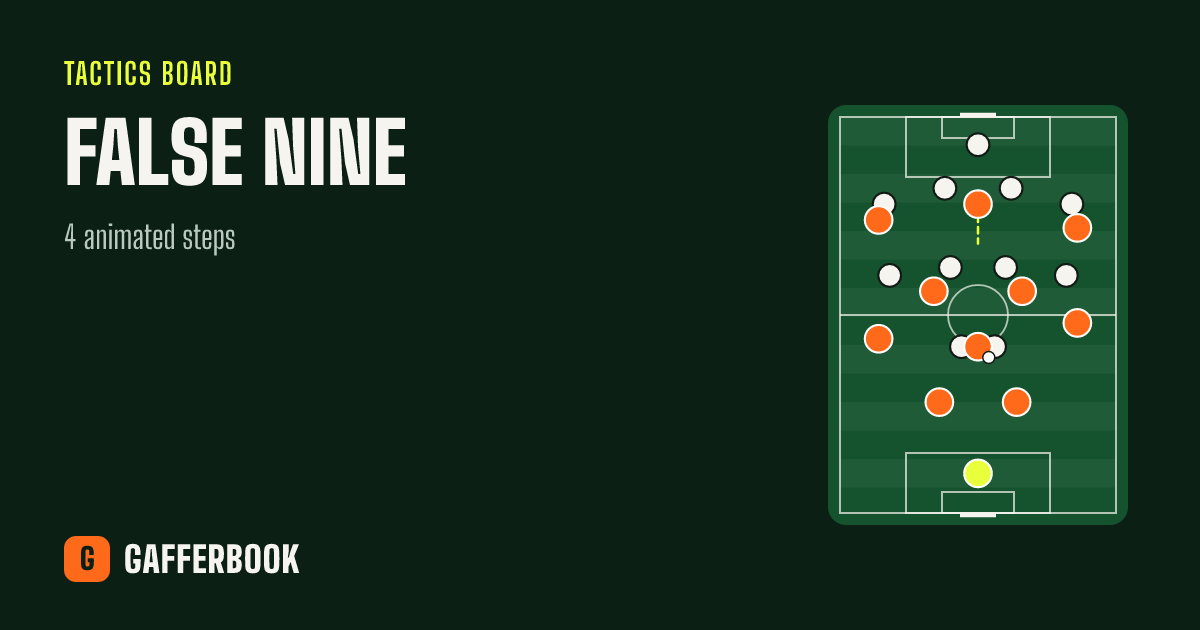
Pep Guardiola's Barcelona of 2008 to 2012 is one of the most studied teams in history. Their style is often called positional play: players occupy set zones across the pitch so the ball always has a free player at a good angle, and the team moves it until someone is free between the lines. In May 2009, at the Bernabéu, Guardiola moved Lionel Messi into the middle as a false nine in a 6-2 win over Real Madrid, a role Messi kept with huge success.
Step 1 of 4
Width from the wingers, the 8s between the lines, the holding midfielder free in front of the defence.
Drawn for 11v11 4-3-3. Pick your own format and shape and every step is redrawn for your players. Then present it or send it to your team.
Step by step
Width from the wingers, the 8s between the lines, the holding midfielder free in front of the defence.
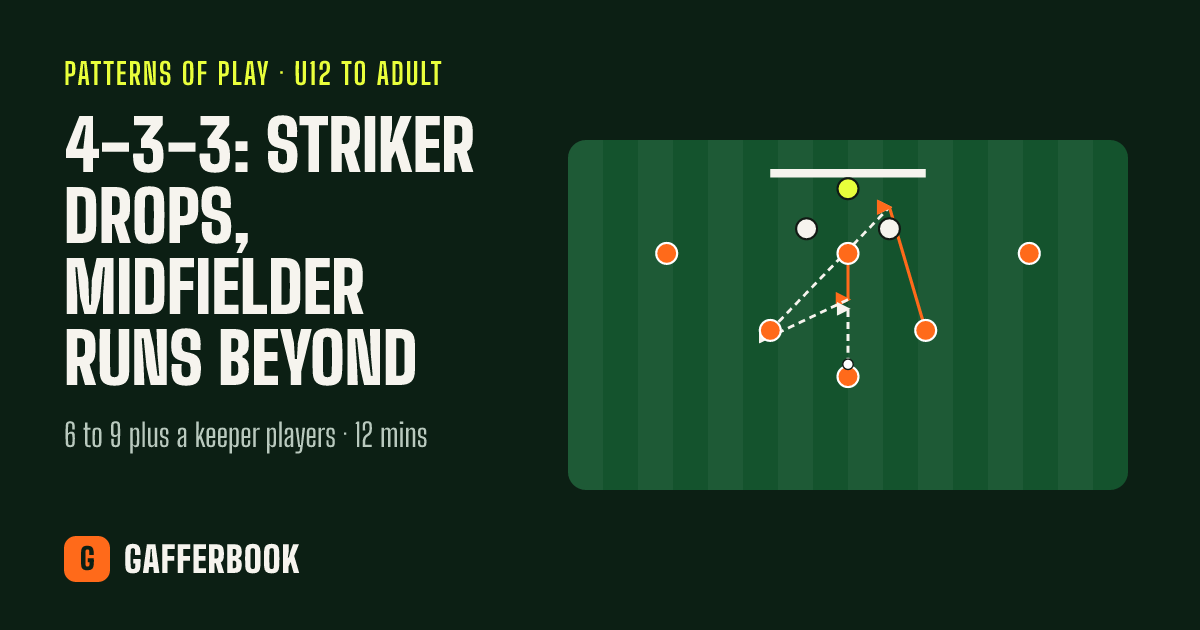
Our false nine drops into the gap. Their centre-back follows him.
The ball goes into the false nine, who sets it first time. Both wingers run in behind.
Through the space the centre-back left.
When to use it
When your team wants the ball and can pass under pressure. The ideas behind it (width, players between the lines, a free player in every line) help any team that wants to play.
Coaching points
Fill the width with the wingers so the opposition is stretched.
Put players between their lines: the 8s and a dropping striker.
Always offer a free player: triangles at every pass.
The false nine drops into midfield; the wingers run in behind the centre-backs.
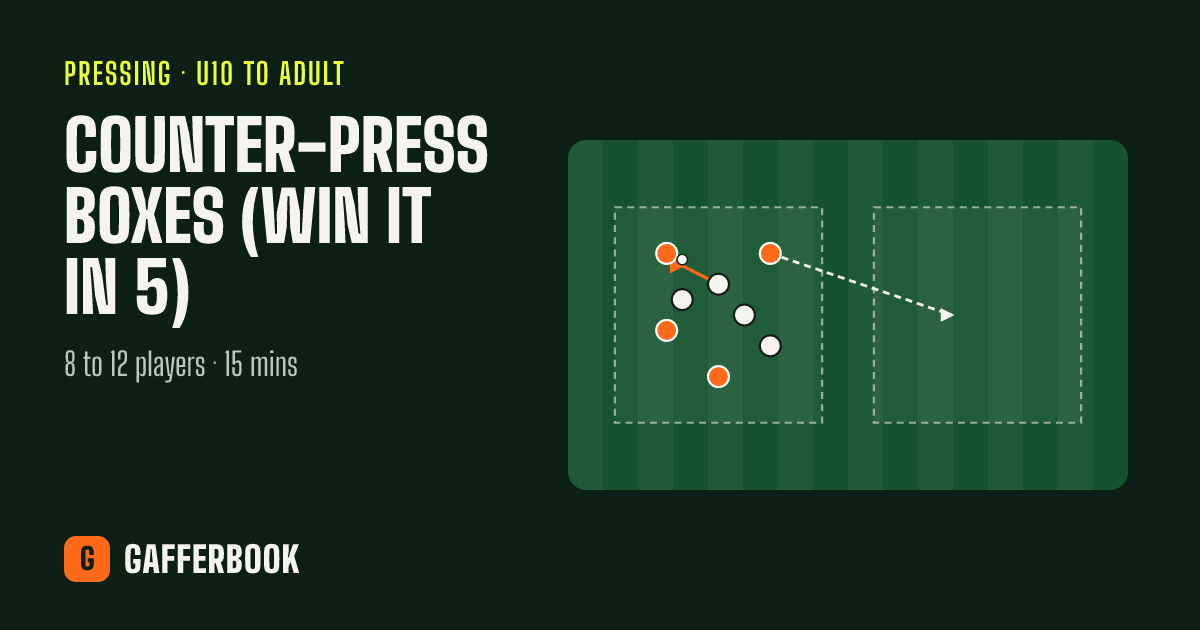
When the ball is lost, win it back straight away while the opponent is disorganised.
Who does what
Position
Their job
Holding midfielder
The pivot: receives from the back and switches play.
8s
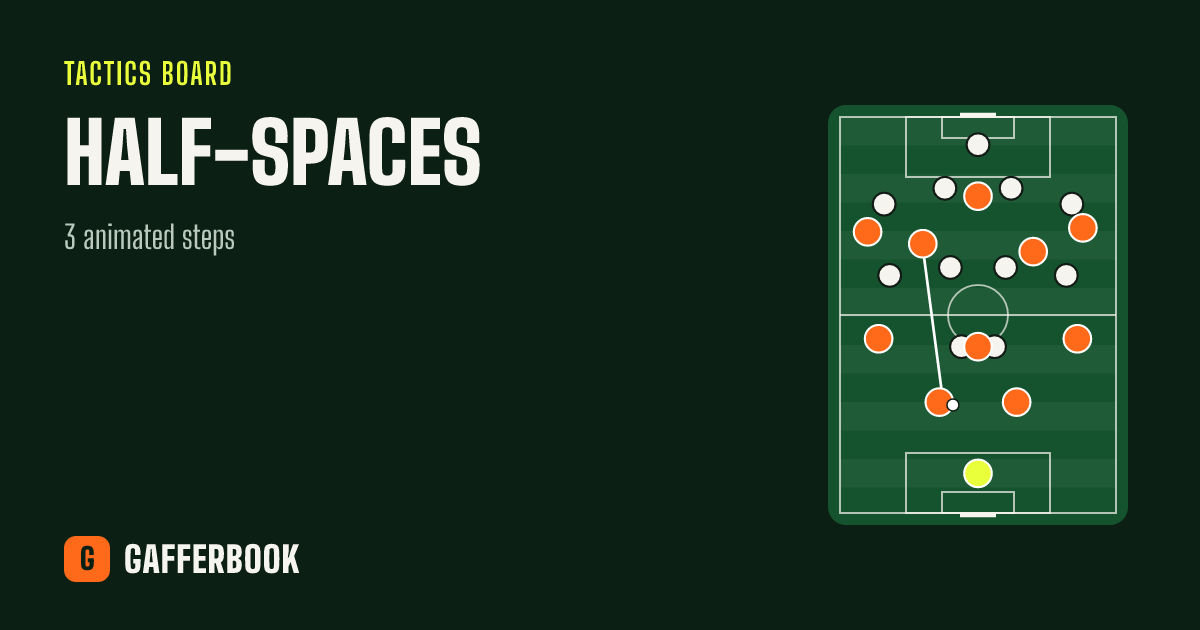
Between the lines and in the half-spaces.
Wingers
Wide to stretch, then diagonal runs in behind.
False nine
Drops into the space between their midfield and defence.
Full-backs
Push on to give width when wingers come inside.
When they change it
If they…
You…
The opponent sits deep
Keep moving it until the gap appears; switch quickly.
A centre-back follows the false nine
Wingers run into the space behind.
Copying it at grassroots
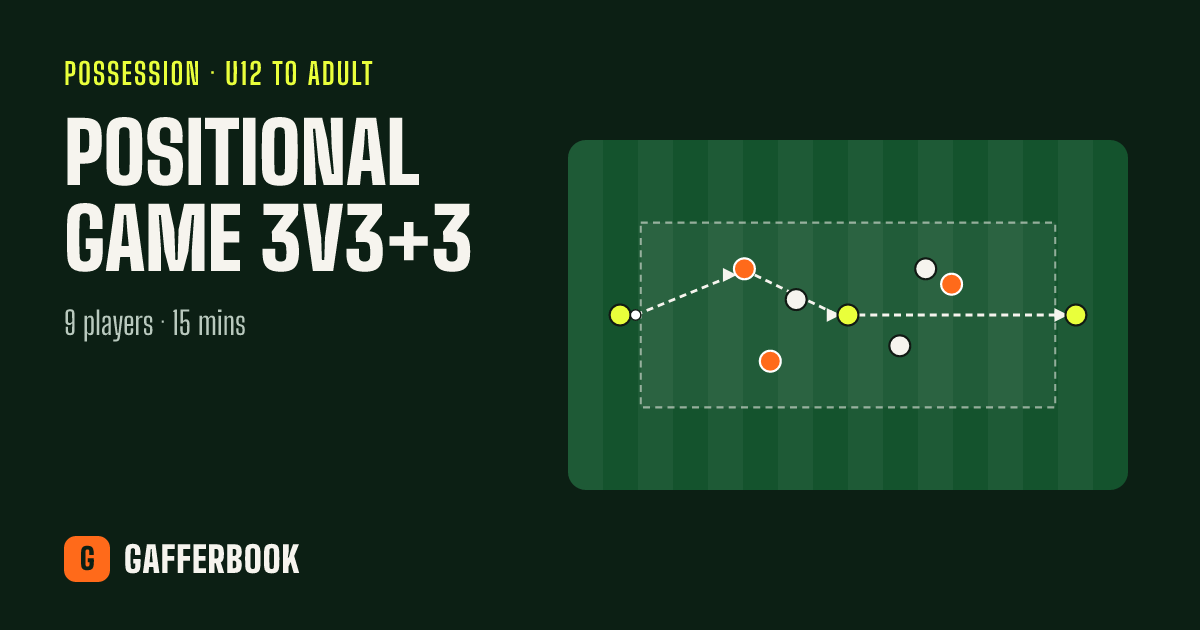
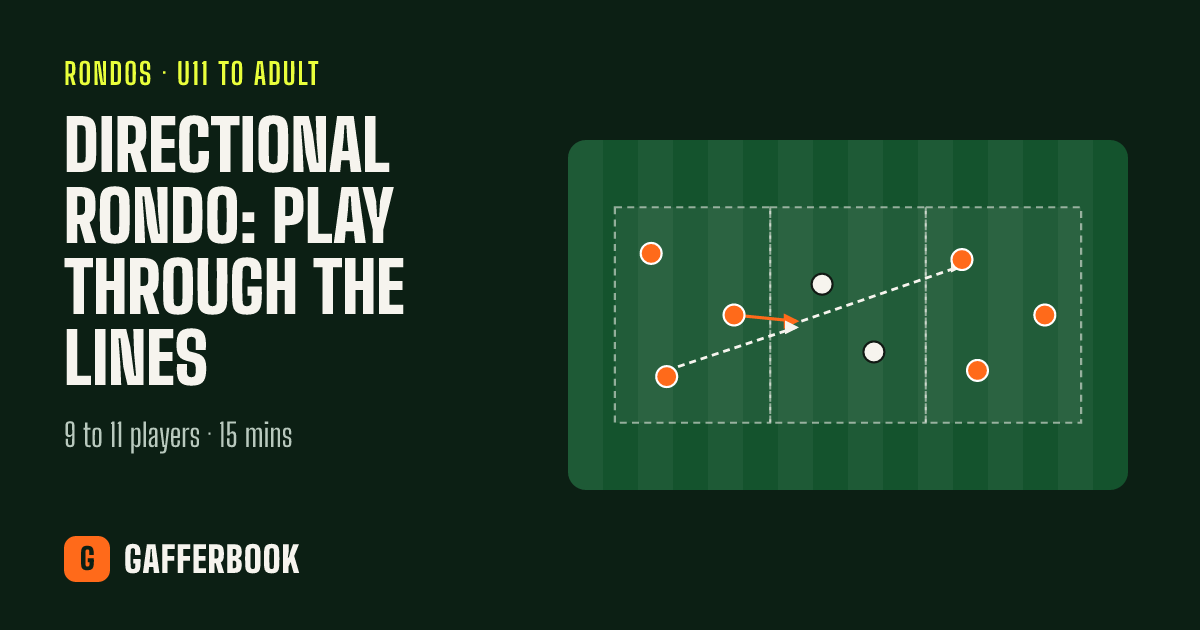
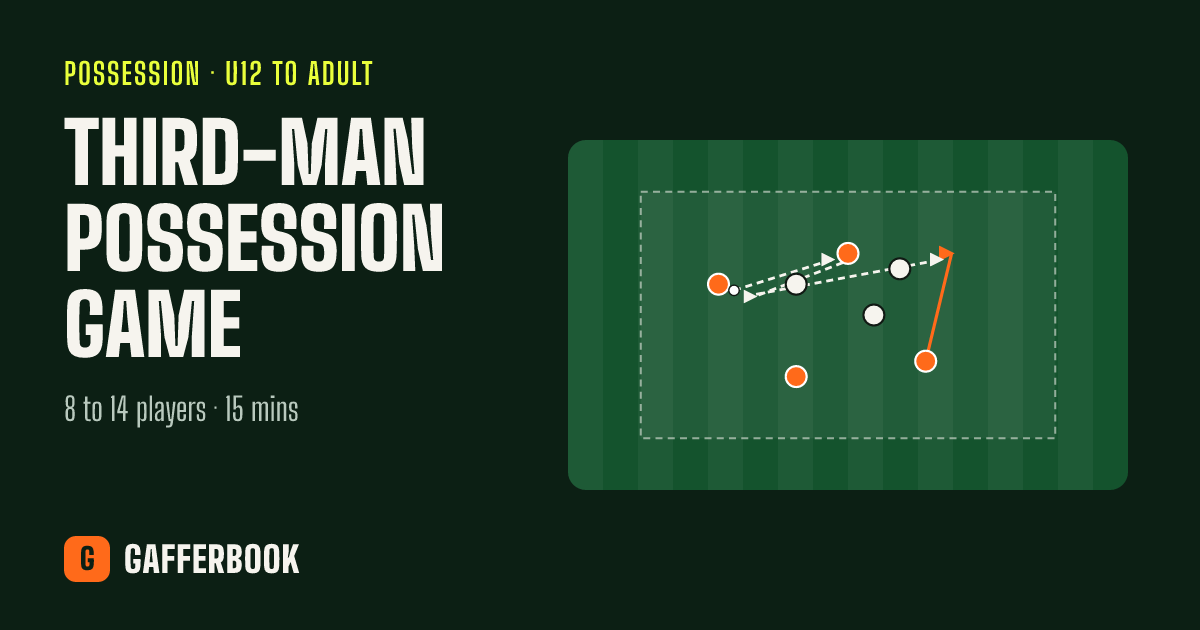
Rondos and positional games teach the habits. Don't expect it all at once.
Common mistakes
Passing for the sake of it, with no attempt to break a line.
Everyone coming to the ball, so the width disappears.
Not pressing when the ball is lost.
At 7v7, 9v9 and 11v11
7v7
A 2-1-2-1 with wide midfielders and a dropping striker has the same habits.
9v9
A 3-2-3 with wingers wide and the striker dropping.
11v11
The board: a 4-3-3 with a false nine and wingers running in behind.
The history on this page is written in our own words from these sources. The board is our simplified picture of the idea, not a copy of any match footage.
A style where players occupy set zones so the ball carrier always has free team-mates at good angles. It's closely associated with Guardiola's Barcelona.
When did Messi first play as a false nine for Guardiola?
In the 6-2 win at Real Madrid's Bernabéu in May 2009, according to analysis of that match.
Can grassroots teams play like Barcelona?
They can learn the habits: rondos, positional games, playing between the lines and pressing straight away when the ball is lost.