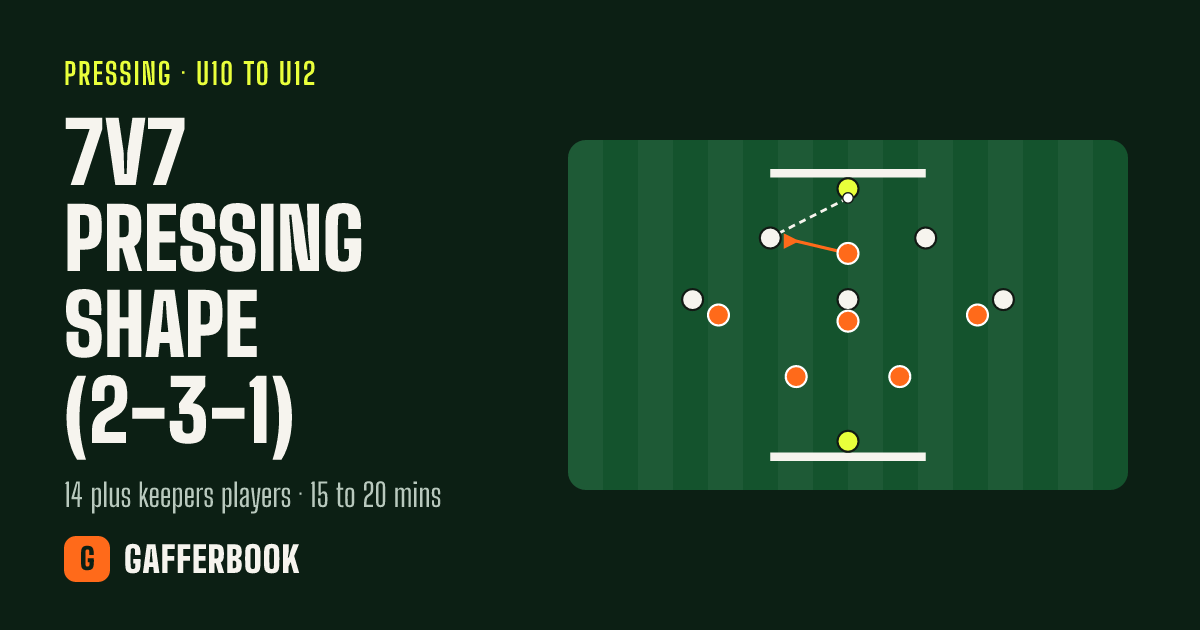
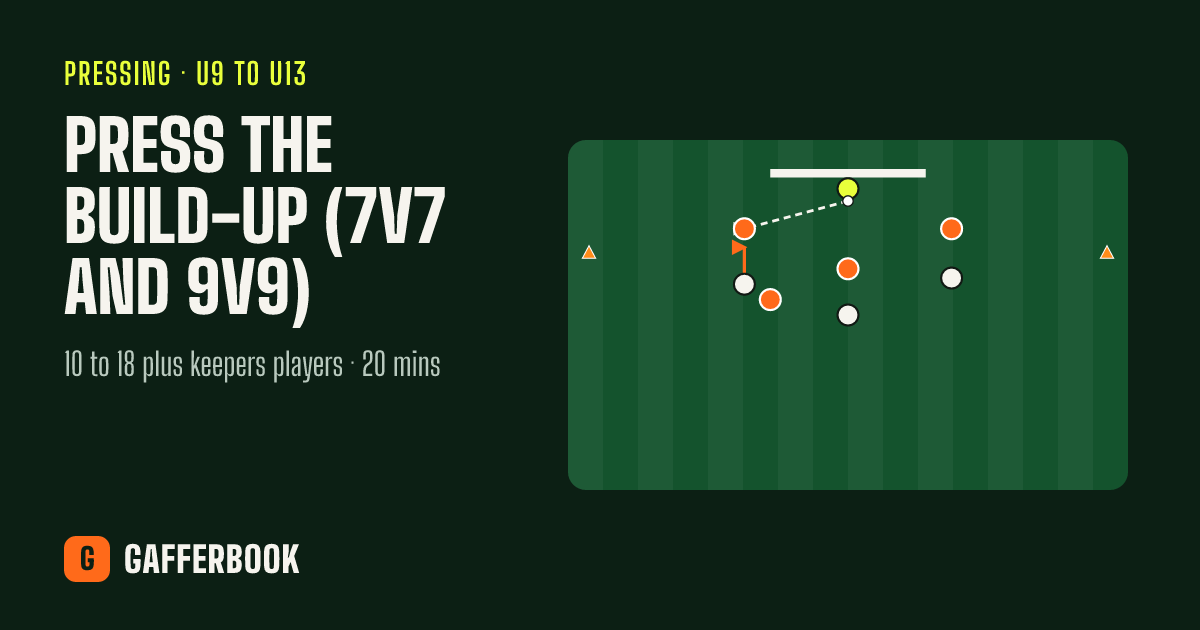
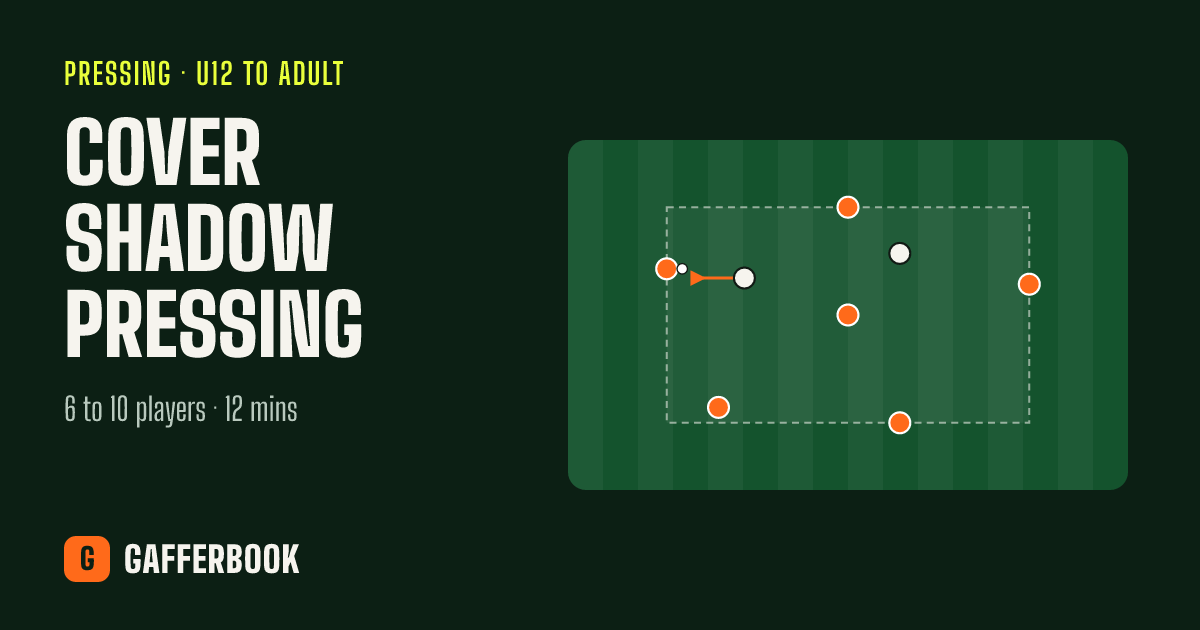
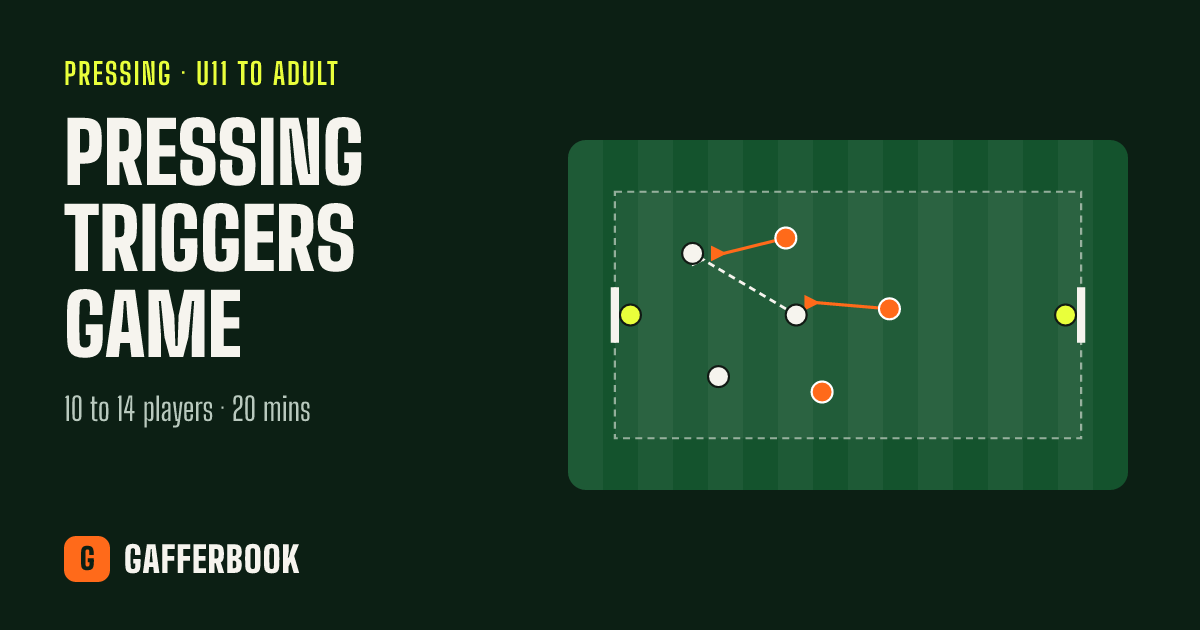
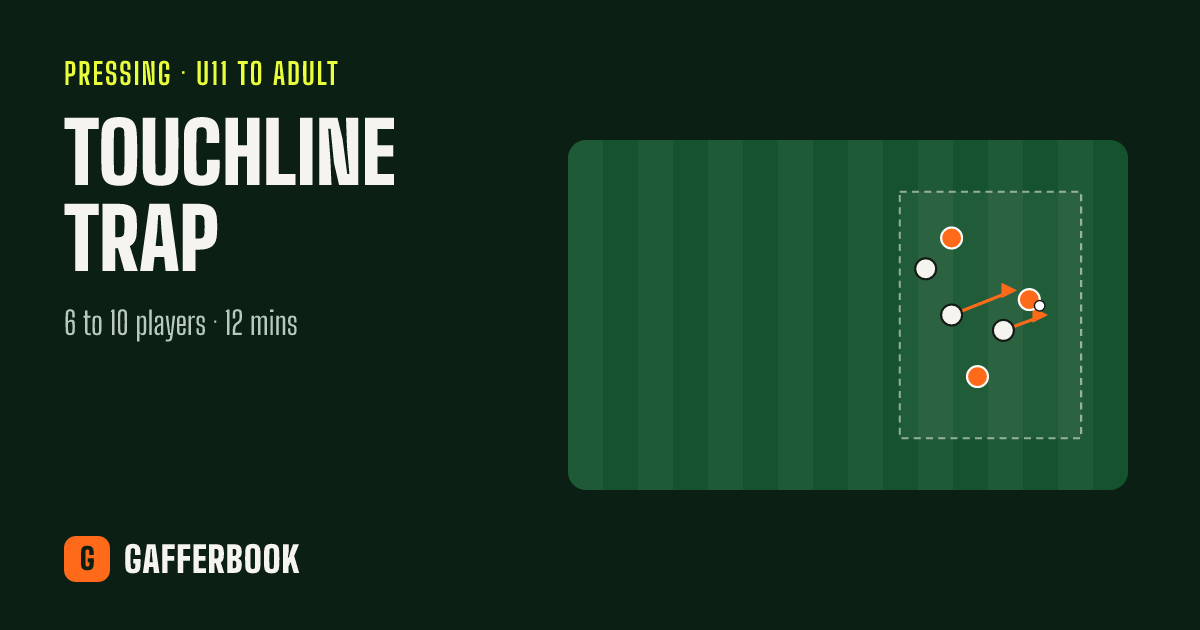
The 2-3-1 presses with its striker and wide midfielders as a front three, and its central midfielder as the cover. Against a team playing out with two split centre-backs, the striker blocks the middle and the wide midfielders wait inside their wide players. When the ball goes to a centre-back, the trap is set: one side of the pitch is shut, and the other is a touchline.
Step 1 of 4
They play out from their keeper. Our striker blocks the middle; the wide midfielders wait inside their wide players.
Drawn for 7v7 2-3-1. Pick your own format and shape and every step is redrawn for your players. Then present it or send it to your team.
Step by step
They play out from their keeper. Our striker blocks the middle; the wide midfielders wait inside their wide players.
Trigger: the keeper passes to a centre-back. The striker curves across to block the way back.
The only way out is wide. As the ball travels, our wide midfielder jumps onto their wide player.
Trapped by the touchline: ball pressed, inside pass blocked. Win it and go.
When to use it
After the retreat line lifts, when the other team plays short from their keeper, and in short spells when you need the ball back.
Coaching points
The striker starts between their centre-backs, blocking the pass into their central midfielder.
Wide midfielders start inside their wide players, level with the centre-backs.
Trigger: the pass from their keeper to a centre-back. The striker curves to block the way back.
The near wide midfielder presses the centre-back or jumps onto their wide player as the ball goes wide.
The central midfielder steps up to mark their midfielder; the two defenders push up to halfway.
With younger players
Check your league's retreat line rules first: many 7v7 formats don't allow pressing goal kicks until the ball is played. Keep the rules simple and press in short spells.
Who does what
Position
Their job
Striker
Blocks the middle, curves on the trigger to show the ball wide.
Wide midfielders
Start inside, jump onto the ball or their wide player.
Central midfielder
Marks their midfielder so the inside pass is gone.
Centre-backs
Push up to halfway; one marks their striker.
Keeper
Starts high enough to sweep a long ball.
When they change it
If they…
You…
Their midfielder drops between the centre-backs
The striker presses the middle player and the wide midfielders take the centre-backs.
They go long
Our centre-backs attack the header; midfielders win the second ball.
They switch it across their back line
Slide across and press the other side; the far wide midfielder leads.
Common mistakes
The striker running straight at the centre-back, leaving both passes open.
Wide midfielders starting too wide, so the pass inside is open.
Centre-backs staying deep, so the gap behind the press is huge.
At 7v7, 9v9 and 11v11
7v7
The board: 7v7 2-3-1 against a team playing out with two split centre-backs.
9v9
At 9v9, the 3-2-3 presses with the same front three idea.
11v11
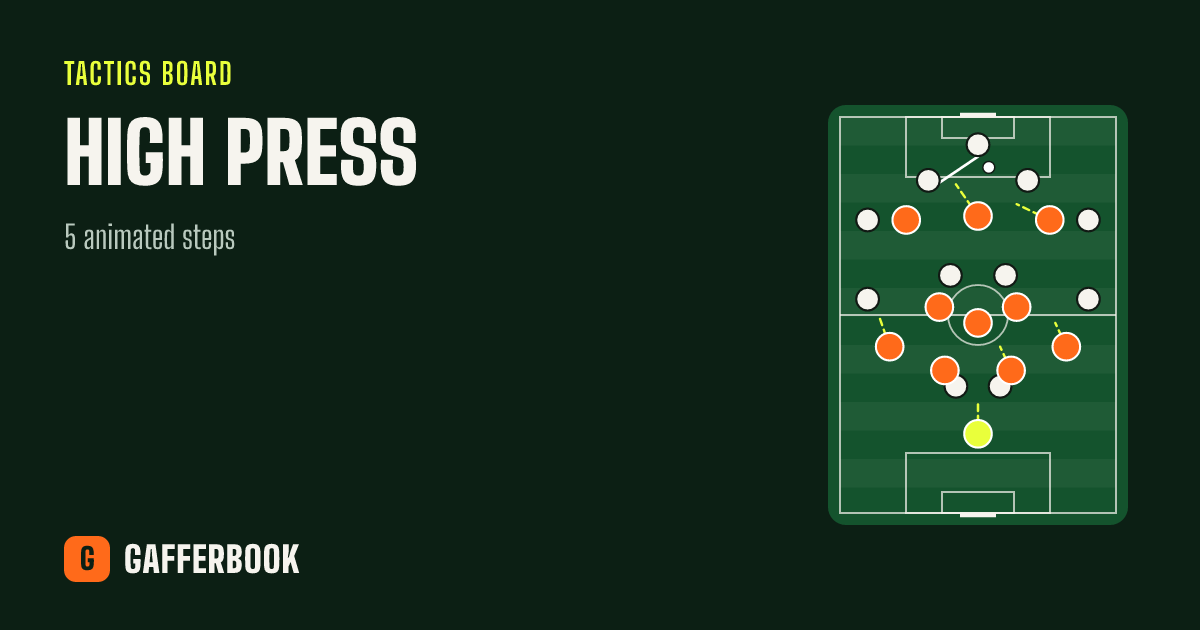
At 11v11, a 4-3-3 high press is the full version. See the high press board.
Yes, after the retreat line has lifted. Keep it simple: one trigger, two or three players going together.
Who covers when we press in a 2-3-1?
The central midfielder steps up to their midfielder and the two defenders push up to halfway.
Should we press from goal kicks?
Only if your league's rules allow it (many younger formats use a retreat line) and only as a team. A goal kick is a good trigger because everyone can get set before the ball is played.