GK LCM RCM DM LW RW LB LCB RCB RB ST ‹ ▶ Play Step 1 of 4 ›
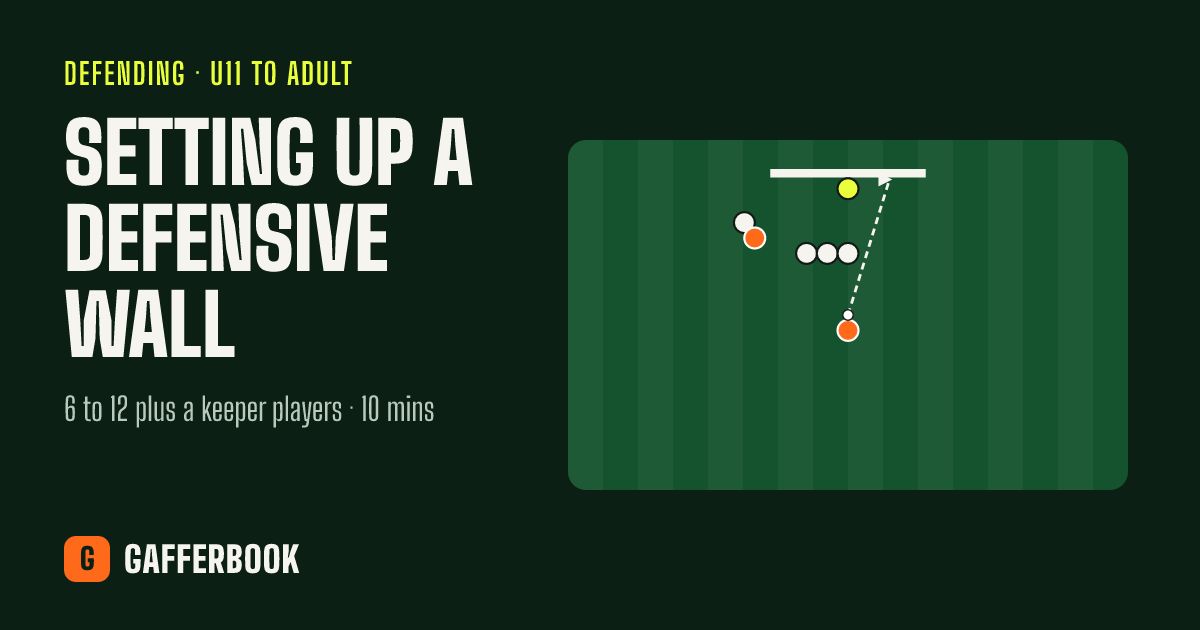
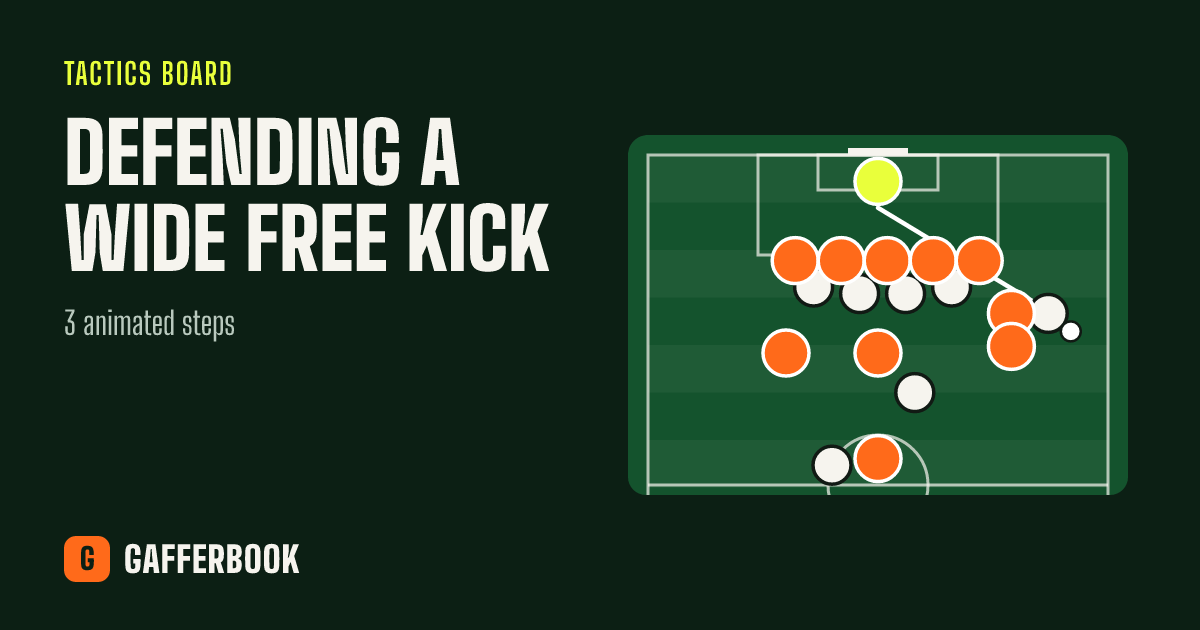
Free kick against us. The keeper calls four in the wall, lines up the end player with the near post, and stands to see the ball.
Drawn for 11v11 4-3-3. Pick your own format and shape and every step is redrawn for your players. Then present it or send it to your team.
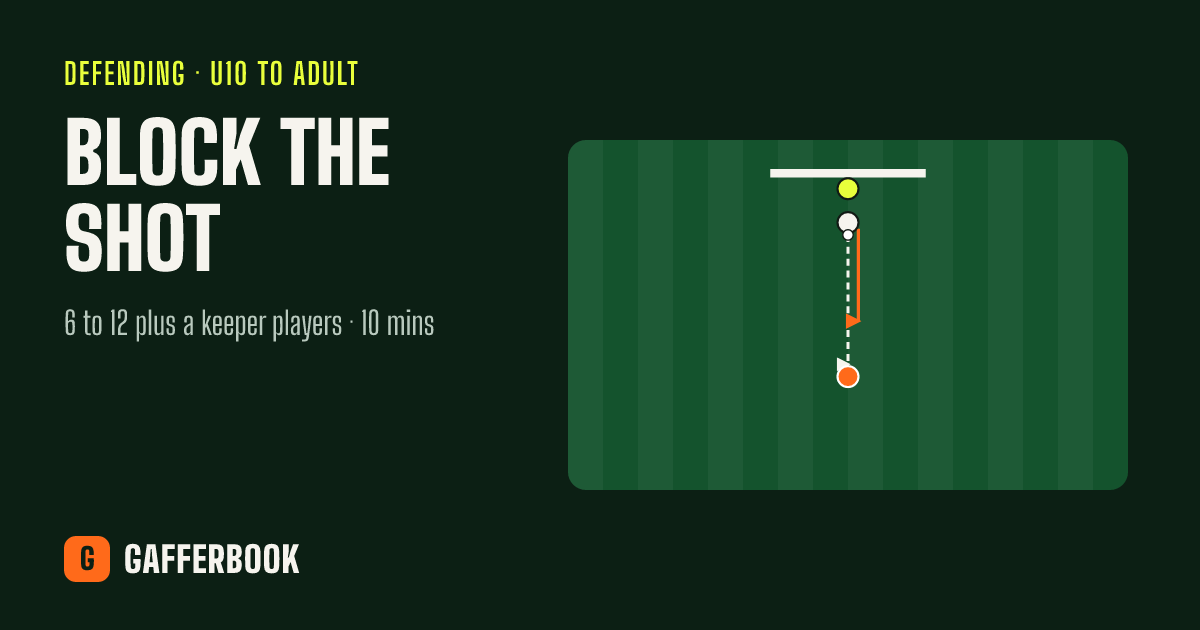
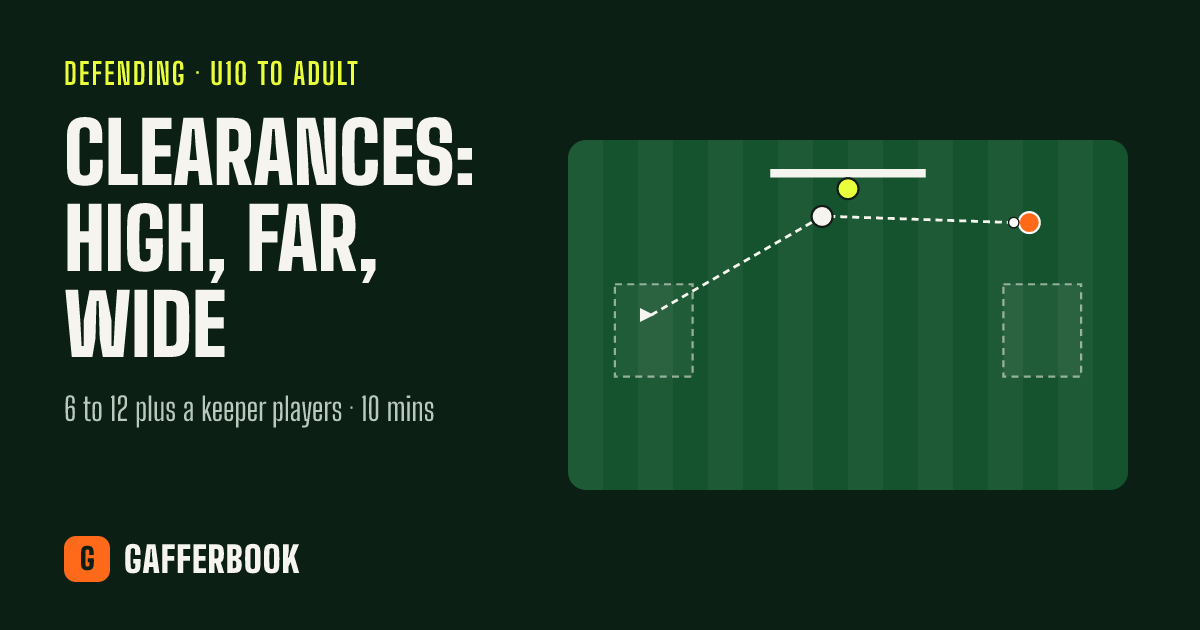
Step by step Free kick against us. The keeper calls four in the wall, lines up the end player with the near post, and stands to see the ball. They try the lay-off. Our blocker charges it straight away; the wall holds. The shot is blocked and dropped. Markers follow in and clear it high and wide. Cleared. Everyone pushes out together. When to use it Every free kick within shooting range of your goal. The further out and wider, the fewer players in the wall.
Coaching points The keeper calls how many in the wall and lines up the end player with the near post. The wall stands still, shoulder to shoulder, and doesn't turn away as the ball is struck. The keeper stands where they can see the ball, usually slightly towards the far post side of the wall. One player is ready to block a lay-off or charge the ball when it moves. Markers stay with their runners and follow in to clear any rebound. With younger players Many coaches don't use walls at all with young players and let them defend normally. If you do, teach them to stay brave and not turn away.
Who does what Position Their job Keeper Sets the wall, sees the ball, saves and organises. Wall Covers the near side of the goal, holds firm, jumps if agreed. Blocker Charges a lay-off or a short pass. Markers Stay with runners, clear rebounds. Striker Stays up as the outlet.
When they change it If they… You… They roll it sideways for a shot The blocker charges it; the end of the wall steps across. They put a player in our wall That's allowed only if they stay one metre away from a wall of three or more. Watch them peel off. Free kick further out Fewer in the wall, more markers, the line stays higher.
Common mistakes The wall turning its back as the ball is struck. The keeper standing behind the wall where they can't see the ball. Nobody following in on the rebound. At 7v7, 9v9 and 11v11
7v7 Two in the wall at most; keep the rest marking.
9v9 Two or three in the wall depending on the angle.
11v11 The board: four in the wall, one blocker, markers, striker up. Drills to practise it Questions coaches ask How many players should be in the wall? It depends on distance and angle. Central and close: four or five at senior level. Further out or wider: fewer. The keeper decides.
How far back must the wall be? At least 9.15 metres (10 yards) from the ball under the Laws of the Game.
Should the wall jump? Many walls jump for a shot over them; some teams lay a player behind the wall to stop low shots under it. Agree it in training.
More tactics boards ← All tactics boards · Formations · Drills